Old Maps of Downtown, Lansing for Academic Research
Study the evolution of Downtown with 12 high-resolution historic maps. Whether you're teaching, researching, or modeling changes in land use, these maps provide essential visual documentation of urban, environmental, and geographic change.
- Analyze long-term change: Track patterns in development, transportation, and natural features.
- Ideal for environmental or urban studies: Support academic projects with primary historical map data.
- Use in the classroom or lab: Educators and researchers rely on these maps to bring historical context to life.
These maps are a powerful tool for teaching, research, and visualizing how Downtown has changed over the decades.
Downtown, Lansing maps
(12)- 1910 Map of Lansing, 1958 Print
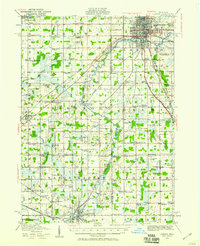 1910 Lansing1958 Print · USGSThe state capital and its surrounding agrarian townships are captured here during a period of significant growth at the start of the 1910s. Genealogists can trace hundreds of family farms and local landmarks including Dolly Varden School, Grovenberg Church, and the Pere Marquette rail lines.
 - 1912 Map of Lansing
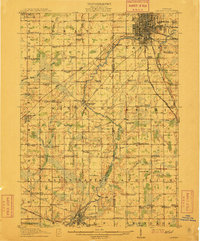 1912 Lansing1912 Print · USGSLansing and the surrounding townships are captured in 1912 as the region's rural character met the growing industrial city. Genealogists can trace family footprints through dozens of country school sites like Dolly Varden School or settlements such as Dimondale and Canada Settlement.4 unique versions available
 - 1958 Map of Grand Rapids, 1973 Print
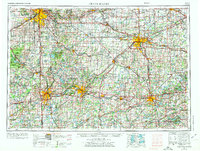 1958 Grand Rapids1973 Print · USGSSouthern Michigan at the peak of the postwar era shows a landscape of burgeoning cities and new interstate highways. Trace family roots and regional growth in Grand Rapids, Battle Creek, and the glacial lake country around Gun Lake or Gull Lake.2 unique versions available
 - 1961 Map of Grand Rapids
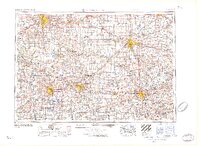 1961 Grand Rapids1961 Print · USGSSouthern Michigan at the dawn of the 1960s reveals a region shaped by major river systems and a robust rail network. Trace mid-century industrial growth and land use from Grand Rapids to the Fort Custer Military Reservation and Gun Lake.
 - 1962 Map of Grand Rapids
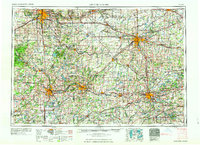 1962 Grand Rapids1962 Print · USGSMid-century Southern Michigan is mapped here at a time of massive growth, showing the expanding urban footprints of Grand Rapids and Lansing. Researchers can trace the legacy of the Grand Trunk Western RR, find historic boundaries of the Fort Custer Military Reservation, or locate sporting camps around Gun Lake.2 unique versions available
 - 1965 Map of Lansing South, 1967 Print
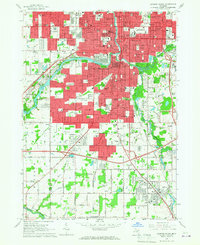 1965 Lansing South1967 Print · USGSGreater Lansing is captured in a period of significant mid-century expansion along the Grand River and Red Cedar River corridors. Genealogists and local historians can trace family plots in Mt Hope Cemetery or locate old neighborhood landmarks like St Mary Sch and the settlement of Millett.3 unique versions available
 - 1983 Map of Lansing, 1984 Print
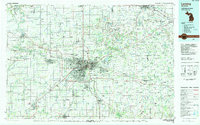 1983 Lansing1984 Print · USGSThe Lansing area and its surrounding river valleys are captured here in the early eighties. Genealogists and historians can trace the rail corridors of the Conrail or locate local landmarks like St Johns Ch and Greenwood Cem.
 - 2011 Map of Lansing South, 2011 Print
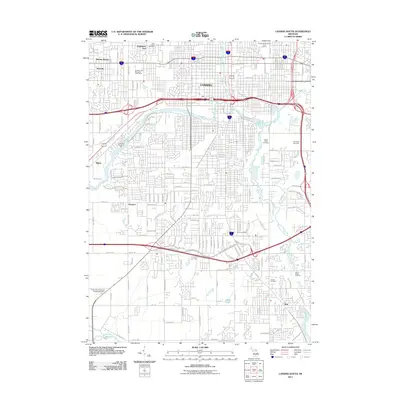 2011 Lansing South2011 Print · USGSLansing and its southern suburbs are captured here at the start of the 2010s, showing a landscape defined by river confluences and civic expansion. Genealogists can trace numerous local burial sites including Mount Hope Cemetery, Pioneer Cemetery, and North Cemetery.
 - 2014 Map of Lansing South, 2014 Print
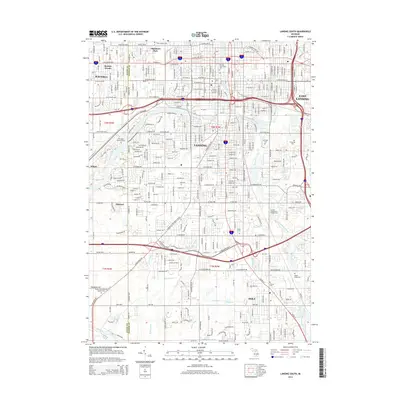 2014 Lansing South2014 Print · USGSThe state capital and its southern suburbs are captured here at a moment of significant 21st-century growth. Genealogists can trace numerous local sites such as Mt Hope Cemetery, Pioneer Cemetery, and the historic campus of Lansing Community College.
 - 2017 Map of Lansing South, 2017 Print
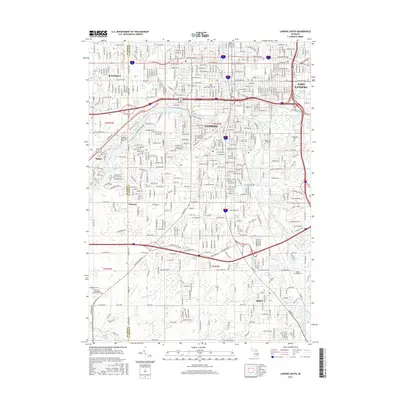 2017 Lansing South2017 Print · USGSLansing and its southern suburbs appear here in the late twenty-teens, showing the dense growth along the Red Cedar River. Genealogists can locate family sites within Mount Hope Cem or Pioneer Cem while tracing the residential expansion of Waverly and Holt.
 - 2019 Map of Lansing South, 2019 Print
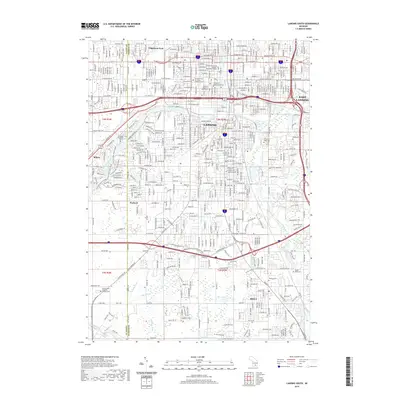 2019 Lansing South2019 Print · USGSThe Michigan capital region and its southern corridor come into focus here as they appeared in the late 2010s. Researchers can trace the development of Lansing and Holt, identifying local landmarks like Pioneer Cem, Millett, and the Grand River riverfront.
 - 2023 Map of Lansing South, 2023 Print
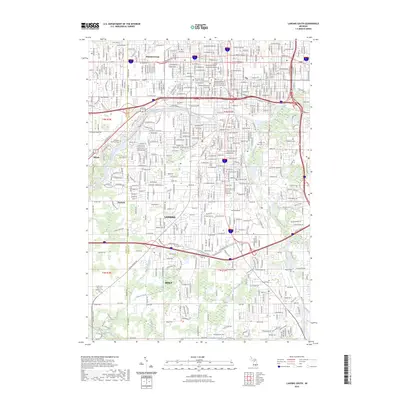 2023 Lansing South2023 Print · USGSGreater Lansing and the community of Holt are shown in this contemporary view as they straddle the Eaton and Ingham County border. Genealogists and researchers can trace the modern layout of the Grand River waterfront and locate landmarks like Evergreen Cem and Edgemont Park.
End of results
Showing maps 1-12 of 12
Frequently asked questions
- What are the different types of historical maps available for Downtown?
- What is the oldest map of Downtown?
- Where can I purchase historical maps of Downtown for my home or office?
- Where can I download high-res historical maps of Downtown?
- Are there historical topographic maps available for Downtown?
- Is there historical aerial imagery available for Downtown?
- Where are historical maps of Downtown sourced from?