1900s (20th Century) Maps of Laketown Township, Minnesota
Explore 11 historic maps of Laketown Township from the 1900s (20th Century). These maps offer a rare glimpse into what life looked like during the 1900s — showing old roads, neighborhoods, homes, and landmarks that have changed or disappeared over time.
Whether you're researching your family's past, planning a metal detecting trip, or studying how Laketown Township's landscape evolved across the 1900s, these high-resolution maps are a powerful tool for exploring the history of this region.
- Focus on a specific era: All maps on this page are from the 1900s, giving you a focused view of this time period.
- See what’s changed: Compare century-old streets, trails, and buildings to today's modern landscape using overlays and satellite layers.
- Research with precision: Use these maps for genealogy, historical research, land use analysis, or educational projects.
- View, download, or print: Maps are fully viewable online in high resolution, and can be downloaded or printed for your own records.
Start exploring Laketown Township's history through authentic maps from the 1900s. This is your window into the past.
Laketown Township, MN maps
(11)- 1905 Map of Minnetonka, 1957 Print
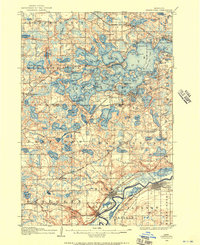 1905 Minnetonka1957 Print · USGSLake Minnetonka and the Minnesota River valley are seen here during the early twentieth century as the region's resort and rail economy reached its height. Genealogists and historians can trace rail stops like Mound Sta, the summer colonies of Deephaven, and the riverfront streets of Chaska.
 - 1907 Map of Minnetonka
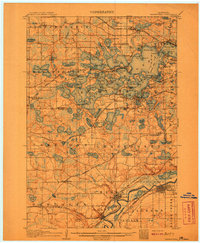 1907 Minnetonka1907 Print · USGSLake Minnetonka was a premier summer destination at the turn of the century, crisscrossed by a Steamboat Route and multiple railroads. Genealogists and historians can trace old lakeside landings and early rail stops like Spring Park Sta, Mound Sta, and Zumbra Heights Sta.3 unique versions available
 - 1953 Map of Saint Paul, 1964 Print
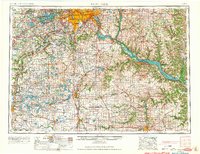 1953 Saint Paul1964 Print · USGSThe Twin Cities and the Mississippi River valley are captured here at a mid-century turning point. Trace the early growth of Minneapolis and Saint Paul alongside landmarks like Lake Minnetonka and the St Croix River.4 unique versions available
 - 1957 Map of Waconia, 1959 Print
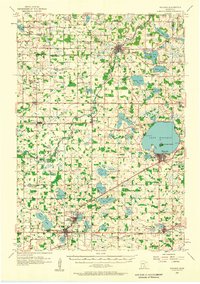 1957 Waconia1959 Print · USGSCarver County and parts of Wright County are captured in the late fifties, showing a rural landscape in transition. Genealogists can trace family roots through numerous small schools and cemeteries, including St Mark Cem, Oakland Cem, and the Hydes Lake Sch.2 unique versions available
 - 1958 Map of Victoria, 1959 Print
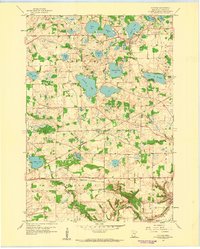 1958 Victoria1959 Print · USGSCarver County’s farming communities and lake country are captured here in the late fifties, just before the expansion of the Twin Cities suburbs. Genealogists and local historians can locate rural landmarks like Lake Auburn Church, Mt Hope Cemetery, and School No 106.4 unique versions available
 - 1958 Map of Mound, 1959 Print
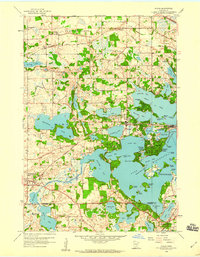 1958 Mound1959 Print · USGSThe western shores of Lake Minnetonka are captured here in the late fifties, showing a landscape of burgeoning lakeside communities and established rail lines. Genealogists and local historians can trace family-named points and historic sites like Phelps Island, the Jesuit Seminary, and the Copeland Sch.4 unique versions available
 - 1958 Map of Lake Minnetonka, 1959 Print
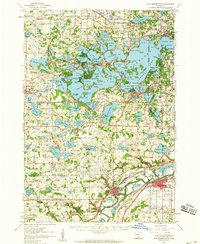 1958 Lake Minnetonka1959 Print · USGSThe western suburbs of Minneapolis appear in a period of transition during the late fifties, centered on the complex shores of Lake Minnetonka. Genealogists and historians can trace the foundations of Wayzata, Deephaven, and Shakopee, or locate family landmarks like Calvin Ch and the Jesuit Seminary.2 unique versions available
 - 1959 Map of Saint Paul
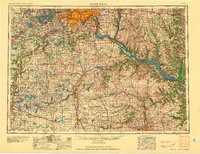 1959 Saint Paul1959 Print · USGSThe Twin Cities and southeastern Minnesota appear here in the late fifties, showing the peak of the rail era and post-war suburban growth. Genealogists can trace family footprints near Lake Minnetonka, the Univ Of Minn Rosemount Research Center, or the growing neighborhoods of Richfield.2 unique versions available
 - 1981 Map of Watertown, 1982 Print
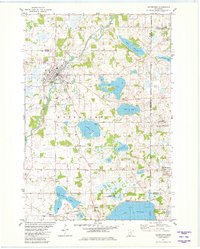 1981 Watertown1982 Print · USGSCarver County and its neighboring townships are captured here in the early eighties, showcasing a region defined by its numerous lakes and the South Fork Crow River. Researchers can locate historic sites like Trinity Cem, St Peters Ch, and the winding Luce Line Trail.2 unique versions available
 - 1981 Map of Waconia, 1982 Print
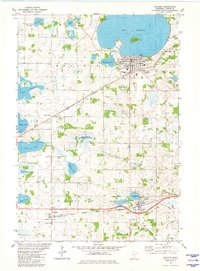 1981 Waconia1982 Print · USGSCarver County during the early eighties shows a landscape of glacial lakes and growing lakeside communities. Genealogists can locate family sites near St Josephs Cem, Scandia Cem, or rural schools like School No 104 while tracing the dual rail lines.2 unique versions available
 - 1985 Map of Saint Paul
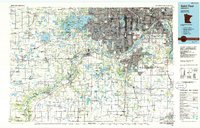 1985 Saint Paul1985 Print · USGSThe Twin Cities metropolitan area and its southern suburbs are captured here in the mid-eighties as the urban landscape expanded toward the Minnesota River. Researchers can trace the layout of the Fort Snelling Military Reservation, find local landmarks like St Benedict Church, and study the rail routes of the Soo Line.2 unique versions available
End of results
Showing maps 1-11 of 11
Top cities near Laketown Township
- Plymouth historical maps
- Maple Grove historical maps
- Eden Prairie historical maps
- Minnetonka historical maps
- Shakopee historical maps
- Chaska historical maps
See more
Frequently asked questions
- What are the different types of historical maps available for Laketown Township?
- What is the oldest map of Laketown Township?
- Where can I purchase historical maps of Laketown Township for my home or office?
- Where can I download high-res historical maps of Laketown Township?
- Are there historical topographic maps available for Laketown Township?
- Is there historical aerial imagery available for Laketown Township?
- Where are historical maps of Laketown Township sourced from?