1960s Maps of Chippewa County, Minnesota
Explore 10 historic maps of Chippewa County from the 1960s. These maps offer a rare glimpse into what life looked like during the 1960s — showing old roads, neighborhoods, homes, and landmarks that have changed or disappeared over time.
Whether you're researching your family's past, planning a metal detecting trip, or studying how Chippewa County's landscape evolved across the 1960s, these high-resolution maps are a powerful tool for exploring the history of this region.
- Focus on a specific era: All maps on this page are from the 1960s, giving you a focused view of this time period.
- See what’s changed: Compare century-old streets, trails, and buildings to today's modern landscape using overlays and satellite layers.
- Research with precision: Use these maps for genealogy, historical research, land use analysis, or educational projects.
- View, download, or print: Maps are fully viewable online in high resolution, and can be downloaded or printed for your own records.
Start exploring Chippewa County's history through authentic maps from the 1960s. This is your window into the past.
Chippewa County, MN maps
(10)- 1965 Map of Montevideo, 1966 Print
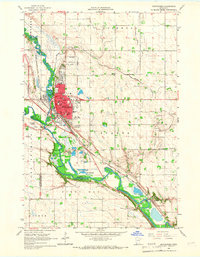 1965 Montevideo1966 Print · USGSThe river confluence at Montevideo flourished in the mid-sixties as a center for rail and river-valley transport. Researchers can trace family history through many local landmarks, including Sunset Memorial Cemetery, St Johns Ch, and the tiny settlement of Wegdahl.2 unique versions available
 - 1965 Map of Clarkfield NE, 1966 Print
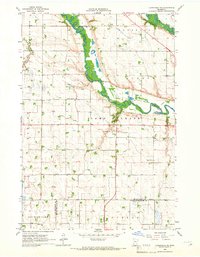 1965 Clarkfield NE1966 Print · USGSThe confluence of the Minnesota and Chippewa Rivers defines this rural landscape in the mid-1960s. Genealogists can trace family footprints at German American Cem and St Petri Cem, or locate landmarks like School No 839.
 - 1965 Map of Asbury, 1966 Print
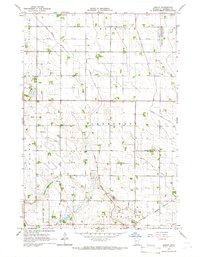 1965 Asbury1966 Print · USGSAgricultural Chippewa County is seen here in the mid-sixties, dominated by township grids and rail-side commerce. Genealogists can locate family landmarks like Saron Ch, Swensson Cem, and the settlement of Asbury along the Great Northern line.
 - 1965 Map of Hazel Run, 1966 Print
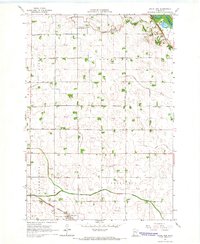 1965 Hazel Run1966 Print · USGSHazel Run and the surrounding prairie townships are captured here in the mid-1960s, showing a landscape defined by industrial agriculture and rail. Researchers can trace the intersections of the Chicago and North Western rail line and local landmarks like Bergen Ch and Camp Release Cem.
 - 1965 Map of Maynard, 1966 Print
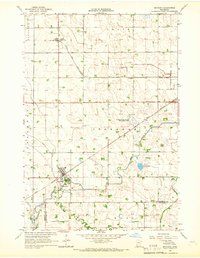 1965 Maynard1966 Print · USGSIn the mid-1960s, this portion of Chippewa County was a busy rail intersection for the local agricultural economy. Researchers can trace the tracks of the Great Northern and find local landmarks like Gluek (Wesota Sta) and Wang Ch.
 - 1965 Map of Clara City, 1966 Print
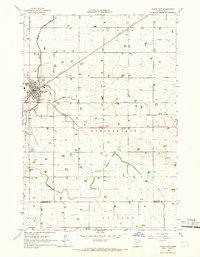 1965 Clara City1966 Print · USGSRailroad and agricultural development define this western Minnesota landscape in the mid-sixties, where the Great Northern and Chicago and North Western lines intersect at Clara City. Genealogists and local historians can trace the early townships of Rheiderland and Ericson, locating family sites near Bunde or the Bethany Cem.
 - 1965 Map of Granite Falls, 1967 Print
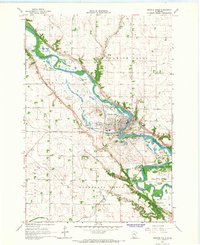 1965 Granite Falls1967 Print · USGSGranite Falls and the Minnesota River valley are captured here in the mid-1960s as the regional rail and agricultural networks reached a point of mature development. Researchers can trace family history at Hillcrest Cem or explore the boundaries of the Upper Sioux Indian Community and the settlement of Minnesota Falls.
 - 1965 Map of Prinsburg, 1967 Print
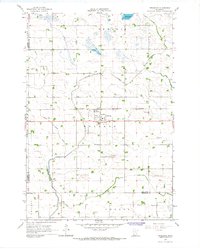 1965 Prinsburg1967 Print · USGSThe rural agricultural landscapes of Kandiyohi County are shown here in the mid-1960s as a complex network of managed drainage and rail transit. Researchers can locate community anchors like Prinsburg, Holland Cem, and School No 815 along the Chicago and North Western line.
 - 1965 Map of Minnesota Falls, 1967 Print
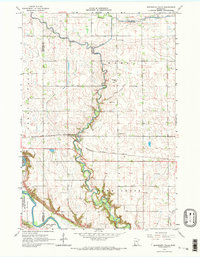 1965 Minnesota Falls1967 Print · USGSThe river valleys of Renville and Chippewa counties are shown here in the mid-1960s, centered on the settlement of Minnesota Falls. Researchers can trace the path of the Chicago Milwaukee St Paul and Pacific railroad and locate landmarks like the Vesper Song Chapel and Upper Sioux Indian Community.2 unique versions available
 - 1967 Map of New Ulm
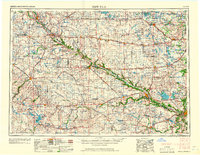 1967 New Ulm1967 Print · USGSSouthern Minnesota in the mid-fifties is captured here as a landscape of river-valley missions and busy prairie rail towns. Researchers can trace the Yellow Medicine Trail and locate historic sites like the Morton Indian Mission and Milford State Monument.
End of results
Showing maps 1-10 of 10
Top cities of Chippewa County
- Montevideo historical maps
- Clara City historical maps
- Maynard historical maps
- Milan historical maps
- Louriston historical maps
- Watson historical maps
Frequently asked questions
- What are the different types of historical maps available for Chippewa County?
- What is the oldest map of Chippewa County?
- Where can I purchase historical maps of Chippewa County for my home or office?
- Where can I download high-res historical maps of Chippewa County?
- Are there historical topographic maps available for Chippewa County?
- Is there historical aerial imagery available for Chippewa County?
- Where are historical maps of Chippewa County sourced from?