1900s (20th Century) Maps of Empire, Minnesota
Explore 6 historic maps of Empire from the 1900s (20th Century). These maps offer a rare glimpse into what life looked like during the 1900s — showing old roads, neighborhoods, homes, and landmarks that have changed or disappeared over time.
Whether you're researching your family's past, planning a metal detecting trip, or studying how Empire's landscape evolved across the 1900s, these high-resolution maps are a powerful tool for exploring the history of this region.
- Focus on a specific era: All maps on this page are from the 1900s, giving you a focused view of this time period.
- See what’s changed: Compare century-old streets, trails, and buildings to today's modern landscape using overlays and satellite layers.
- Research with precision: Use these maps for genealogy, historical research, land use analysis, or educational projects.
- View, download, or print: Maps are fully viewable online in high resolution, and can be downloaded or printed for your own records.
Start exploring Empire's history through authentic maps from the 1900s. This is your window into the past.
Empire, MN maps
(6)- 1953 Map of Saint Paul, 1964 Print
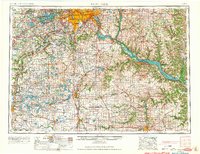 1953 Saint Paul1964 Print · USGSThe Twin Cities and the Mississippi River valley are captured here at a mid-century turning point. Trace the early growth of Minneapolis and Saint Paul alongside landmarks like Lake Minnetonka and the St Croix River.4 unique versions available
 - 1957 Map of Farmington, 1958 Print
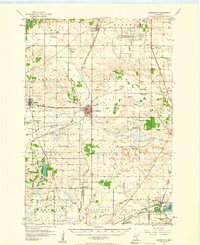 1957 Farmington1958 Print · USGSDakota County in the late fifties shows a landscape of busy rail junctions and transitioning rural schools. You can trace family roots through sites like Christiania Church or locate vanished landmarks like Southport Landing Field and School No 55.2 unique versions available
 - 1959 Map of Saint Paul
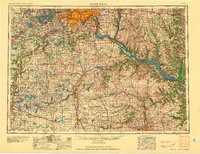 1959 Saint Paul1959 Print · USGSThe Twin Cities and southeastern Minnesota appear here in the late fifties, showing the peak of the rail era and post-war suburban growth. Genealogists can trace family footprints near Lake Minnetonka, the Univ Of Minn Rosemount Research Center, or the growing neighborhoods of Richfield.2 unique versions available
 - 1974 Map of Coates, 1976 Print
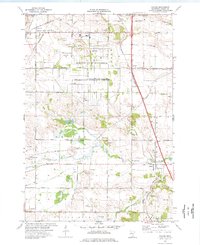 1974 Coates1976 Print · USGSDakota County during the mid-seventies reveals a landscape defined by large-scale research facilities and a complex rail network. Researchers can locate several rural burial sites like St Johns Cem and trace the original paths of the Chicago and North Western railroad near Coates.3 unique versions available
 - 1974 Map of Farmington, 1976 Print
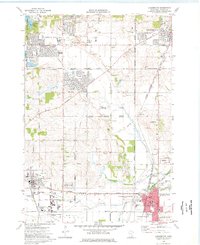 1974 Farmington1976 Print · USGSDakota County was undergoing rapid transformation in the 1970s as suburban residential tracts met the region's long-standing industrial and rail networks. Researchers can trace the layout of early neighborhoods around Parkview School and locate family plots at St Johns Cemetery or St Michaels Cemetery.2 unique versions available
 - 1985 Map of Saint Paul
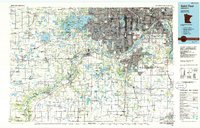 1985 Saint Paul1985 Print · USGSThe Twin Cities metropolitan area and its southern suburbs are captured here in the mid-eighties as the urban landscape expanded toward the Minnesota River. Researchers can trace the layout of the Fort Snelling Military Reservation, find local landmarks like St Benedict Church, and study the rail routes of the Soo Line.2 unique versions available
End of results
Showing maps 1-6 of 6
Top cities near Empire
- Minneapolis historical maps
- Saint Paul historical maps
- Bloomington historical maps
- Woodbury historical maps
- Eagan historical maps
- Burnsville historical maps
See more
Frequently asked questions
- What are the different types of historical maps available for Empire?
- What is the oldest map of Empire?
- Where can I purchase historical maps of Empire for my home or office?
- Where can I download high-res historical maps of Empire?
- Are there historical topographic maps available for Empire?
- Is there historical aerial imagery available for Empire?
- Where are historical maps of Empire sourced from?