1960s Maps of Fillmore County, Minnesota
Explore 16 historic maps of Fillmore County from the 1960s. These maps offer a rare glimpse into what life looked like during the 1960s — showing old roads, neighborhoods, homes, and landmarks that have changed or disappeared over time.
Whether you're researching your family's past, planning a metal detecting trip, or studying how Fillmore County's landscape evolved across the 1960s, these high-resolution maps are a powerful tool for exploring the history of this region.
- Focus on a specific era: All maps on this page are from the 1960s, giving you a focused view of this time period.
- See what’s changed: Compare century-old streets, trails, and buildings to today's modern landscape using overlays and satellite layers.
- Research with precision: Use these maps for genealogy, historical research, land use analysis, or educational projects.
- View, download, or print: Maps are fully viewable online in high resolution, and can be downloaded or printed for your own records.
Start exploring Fillmore County's history through authentic maps from the 1960s. This is your window into the past.
Fillmore County, MN maps
(16)- 1961 Map of La Crosse
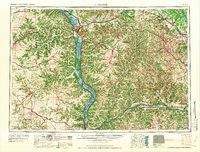 1961 La Crosse1961 Print · USGSThe Driftless Area at the start of the 1960s reveals a complex network of river towns and rail lines along the Mississippi River. Genealogists and historians can trace old settlements like New Amsterdam and Wyattville or locate major landmarks like Camp McCoy Military Reservation and Effigy Mounds National Monument.
 - 1965 Map of La Crosse
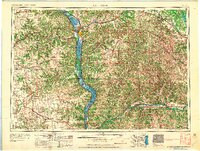 1965 La Crosse1965 Print · USGSThe Driftless Area and the Upper Mississippi valley are captured here during a period of steady mid-century growth. Researchers can trace the rail lines of the Chicago and North Western or locate riverfront sites like Effigy Mounds National Monument and the Camp McCoy Military Reservation.
 - 1965 Map of Greenleafton, 1966 Print
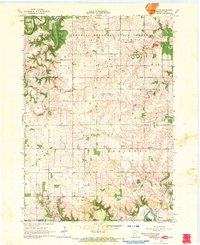 1965 Greenleafton1966 Print · USGSAcross the Fillmore County hills in the 1960s, this survey traces the rural settlements of Greenleafton and Bristol along the Minnesota-Iowa border. Researchers can locate numerous family-history sites like St Liquori Cem, Saetersdal Ch, and the many Strip Mines near the South Branch Root River.2 unique versions available
 - 1965 Map of Harmony, 1966 Print
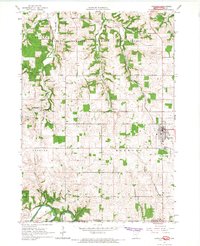 1965 Harmony1966 Print · USGSThe Minnesota-Iowa borderlands near Harmony are shown in the mid-1960s, a time when rail and river still defined the local geography. Researchers can trace the Milwaukee Road railroad or locate family burial sites at Rice Cem and Old Big Spring Cem.2 unique versions available
 - 1965 Map of Mabel, 1966 Print
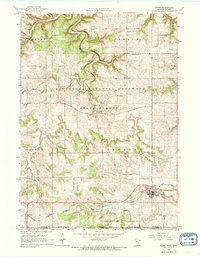 1965 Mabel1966 Print · USGSThe Minnesota-Iowa border comes alive in the mid-1960s, showing the intersection of rail transport and forest conservation. Genealogists and historians can trace the Milwaukee St Paul and Pacific railroad through Mabel and find remote sites like Scheie Ch or Prosper Cem.
 - 1965 Map of Spring Grove, 1966 Print
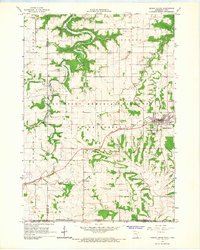 1965 Spring Grove1966 Print · USGSSoutheastern Minnesota's ridge-and-valley landscape is preserved here during the mid-sixties, showing the rural communities of Houston County. Trace family roots at St Marys Cem or Trinity Cem, and locate landmarks like Sylling Landing Field and the rail stop at Newhouse.
 - 1965 Map of Wykoff, 1966 Print
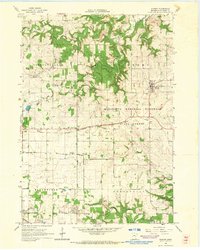 1965 Wykoff1966 Print · USGSWykoff and the surrounding Fillmore County townships appear here in the mid-sixties, caught between their railroad heritage and the deep karst geography of the Root River valley. Researchers can pinpoint numerous family landmarks, from the Bateman Sch to local burial sites like Lone Oak Cem and St Ignatius Cem.2 unique versions available
 - 1965 Map of Canton, 1966 Print
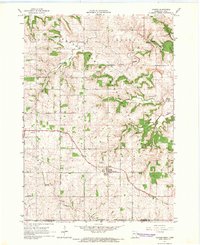 1965 Canton1966 Print · USGSSoutheast Minnesota near the Iowa border is captured in the mid-sixties, showing a landscape defined by the South Fork Root River and its rail-linked villages. Researchers can trace the Chicago Milwaukee St Paul and Pacific tracks through Canton and find family-named sites like Henrytown and Scotland Cem.
 - 1965 Map of Spring Valley, 1966 Print
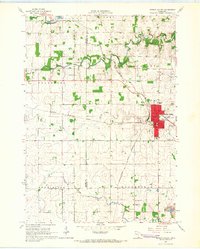 1965 Spring Valley1966 Print · USGSSpring Valley and the surrounding townships in the mid-1960s reveal a landscape shaped by a major railroad junction and rural industry. Researchers can trace historic family burial sites like Frankford Cem and Bloomfield Cem or locate old infrastructure like the Townhall.
 - 1965 Map of Yucatan, 1966 Print
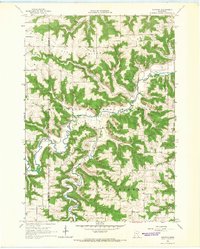 1965 Yucatan1966 Print · USGSSoutheastern Minnesota’s bluff country is captured here in the mid-sixties, where the South Fork Root River winds between high ridges. Researchers can trace historic cemeteries and community centers like the Oak Ridge Ch Cem, Townhall, and Riceford settlement.
 - 1965 Map of Bratsberg, 1966 Print
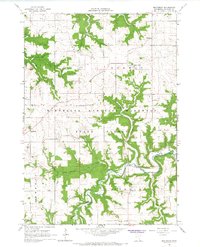 1965 Bratsberg1966 Print · USGSFillmore County, Minnesota, is shown here in the mid-1960s, featuring the rugged coulees and ridges between the Root River and the state forest. Genealogists can locate family landmarks like Kopperud Cem, Highland Prairie Ch, and rural schoolhouses such as School No 498.
 - 1965 Map of Ostrander, 1966 Print
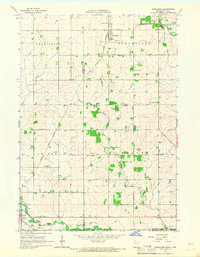 1965 Ostrander1966 Print · USGSThe borderlands of Fillmore County and Iowa are captured here in the mid-sixties, dominated by rail lines and winding river branches. Researchers can pinpoint early landmarks like Bloomfield Cem, the Ostrander rail corridor, and various Quarry sites.
 - 1965 Map of Lanesboro, 1967 Print
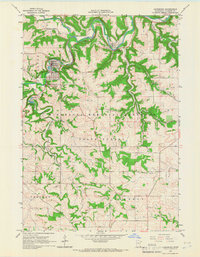 1965 Lanesboro1967 Print · USGSFillmore County’s river valleys and blufflands are captured in the mid-sixties as the rails still follow the water. Genealogists and hikers can trace Lanesboro, the rural Elstad Ch, and the winding Gribben Valley.2 unique versions available
 - 1965 Map of Fountain, 1967 Print
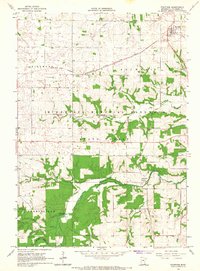 1965 Fountain1967 Print · USGSFillmore County was undergoing a period of landscape preservation in the mid-sixties as forested bluffs were set aside for conservation. Researchers can trace the rail lines of the Chicago Milwaukee St Paul and Pacific or locate local burials at Winslow Cem and Carimona Cem.2 unique versions available
 - 1965 Map of Cherry Grove, 1967 Print
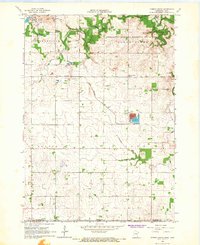 1965 Cherry Grove1967 Print · USGSSouthern Minnesota farmland meets the deep valleys of the Root River in the mid-sixties, just as local strip mines and gravel pits dotted the landscape. Researchers can locate the Chicago Great Western rail line and family landmarks like Bethlehem Cem and Pietenpol Landing Field.
 - 1965 Map of Preston, 1967 Print
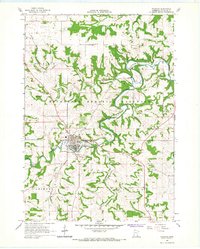 1965 Preston1967 Print · USGSPreston and the surrounding Fillmore County highlands are captured here in the mid-sixties as the river valleys supported a mix of rail transport and timber. Genealogists can trace family plots at St Columbanus Cem and Crown Hill Cem or locate the old Isinours junction.
End of results
Showing maps 1-16 of 16
Top cities of Fillmore County
- Spring Valley historical maps
- Rushford historical maps
- Preston historical maps
- Harmony historical maps
- Rushford Village historical maps
- Lanesboro historical maps
See more
Frequently asked questions
- What are the different types of historical maps available for Fillmore County?
- What is the oldest map of Fillmore County?
- Where can I purchase historical maps of Fillmore County for my home or office?
- Where can I download high-res historical maps of Fillmore County?
- Are there historical topographic maps available for Fillmore County?
- Is there historical aerial imagery available for Fillmore County?
- Where are historical maps of Fillmore County sourced from?