Old Maps of Choctaw County, Mississippi
Explore 109 old maps of Choctaw County, spanning from 1953 to today. These high-resolution historic maps reveal how streets, neighborhoods, landmarks, and natural features evolved over time — perfect for genealogy, metal detecting, research, and local history exploration.
What you can do with these maps:
- See how Choctaw County changed over time: Compare historical maps to modern-day views to trace roads, homesites, rail lines & more.
- View detailed metadata: Each map includes creators, publishers, year, scale, and archive source.
- Overlay maps with satellite & LiDAR: Visualize the past alongside modern tools to explore terrain & human change.
- Trusted historical sources: Maps sourced from the USGS, Library of Congress, and other archives.
- Access maps your way: View online, download high-res files, or order prints for personal or research use.
Start exploring old maps of Choctaw County to uncover forgotten places, hidden landmarks, and the deep history beneath your feet.
Choctaw County, MS maps
(109)- 1953 Map of Walthall
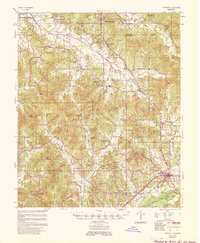 1953 Walthall1953 Print · USGSMid-century Webster County is documented here during a period of rural stability, centered on the county seat and the rail junction at Eupora. Researchers can trace old family sites and rural landmarks like Doolittle Chapel Sch, Greenboro Ch & Cem, and the historic Natchez Trace.
 - 1953 Map of West Point, 1973 Print
 1953 West Point1973 Print · USGSNorth-Central Mississippi and the Alabama borderlands are captured here during the mid-twentieth century as new reservoirs and national forests transformed the landscape. Researchers can trace the path of the Mississippi & Skuna Valley railroad or locate old landings along the Tombigbee River and Schooner Creek.3 unique versions available
 - 1958 Map of West Point
 1958 West Point1958 Print · USGSNortheastern Mississippi and western Alabama are shown in the late 1950s, highlighting a region defined by its river-and-rail economy. Researchers can trace family roots through numerous settlements like Artesia and Vardaman or explore the corridor of the Tombigbee River.
 - 1963 Map of West Point
 1963 West Point1963 Print · USGSEastern Mississippi and western Alabama are captured in the early sixties as industrial centers and rail lines connected the Black Prairie to the hills. Genealogists and historians can trace family-named watercourses and the early footprints of Starkville, Columbus, and the Noxubee National Wildlife Refuge.2 unique versions available
 - 1966 Map of Stewart, 1967 Print
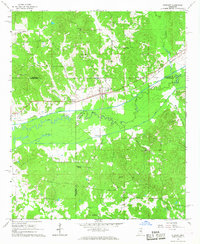 1966 Stewart1967 Print · USGSIn the mid-1960s, the rural borderlands of Webster and Montgomery counties were defined by the Big Black River and the Columbus and Greenville rail line. Researchers can trace family roots through numerous sites like Reeds Chapel, Jopkins Cem, and the settlement at Stewart.2 unique versions available
 - 1966 Map of Weir, 1967 Print
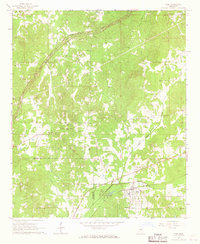 1966 Weir1967 Print · USGSMid-century Choctaw County life is centered on the railroad town of Weir and the winding Natchez Trace. Researchers can trace rural congregation sites like Millsprings Ch or New Zion Ch and follow the path of the Illinois Central near the Yockanookany River.2 unique versions available
 - 1966 Map of Tomnolen, 1967 Print
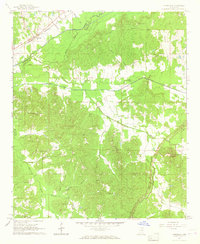 1966 Tomnolen1967 Print · USGSChoctaw and Webster counties are captured here in the mid-sixties, centered on the Big Black River bottomlands and the historic Natchez Trace Parkway. Genealogists and local historians can locate many rural landmarks including Tomnolen, Bluff Spring Ch, and Bankston Cem.2 unique versions available
 - 1966 Map of French Camp, 1967 Print
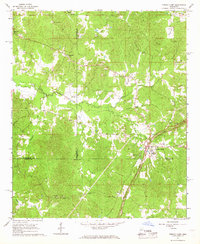 1966 French Camp1967 Print · USGSChoctaw and Attala Counties are mapped here in the mid-sixties, showing the rural landscape as the modern Natchez Trace Parkway bypasses older settlements. Researchers can locate family landmarks such as Huntsville Cem, Covenant Ch, and several Sandpits along the timbered creek bottoms.
 - 1968 Map of Weir
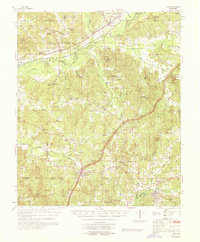 1968 Weir1968 Print · USGSChoctaw and Montgomery counties come alive in this late-sixties study of the Mississippi hill country. Genealogists and local historians can trace family locations near French Camp, Weir, and numerous rural landmarks like Serepta Cem and Millsprings Sch.
 - 1972 Map of Louisville North, 1973 Print
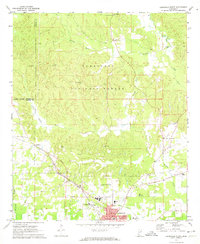 1972 Louisville North1973 Print · USGSWinston County in the early 1970s shows a landscape balancing the Tombigbee National Forest with the industrial growth of Louisville. Trace family history at Noxubee Hill Cem or locate rural landmarks like Poplar Flat Ch and the McMillan settlement.2 unique versions available
 - 1972 Map of McCool, 1973 Print
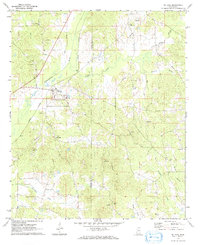 1972 McCool1973 Print · USGSThe Illinois Central railroad and the Yockanookany River define the settlement of McCool in the early seventies. Genealogists and historians can trace rural family landmarks like Mt Pilgrim Cemetery, Bowie Chapel, and the rugged terrain of the Ironstone Hills.
 - 1972 Map of Highpoint, 1973 Print
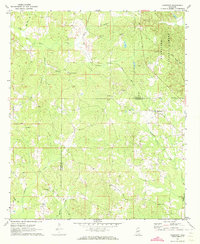 1972 Highpoint1973 Print · USGSThe Choctaw and Winston county line in the early seventies shows a rural landscape of timberland and small parishes. Genealogists can trace several family burial sites and country churches including Old Concord Cem, Mt Nebo Ch, and Turner Cem.2 unique versions available
 - 1972 Map of Ethel SE, 1973 Print
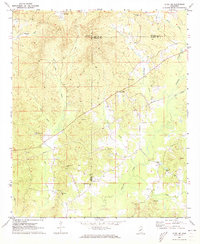 1972 Ethel SE1973 Print · USGSWinston and Attala counties meet in this early 1970s survey, showing a landscape of timbered ridges and rural crossroads. Researchers can trace family history through a high density of local landmarks like Edgefield Ch, Rural Hill, and the McCool Lookout Tower.
 - 1972 Map of Louisville SW, 1973 Print
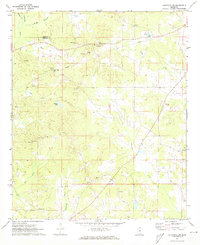 1972 Louisville SW1973 Print · USGSThe Winston and Choctaw county line in the early 1970s reveals a landscape defined by its rural churches and small-scale creek-side operations. You can locate family history sites like Whitehall Ch, Ford Community Center, and the Steed Cem along the Noxapater Creek drainage.2 unique versions available
 - 1972 Map of Maben, 1974 Print
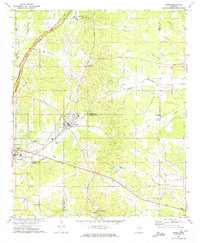 1972 Maben1974 Print · USGSMaben and Mathiston appear as active rail-and-road junctions in the early seventies, positioned at the convergence of four North Mississippi counties. Local historians can trace old community centers like Cumberland, dozens of country churches including Double Springs Ch, and the route of the Natchez Trace Parkway.
 - 1972 Map of Sapa, 1974 Print
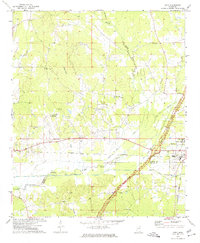 1972 Sapa1974 Print · USGSNorth-central Mississippi communities at the start of the 1970s reveal a landscape of rural school life and river-bottom agriculture. Researchers can trace local landmarks like Wood Junior College and the Drive-in Theater or locate ancestral sites such as Lollars Grove Ch.
 - 1972 Map of Double Springs, 1975 Print
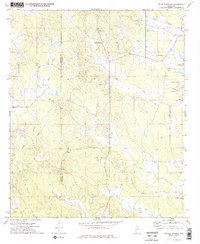 1972 Double Springs1975 Print · USGSThe rural borderlands of Choctaw and Oktibbeha counties are documented here in the early seventies, centered on the community of Double Springs. Genealogists and local historians can locate several rural landmarks, including Mt Olive Cem, McMinn Cem, and the Old Self Creek Ch.2 unique versions available
 - 1972 Map of Sturgis, 1975 Print
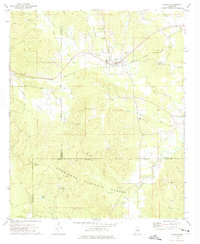 1972 Sturgis1975 Print · USGSThe town of Sturgis and its surrounding timberlands are captured here in the early seventies as the railroad still connected the local economy. Genealogists can trace family names through landmarks like Old Sturgis Cem, Boyd Chapel, and the Tombigbee Lookout Tower.
 - 1972 Map of Reform, 1975 Print
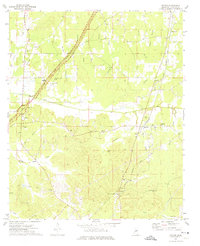 1972 Reform1975 Print · USGSChoctaw County in the early seventies shows a landscape shaped by the Natchez Trace Parkway and the Illinois Central Gulf railroad. Genealogists can trace deep local roots through numerous country churches and cemeteries, from Reform Chapel to Old Mt Pisgah Cem.
 - 1972 Map of Ackerman, 1975 Print
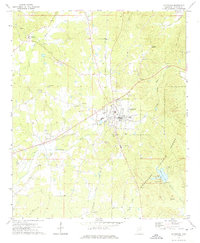 1972 Ackerman1975 Print · USGSChoctaw County in the early seventies shows a landscape defined by the Illinois Central Gulf railroad and the Tombigbee National Forest. Researchers can locate family sites like Old Lebanon Ch or trace the waters of the Yockanookany River near Fentress.2 unique versions available
 - 1976 Map of Walthall SE, 1977 Print
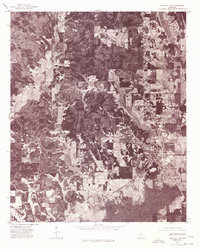 1976 Walthall SE1977 Print · USGSWebster County agriculture and town life are captured in the mid-1970s as the landscape shifts from forest to farm. Local historians can trace the development of Eupora and Walthall, or follow the course of the Big Black River.
 - 1983 Map of Eupora, 1984 Print
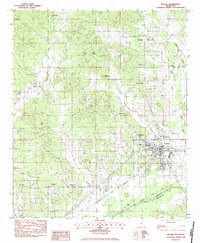 1983 Eupora1984 Print · USGSEupora and Walthall are shown in detail during the early 1980s, reflecting a rural Mississippi landscape of churches, cemeteries, and light industry. Researchers can trace family roots at Old Greensboro Cem and Jordons Cem, or locate landmarks like the Eupora Airport and the Columbus and Greenville rail line.2 unique versions available
 - 1984 Map of Kosciusko
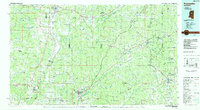 1984 Kosciusko1984 Print · USGSCentral Mississippi in the mid-eighties shows a landscape of timberlands and rural crossroads anchored by Kosciusko. Genealogists can trace family roots through numerous country parishes like Bethany Ch and Zion Ch or the path of the Illinois Central Gulf railroad.3 unique versions available
 - 1984 Map of West Point
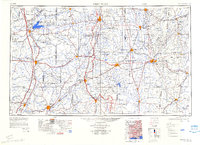 1984 West Point1984 Print · USGSNorth-Central Mississippi in the mid-eighties shows a landscape defined by massive water management projects and dense timberlands. Researchers can trace the legacy of rural settlements like Geeslin Corner or the rail corridors of the Illinois Central Gulf RR near Grenada Lake.3 unique versions available
 - 1984 Map of Grenada, 1990 Print
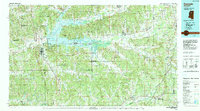 1984 Grenada1990 Print · USGSNorth Central Mississippi’s river valleys and conservation lands are captured here in the mid-1980s. Researchers can trace the sprawling Camp Mc Cain, the Illinois Central Gulf rail line, and the historic Treaty Boundary.
Showing maps 1-25 of 109
Top cities of Choctaw County
Frequently asked questions
- What are the different types of historical maps available for Choctaw County?
- What is the oldest map of Choctaw County?
- Where can I purchase historical maps of Choctaw County for my home or office?
- Where can I download high-res historical maps of Choctaw County?
- Are there historical topographic maps available for Choctaw County?
- Is there historical aerial imagery available for Choctaw County?
- Where are historical maps of Choctaw County sourced from?