Old Maps of Lamar, Missouri for Academic Research
Study the evolution of Lamar with 28 high-resolution historic maps. Whether you're teaching, researching, or modeling changes in land use, these maps provide essential visual documentation of urban, environmental, and geographic change.
- Analyze long-term change: Track patterns in development, transportation, and natural features.
- Ideal for environmental or urban studies: Support academic projects with primary historical map data.
- Use in the classroom or lab: Educators and researchers rely on these maps to bring historical context to life.
These maps are a powerful tool for teaching, research, and visualizing how Lamar has changed over the decades.
Lamar, MO maps
(28)- 1886 Map of Nevada
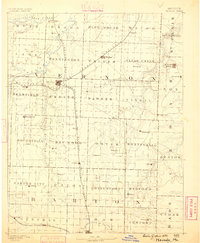 1886 Nevada1886 Print · USGSRailroads and river valleys define southwestern Missouri in the late nineteenth century, as the landscape transitions into a series of organized townships and trade centers. Genealogists and local historians can trace early settlements like Moundville, Montevallo, and El Dorado Springs along the Missouri Pacific Railroad.
 - 1886 Map of Carthage
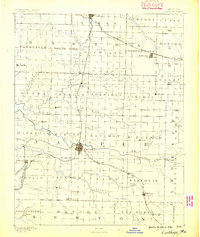 1886 Carthage1886 Print · USGSJasper and Barton Counties thrive during the mid-1880s as the railroad era transforms the Missouri landscape into a bustling corridor of trade and industry. Genealogists and historians can trace the early footprints of Carthage, the mills at Bowers Mill, and the early rail connections through Webb City and Oronogo.
 - 1894 Map of Nevada
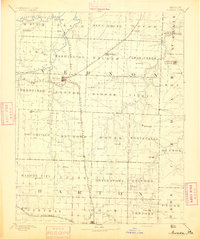 1894 Nevada1894 Print · USGSWestern Missouri at the end of the nineteenth century is defined here by its emerging rail towns and expansive prairie townships. Genealogists and local historians can trace the early development of Nevada and Lamar alongside smaller settlements like Montevallo and El Dorado Springs.5 unique versions available
 - 1894 Map of Carthage
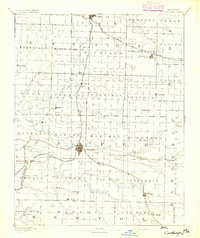 1894 Carthage1894 Print · USGSSouthwest Missouri thrived as a rail and mining hub in the late nineteenth century. Genealogists can trace family roots through old settlements like Diamond City, Dudenville, and Bowers Mill during this period of growth.5 unique versions available
 - 1947 Map of Joplin, 1954 Print
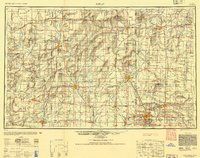 1947 Joplin1954 Print · USGSThe borderlands of Missouri, Kansas, and Oklahoma are shown here during the late 1940s, a period of heavy industrial and military activity. Researchers can trace the extensive Tri-State Mining District, the layout of Camp Crowder, and local landmarks like Mount Hope Cem.
 - 1949 Map of Joplin
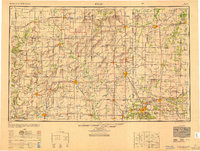 1949 Joplin1949 Print · USGSThe Kansas-Missouri borderlands thrive in the late 1940s, showing a robust network of railroad towns and river valleys. Researchers can trace historic rail lines like the Missouri Pacific RR and locate rural centers such as Chanute, Iola, and Fort Scott.
 - 1954 Map of Joplin, 1967 Print
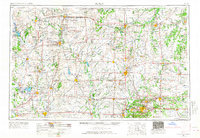 1954 Joplin1967 Print · USGSThe tri-state border region of Kansas, Missouri, and Oklahoma is captured here during a peak era of mid-century industrial and agricultural activity. Researchers can trace family history through dozens of rural cemeteries or locate landmarks like the Kansas Army Ammunition Plant and Pittsburg State University.3 unique versions available
 - 1958 Map of Joplin
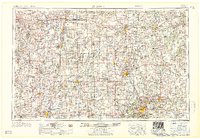 1958 Joplin1958 Print · USGSThe tri-state border region of Missouri, Kansas, and Oklahoma is shown during the late fifties, a time of heavy rail traffic and mining activity. Local historians can trace the industrial landscape through the Joplin & Pittsburg Ry or locate family sites like Zion Ch and Bender Mounds.
 - 1959 Map of Joplin
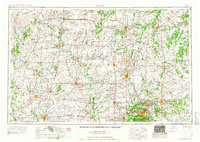 1959 Joplin1959 Print · USGSThe Tri-State region’s mining and rail-driven economy is on full display in the late fifties. Genealogists can locate Lead and Zinc Mines near Joplin, family markers at Oak Hill Cem, and military history at Camp Clark.
 - 1962 Map of Kenoma, 1963 Print
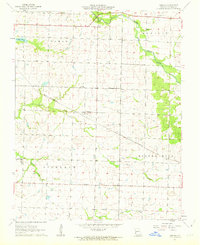 1962 Kenoma1963 Print · USGSBarton County farming life is captured here in the early sixties, showing a landscape defined by traditional township boundaries and the ST Louis - San Francisco railroad. Genealogists can locate family landmarks like Mt Carmel Ch, Fair View Cem, and numerous rural schoolhouses including Glendale Sch.2 unique versions available
 - 1962 Map of Lamar North, 1963 Print
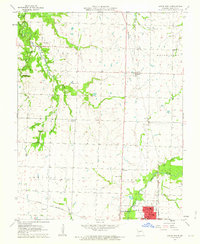 1962 Lamar North1963 Print · USGSBarton County is shown here in the early 1960s, a landscape shaped by the intersection of the Missouri Pacific and St Louis San Francisco railroads. Researchers can locate rural landmarks like Central Chapel, Bakers Grove Cem, and several country schools.
 - 1962 Map of Lamar South, 1964 Print
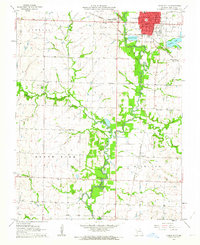 1962 Lamar South1964 Print · USGSBarton County in the early sixties shows the growth of Lamar City and the rural townships of Richland and North. Genealogists can trace early landmarks like St Marys Cem, Bethel Ch, and forgotten school sites like Ledbetter Sch.
 - 1986 Map of Nevada
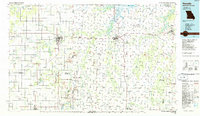 1986 Nevada1986 Print · USGSThe Missouri-Kansas borderlands in the mid-1980s show a landscape of active rail lines and coal mining. Researchers can trace the Old Military Road or locate family plots in the National Cemetery and Deepwood Cemetery.
 - 1986 Map of Joplin
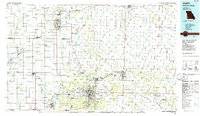 1986 Joplin1986 Print · USGSThe tri-state border region comes alive in the mid-eighties as an industrial and transit powerhouse where Kansas and Missouri meet. Researchers can trace the heavy rail influence of the Missouri Pacific RR and explore sites like the Mined Land State Wildlife Area.
 - 1991 Map of Joplin
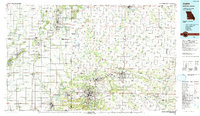 1991 Joplin1991 Print · USGSThe tri-state mining district and the Ozark foothills meet in the early 1990s as industrial land transitions into conservation areas. Genealogists and historians can trace the growth of Joplin and Baxter Springs or locate rural sites like Mount Hope Cem and Blue Mound.
 - 1991 Map of Nevada
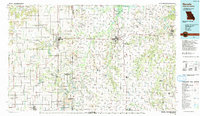 1991 Nevada1991 Print · USGSThis borderland region in the early nineties captures the transition from Kansas plains to Missouri timber. Researchers can trace family history through Bunn Cemetery, locate the Camp Clark Military Reservation, and explore rail towns like Nevada and Fort Scott.
 - 2011 Map of Lamar South, 2011 Print
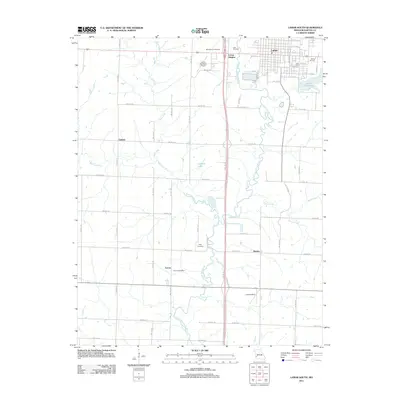 2011 Lamar South2011 Print · USGSBarton County at the start of the 2010s shows a classic Missouri mix of a growing county seat and quiet rural outposts. Researchers can find old family landmarks and civic centers like the Esrom Post Office, Killey Cemetery, and the Barco Drive-In.
 - 2011 Map of Kenoma, 2011 Print
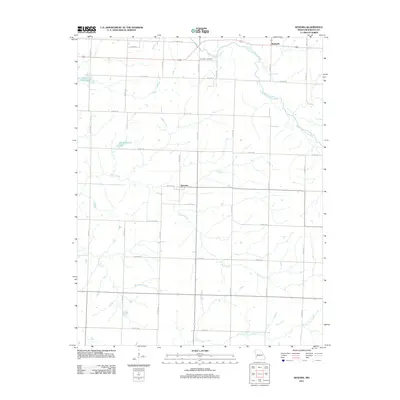 2011 Kenoma2011 Print · USGSBarton County at the start of the 2010s reveals a structured agricultural landscape shaped by its river systems and small communities. Researchers can trace local landmarks like Fair View Cemetery or follow the waters of the North Fork Spring River near Kenoma.
 - 2011 Map of Lamar North, 2011 Print
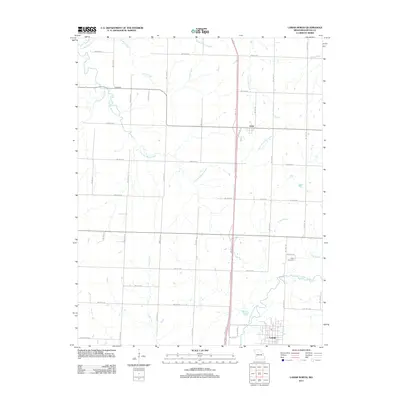 2011 Lamar North2011 Print · USGSBarton County at the start of the 2010s shows a classic Midwestern landscape of section-line roads and prairie streams. Genealogists and local historians can locate Nigh Cemetery and trace the settlements of Irwin and Fairbanks.
 - 2015 Map of Lamar North, 2015 Print
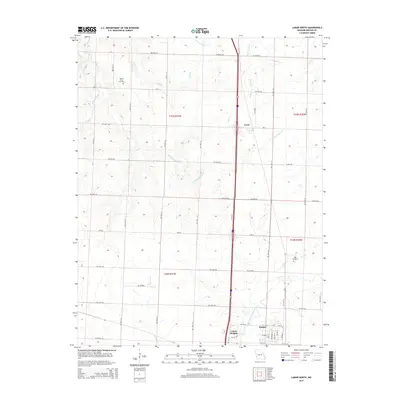 2015 Lamar North2015 Print · USGSBarton County is shown in this contemporary study as it appeared in the mid-2010s, focusing on the area around Lamar. Genealogists and local researchers can pinpoint Bakers Grove Cemetery, Nigh Cemetery, and the small settlement of Irwin.
 - 2015 Map of Kenoma, 2015 Print
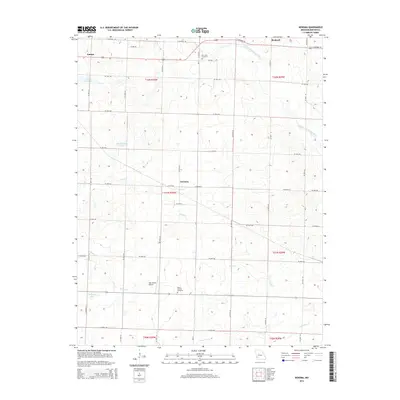 2015 Kenoma2015 Print · USGSBarton County agriculture and small-town Missouri life are documented here in the mid-2010s. Local researchers can trace family lands near Kenoma or locate burial sites at Mount Carmel Cemetery and Fair View Cemetery.
 - 2015 Map of Lamar South, 2015 Print
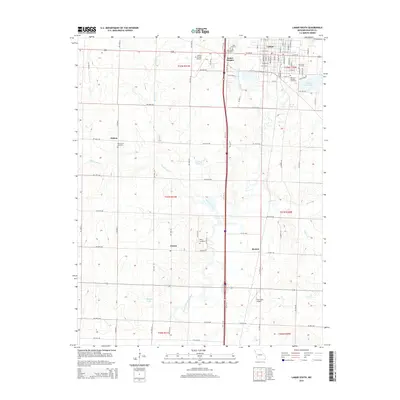 2015 Lamar South2015 Print · USGSBarton County is shown here in the mid-2010s, centered on the city of Lamar and its rural southern reaches. Researchers can trace local heritage through numerous burial sites like Killey Cemetery and find small settlements such as Esrom, Oakton, and Boston.
 - 2017 Map of Kenoma, 2017 Print
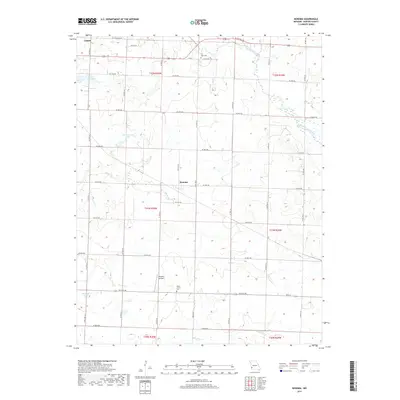 2017 Kenoma2017 Print · USGSBarton County agriculture and water management are on full display in this recent survey of the Missouri plains. Genealogists and local historians can locate long-standing sites like Mount Carmel Cem, McGuire Airfield, and the waters of Lamar City Lake.
 - 2017 Map of Lamar South, 2017 Print
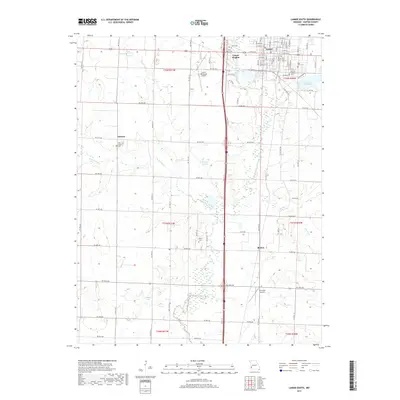 2017 Lamar South2017 Print · USGSBarton County at the start of the 2010s shows a landscape of steady agricultural communities and winding river forks. Genealogists can trace family locations near Oak Grove Cem and Boston, or locate properties around the West Fork River.
 - 2017 Map of Lamar North, 2017 Print
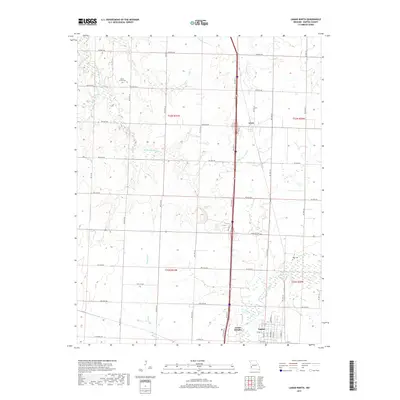 2017 Lamar North2017 Print · USGSBarton County is captured in this modern survey as the agricultural prairie north of Lamar continues to thrive along the North Fork Spring River. Researchers can locate family sites and rural landmarks like Bakers Grove Cem, Nigh Cem, and the village of Irwin.
Showing maps 1-25 of 28
Top cities near Lamar
- Jasper historical maps
- Golden City historical maps
- Liberal historical maps
- Sheldon historical maps
- Nashville historical maps
- Newport historical maps
See more
Frequently asked questions
- What are the different types of historical maps available for Lamar?
- What is the oldest map of Lamar?
- Where can I purchase historical maps of Lamar for my home or office?
- Where can I download high-res historical maps of Lamar?
- Are there historical topographic maps available for Lamar?
- Is there historical aerial imagery available for Lamar?
- Where are historical maps of Lamar sourced from?