1900s (20th Century) Maps of Fortescue, Missouri
Explore 6 historic maps of Fortescue from the 1900s (20th Century). These maps offer a rare glimpse into what life looked like during the 1900s — showing old roads, neighborhoods, homes, and landmarks that have changed or disappeared over time.
Whether you're researching your family's past, planning a metal detecting trip, or studying how Fortescue's landscape evolved across the 1900s, these high-resolution maps are a powerful tool for exploring the history of this region.
- Focus on a specific era: All maps on this page are from the 1900s, giving you a focused view of this time period.
- See what’s changed: Compare century-old streets, trails, and buildings to today's modern landscape using overlays and satellite layers.
- Research with precision: Use these maps for genealogy, historical research, land use analysis, or educational projects.
- View, download, or print: Maps are fully viewable online in high resolution, and can be downloaded or printed for your own records.
Start exploring Fortescue's history through authentic maps from the 1900s. This is your window into the past.
Fortescue, MO maps
(6)- 1920 Map of Craig
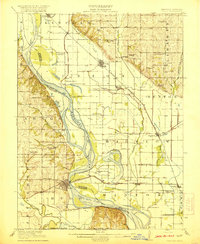 1920 Craig1920 Print · USGSThe Missouri River bottoms and neighboring bluffs come alive in this post-war survey of the Nebraska-Missouri border. Researchers can trace dozens of rural landmarks, from the streets of Rulo and Bigelow to scattered schoolhouses like Brush College School and Idlewild School.5 unique versions available
 - 1955 Map of Nebraska City, 1967 Print
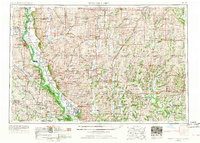 1955 Nebraska City1967 Print · USGSThe four-state region surrounding the Missouri River valley appears here in the mid-1950s, a landscape of rail-dependent market towns and rural school districts. Genealogists can locate family landmarks like the Rock Bluff School, St Oswald Church, and the Clarinda State Hospital.3 unique versions available
 - 1957 Map of Nebraska City
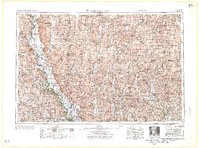 1957 Nebraska City1957 Print · USGSThe four-state junction of Nebraska, Iowa, Missouri, and Kansas comes alive in this mid-fifties survey of the Missouri River valley. Genealogists and historians can trace the rail-and-road networks connecting Nebraska City, Maryville, and the Squaw Creek National Wildlife Refuge.
 - 1958 Map of Nebraska City
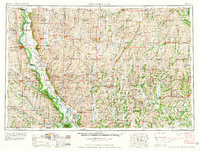 1958 Nebraska City1958 Print · USGSThe Missouri River Valley and its fertile four-state borderlands are captured here during the mid-century expansion of the regional highway and rail networks. Genealogists can trace family roots through numerous rural landmarks like Moulton School, Shady Grove Church, and the Clarinda State Hospital.
 - 1981 Map of Big Lake, 1982 Print
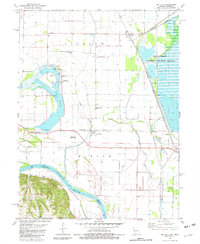 1981 Big Lake1982 Print · USGSThe Missouri River floodplain comes to life in the early 1980s, documenting the vital wetlands and small rail towns along the Nebraska border. Genealogists can trace family names at Tarkio Chapel Cem and Laukemper Cem or locate the old Bigelow station.
 - 1986 Map of Falls City
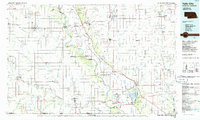 1986 Falls City1986 Print · USGSThe Missouri River borderlands of Nebraska and Missouri were a landscape of established colleges and river-bound railroads in the mid-1980s. Researchers can locate long-standing landmarks like Peru State College, the Iowa Indian Reservation, and St Johns Cem.2 unique versions available
End of results
Showing maps 1-6 of 6
Top cities near Fortescue
- Hiawatha historical maps
- Mound City historical maps
- Highland historical maps
- Oregon historical maps
- Forest City historical maps
- Craig historical maps
See more
Frequently asked questions
- What are the different types of historical maps available for Fortescue?
- What is the oldest map of Fortescue?
- Where can I purchase historical maps of Fortescue for my home or office?
- Where can I download high-res historical maps of Fortescue?
- Are there historical topographic maps available for Fortescue?
- Is there historical aerial imagery available for Fortescue?
- Where are historical maps of Fortescue sourced from?