Old Maps of Harrill Ford, Missouri
Explore 12 old maps of Harrill Ford, spanning from 1943 to today. These high-resolution historic maps reveal how streets, neighborhoods, landmarks, and natural features evolved over time — perfect for genealogy, metal detecting, research, and local history exploration.
What you can do with these maps:
- See how Harrill Ford changed over time: Compare historical maps to modern-day views to trace roads, homesites, rail lines & more.
- View detailed metadata: Each map includes creators, publishers, year, scale, and archive source.
- Overlay maps with satellite & LiDAR: Visualize the past alongside modern tools to explore terrain & human change.
- Trusted historical sources: Maps sourced from the USGS, Library of Congress, and other archives.
- Access maps your way: View online, download high-res files, or order prints for personal or research use.
Start exploring old maps of Harrill Ford to uncover forgotten places, hidden landmarks, and the deep history beneath your feet.
Harrill Ford, MO maps
(12)- 1943 Map of Drynob
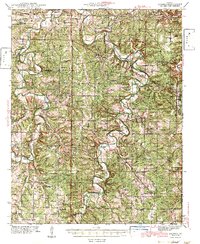 1943 Drynob1943 Print · USGSThe Ozark plateau of Laclede County is captured here in the early 1940s, just as the nearby military presence began to reshape the landscape. Genealogists and historians can trace numerous rural schools like Stockdale Sch and family cemeteries such as Similin Cem and Nicks Cem.3 unique versions available
 - 1954 Map of Springfield
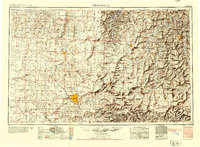 1954 Springfield1954 Print · USGSThe Missouri Ozarks are captured here during the post-war era, showing the expansion of Springfield and the surrounding river valleys. Genealogists and historians can trace local landmarks like Mount Comfort Cemetery and the Fort Leonard Wood military grounds.6 unique versions available
 - 1954 Map of Drynob, 1958 Print
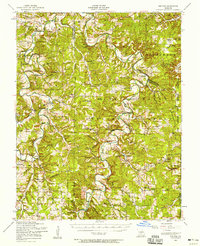 1954 Drynob1958 Print · USGSThe rural hills of Laclede County are captured here in the mid-fifties as many one-room schoolhouses were beginning to close. You can trace early Ozark river crossings at Hall Ford Bridge or locate family sites like the Stewart Cemetery and Mt Pleasant Church.2 unique versions available
 - 1954 Map of Drynob, 1959 Print
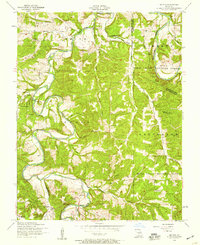 1954 Drynob1959 Print · USGSLaclede and Pulaski Counties are shown during the mid-1950s as the river-carved landscape began to see the closing of its traditional country schools. Genealogists can trace family names through the Ripley Cemetery and Brandon Cemetery or locate the old Oakland School and Abo settlement.2 unique versions available
 - 1958 Map of Springfield
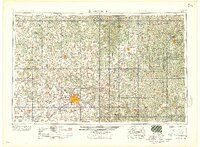 1958 Springfield1958 Print · USGSThe Missouri Ozarks are captured during the mid-century era of growth, centered on the bustling hub of Springfield. Genealogists and historians can trace family roots through numerous landmarks like Ebenezer Church, Stockton Cem, and the various county courthouses.
 - 1959 Map of Springfield
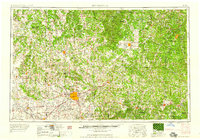 1959 Springfield1959 Print · USGSThe Missouri Ozarks are captured here during a decade of postwar growth and increasing highway connectivity. Researchers can trace the legacy of the St Louis-San Francisco RR and locate early sites in Springfield, Lebanon, and Mountain Grove.
 - 1982 Map of Lebanon, 1983 Print
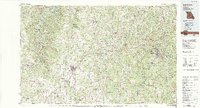 1982 Lebanon1983 Print · USGSThe Missouri Ozarks are captured in the early eighties as Interstate 44 and the St Louis-San Francisco rail line link growing towns with the Fort Leonard Wood Military Reservation. Genealogists and historians can trace family-named sites like Flatwood Church and old post offices at Sleeper and Nebo.
 - 2004 Map of Drynob, 2006 Print
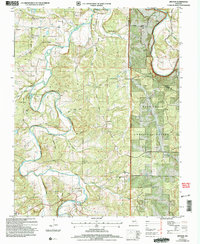 2004 Drynob2006 Print · USGSLaclede and Pulaski counties are shown at the start of the new millennium as the Ozark landscape balances forest conservation with deep-rooted rural settlements. Genealogists can locate family landmarks like Rippy Cem, Abo, and former school locations such as Oakland Sch.
 - 2012 Map of Drynob, 2012 Print
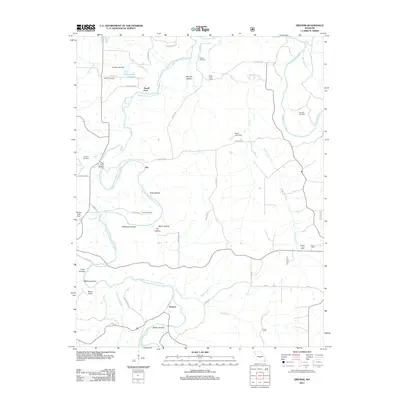 2012 Drynob2012 Print · USGSLaclede County in the early twenty-first century remains a landscape of deep hollows and historic river crossings along the Osage Fork Gasconade River. Genealogists and local historians can locate early burial sites like Similin Cemetery or trace the rural footprint of the Atoka Post Office and Abo.
 - 2015 Map of Drynob, 2015 Print
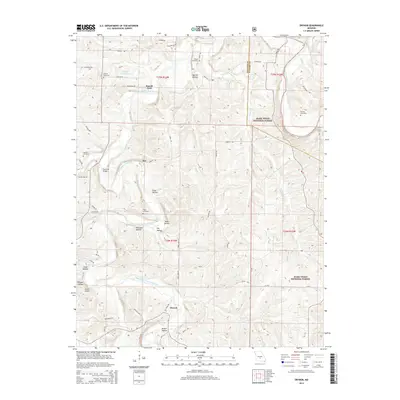 2015 Drynob2015 Print · USGSLaclede County's river-cut terrain is shown in detail during the early 2010s, centered on the winding Osage Fork Gasconade River. Genealogists and local historians can locate several burial sites like Wrinkle Cemetery and Wilson Cemetery near the communities of Abo and Drynob.
 - 2017 Map of Drynob, 2017 Print
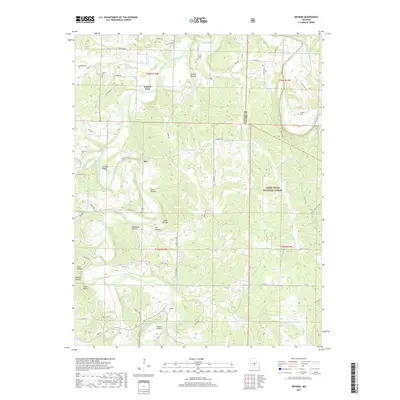 2017 Drynob2017 Print · USGSThe rural river country of Laclede and Pulaski counties is captured here in the early twenty-first century as the Ozark landscape remains centered on its waterways. Genealogists can locate family burial sites like Wrinkle Cem or trace the early paths near Abo and Harrill Ford.
 - 2021 Map of Drynob, 2021 Print
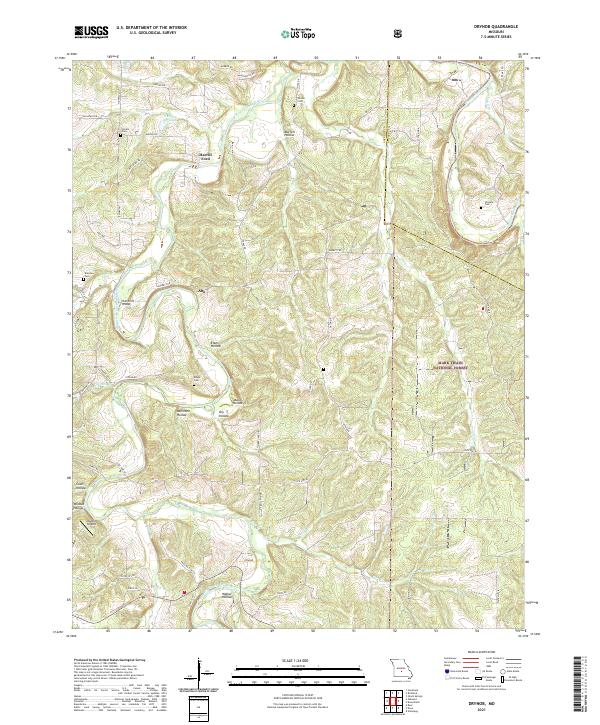 2021 Drynob2021 Print · USGSLaclede and Pulaski counties are captured in this modern survey of the Missouri Ozarks, where the river valleys dictate the location of family farms and forest boundaries. Researchers can trace rural lineages through sites like Similin Cem, the community of Abo, and old crossings at Harrill Ford.
End of results
Showing maps 1-12 of 12
Top cities near Harrill Ford
- Lebanon historical maps
- Waynesville historical maps
- Richland historical maps
- Crocker historical maps
- Evergreen historical maps
Frequently asked questions
- What are the different types of historical maps available for Harrill Ford?
- What is the oldest map of Harrill Ford?
- Where can I purchase historical maps of Harrill Ford for my home or office?
- Where can I download high-res historical maps of Harrill Ford?
- Are there historical topographic maps available for Harrill Ford?
- Is there historical aerial imagery available for Harrill Ford?
- Where are historical maps of Harrill Ford sourced from?