Old Maps of Strother, Missouri
Explore 10 old maps of Strother, spanning from 1890 to today. These high-resolution historic maps reveal how streets, neighborhoods, landmarks, and natural features evolved over time — perfect for genealogy, metal detecting, research, and local history exploration.
What you can do with these maps:
- See how Strother changed over time: Compare historical maps to modern-day views to trace roads, homesites, rail lines & more.
- View detailed metadata: Each map includes creators, publishers, year, scale, and archive source.
- Overlay maps with satellite & LiDAR: Visualize the past alongside modern tools to explore terrain & human change.
- Trusted historical sources: Maps sourced from the USGS, Library of Congress, and other archives.
- Access maps your way: View online, download high-res files, or order prints for personal or research use.
Start exploring old maps of Strother to uncover forgotten places, hidden landmarks, and the deep history beneath your feet.
Strother, MO maps
(10)- 1890 Map of Mexico
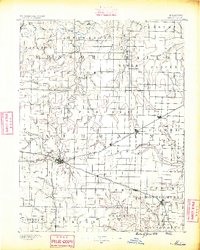 1890 Mexico1890 Print · USGSMid-Missouri was a bustling junction of rail and river in the late 1880s, where iron rails began to reshape the old prairie. Genealogists can trace family roots in early settlements like Mexico, Laddonia, and the rural community at Shamrock P.O..5 unique versions available
 - 1945 Map of Florida
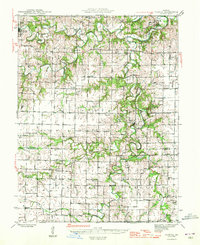 1945 Florida1945 Print · USGSThe Salt River forks in Monroe and Audrain counties defined local life in the 1940s before modern reservoirs changed the landscape. Genealogists can trace family footprints through dozens of rural landmarks like Walnut Grove Cem, Cedar Grove Ch, and Dye Sch.3 unique versions available
 - 1948 Map of Quincy
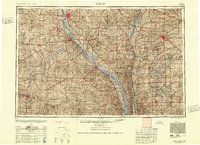 1948 Quincy1948 Print · USGSThe Mississippi and Illinois River valleys are captured at a post-war crossroads as rail and river travel met the expanding highway system. Genealogists can trace family settlements from Quincy to Hannibal and smaller towns like Vandalia and Jerseyville.2 unique versions available
 - 1956 Map of Quincy, 1967 Print
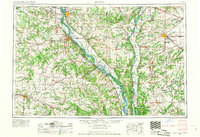 1956 Quincy1967 Print · USGSThe river and rail corridors of the Illinois-Missouri border are documented here during the mid-1950s. Researchers can trace historic river landings and regional transit hubs from Quincy and Hannibal to smaller settlements like Meredosia and Roodhouse.3 unique versions available
 - 1972 Map of Paris East, 1974 Print
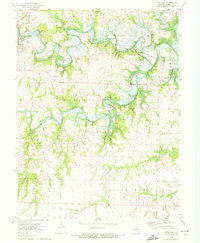 1972 Paris East1974 Print · USGSMonroe County in the early seventies shows the river valleys before the full expansion of the reservoir. Researchers can locate family landmarks like Walnut Grove Cem, trace the Norfolk and Western rail line, or find the small settlement of Strother.
 - 1986 Map of Mexico
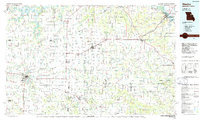 1986 Mexico1986 Print · USGSEast Central Missouri in the mid-eighties shows a landscape of steady agricultural towns and the expansive waters of Mark Twain Lake. Genealogists and historians can trace rail-side communities like Laddonia and Wellsville or locate family markers at Elwood Cem.2 unique versions available
 - 2012 Map of Paris East, 2012 Print
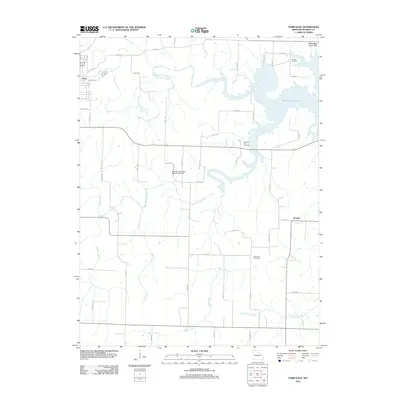 2012 Paris East2012 Print · USGSMonroe County terrain at the start of the 2010s shows the extensive reach of Mark Twain Lake into the Salt River valley. Researchers can trace rural lineages through the Scobee Cemetery, Pleasant Hill Cemetery, and the tiny settlement of Strother.
 - 2015 Map of Paris East, 2015 Print
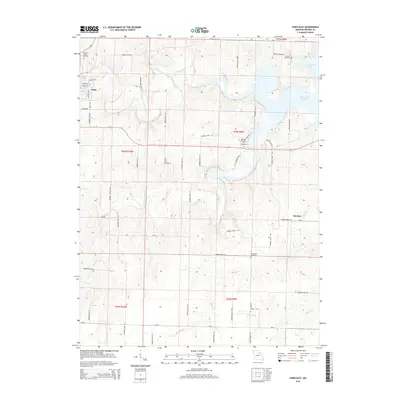 2015 Paris East2015 Print · USGSMonroe County is shown here as it appeared in the early twenty-first century, centered on the confluence of the Salt River forks. Genealogists and local historians can locate several rural burial grounds, such as Scobee Cemetery, and trace the settlement of Strother or the eastern streets of Paris.
 - 2017 Map of Paris East, 2017 Print
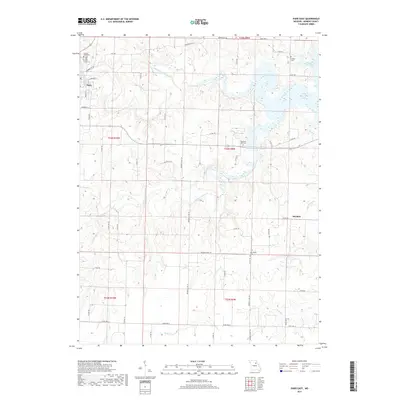 2017 Paris East2017 Print · USGSMonroe County's river valleys and the emerging waters of the Mark Twain Lake reservoir define this area in the early twenty-first century. Researchers can locate ancestral sites at Walnut Grove Cem or trace the rural settlement of Strother near the banks of Jordan Br.
 - 2021 Map of Paris East, 2021 Print
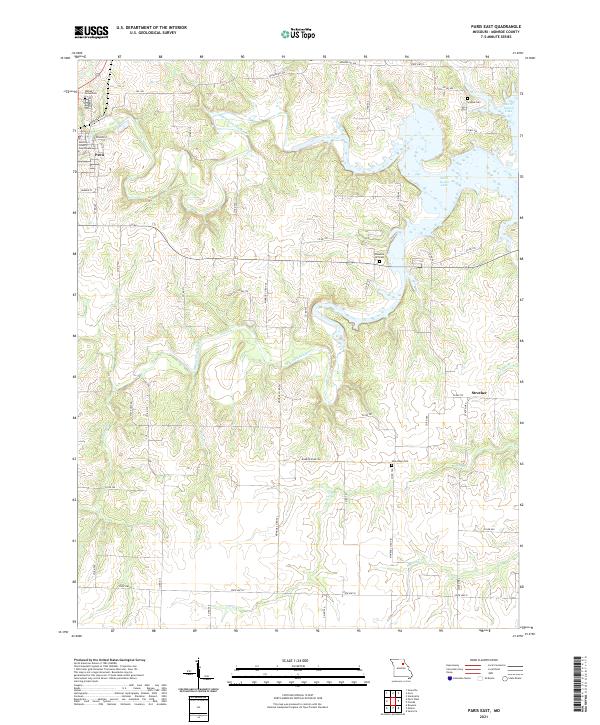 2021 Paris East2021 Print · USGSMonroe County's river valleys meet the expanse of the reservoir in this 2021 study of the Missouri countryside. Researchers can locate the Monroe County Courthouse in Paris and trace rural family history through sites like Scobee Cem and Pleasant Hill Cem.
End of results
Showing maps 1-10 of 10
Top cities near Strother
- Mexico historical maps
- Centralia historical maps
- Monroe City historical maps
- Paris historical maps
- Perry historical maps
- Rush Hill historical maps
See more
Frequently asked questions
- What are the different types of historical maps available for Strother?
- What is the oldest map of Strother?
- Where can I purchase historical maps of Strother for my home or office?
- Where can I download high-res historical maps of Strother?
- Are there historical topographic maps available for Strother?
- Is there historical aerial imagery available for Strother?
- Where are historical maps of Strother sourced from?