1900s (20th Century) Maps of Hardin, Montana
Explore 7 historic maps of Hardin from the 1900s (20th Century). These maps offer a rare glimpse into what life looked like during the 1900s — showing old roads, neighborhoods, homes, and landmarks that have changed or disappeared over time.
Whether you're researching your family's past, planning a metal detecting trip, or studying how Hardin's landscape evolved across the 1900s, these high-resolution maps are a powerful tool for exploring the history of this region.
- Focus on a specific era: All maps on this page are from the 1900s, giving you a focused view of this time period.
- See what’s changed: Compare century-old streets, trails, and buildings to today's modern landscape using overlays and satellite layers.
- Research with precision: Use these maps for genealogy, historical research, land use analysis, or educational projects.
- View, download, or print: Maps are fully viewable online in high resolution, and can be downloaded or printed for your own records.
Start exploring Hardin's history through authentic maps from the 1900s. This is your window into the past.
Hardin, MT maps
(7)- 1954 Map of Hardin, 1964 Print
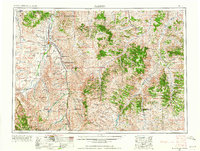 1954 Hardin1964 Print · USGSSoutheastern Montana is documented here during the mid-fifties, showing the vast tribal lands and historic battle sites before modern highway expansion. Researchers can trace the Chicago Burlington and Quincy rail line through Hardin or locate the Custer National Cemetery and Museum.2 unique versions available
 - 1957 Map of Hardin
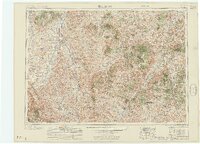 1957 Hardin1957 Print · USGSSoutheastern Montana in the mid-fifties reveals a landscape shaped by tribal lands and the historic Bighorn river valleys. Researchers can trace the Chicago Burlington and Quincy RR through Hardin and locate the National Cemetery and Custer Battlefield Monument.
 - 1958 Map of Hardin
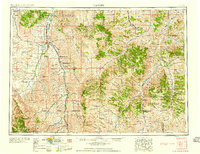 1958 Hardin1958 Print · USGSSoutheastern Montana in the mid-fifties presents a landscape defined by significant tribal lands and national monuments. Researchers can trace the geography of the Little Bighorn at Custer Battlefield National Monument and locate settlements like Lame Deer and Birney.
 - 1960 Map of Ninemile Point, 1962 Print
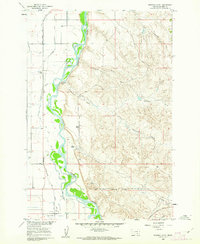 1960 Ninemile Point1962 Print · USGSBig Horn County in the early sixties reveals a landscape of industrial agriculture and river-valley ranching. Genealogists and historians can trace family properties like Miller Ranch, locate the Nine Mile Sch, and study the rail-side Sugar Refinery at Whitman.2 unique versions available
 - 1960 Map of Walker Hill, 1962 Print
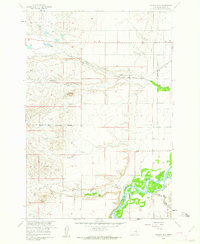 1960 Walker Hill1962 Print · USGSThe Bighorn River valley in the early sixties was a landscape of intensive irrigation and rail transport. Researchers can trace local landmarks like Walker Hill, the Chicago Burlington and Quincy railroad, and the Two Leggins Canal.3 unique versions available
 - 1960 Map of Hardin, 1962 Print
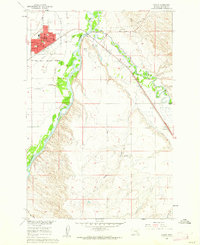 1960 Hardin1962 Print · USGSHardin and the Bighorn River valley are shown here in the early sixties, a time of established irrigation and rail transport. Researchers can locate the Historical Monument (Site of Fort Custer), trace the Farmers Canal, and find local landmarks like St Joseph Ch.3 unique versions available
 - 1981 Map of Hardin
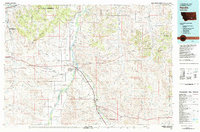 1981 Hardin1981 Print · USGSBig Horn County at the start of the eighties shows a landscape shaped by the Bighorn River and deep historical ties. Researchers can trace the grounds of Custer Battlefield National Monument or find small rail points like Toluca and Crow Agency.
End of results
Showing maps 1-7 of 7
Top cities near Hardin
Frequently asked questions
- What are the different types of historical maps available for Hardin?
- What is the oldest map of Hardin?
- Where can I purchase historical maps of Hardin for my home or office?
- Where can I download high-res historical maps of Hardin?
- Are there historical topographic maps available for Hardin?
- Is there historical aerial imagery available for Hardin?
- Where are historical maps of Hardin sourced from?