Old Maps of Lippard, Montana
Explore 12 old maps of Lippard, spanning from 1890 to today. These high-resolution historic maps reveal how streets, neighborhoods, landmarks, and natural features evolved over time — perfect for genealogy, metal detecting, research, and local history exploration.
What you can do with these maps:
- See how Lippard changed over time: Compare historical maps to modern-day views to trace roads, homesites, rail lines & more.
- View detailed metadata: Each map includes creators, publishers, year, scale, and archive source.
- Overlay maps with satellite & LiDAR: Visualize the past alongside modern tools to explore terrain & human change.
- Trusted historical sources: Maps sourced from the USGS, Library of Congress, and other archives.
- Access maps your way: View online, download high-res files, or order prints for personal or research use.
Start exploring old maps of Lippard to uncover forgotten places, hidden landmarks, and the deep history beneath your feet.
Lippard, MT maps
(12)- 1890 Map of Fort Benton
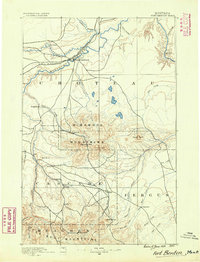 1890 Fort Benton1890 Print · USGSUpper Missouri river country was transforming in the late nineteenth century as rail lines and ranching settlements expanded across the plains. Genealogists and historians can trace early land routes between Fort Benton, Stanford, and the mining district around Clendenin.
 - 1892 Map of Fort Benton
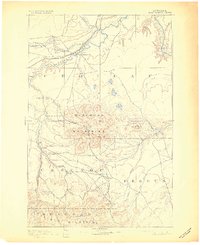 1892 Fort Benton1892 Print · USGSUpper Missouri River country in the late nineteenth century shows the transition from river commerce to the iron horse. Genealogists and historians can trace early settlements like Stanford and Fort Benton alongside the St Paul Minneapolis and Manitoba Railroad.
 - 1897 Map of Fort Benton
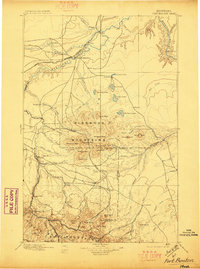 1897 Fort Benton1897 Print · USGSUpper Missouri River territory is charted here during its transition from a river-based economy to a rail-and-ranching frontier. Researchers can trace the early layouts of Fort Benton and Stanford, or locate remote sites like Barker Mtn and Riceville.4 unique versions available
 - 1953 Map of Loma East, 1954 Print
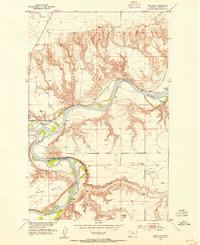 1953 Loma East1954 Print · USGSChouteau County in the early fifties shows the vital junction of the Missouri and Marias Rivers before the modern era. Researchers can trace the river economy through labels like Loma Ferry, the Great Northern rail stops at Chappell, and the West Wayside School.2 unique versions available
 - 1954 Map of Great Falls
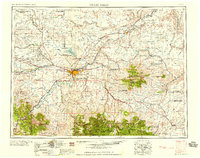 1954 Great Falls1954 Print · USGSThe Missouri River valley in the mid-1950s is shown at a time of significant industrial and military growth. Genealogists and historians can locate early schools and rail stops like Tiger Butte Community Center, Fort Benton, and the Anaconda Wire Plant.4 unique versions available
 - 1957 Map of Great Falls
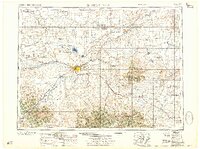 1957 Great Falls1957 Print · USGSMontana's central plains and mountain foothills are captured here in the mid-fifties, showing the hub of Great Falls and the surrounding grain-shipping towns. Genealogists can trace family roots through the rail sidings of the Great Northern and small rural communities like Sand Coulee or Fort Benton.
 - 1984 Map of Fort Benton
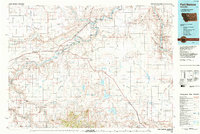 1984 Fort Benton1984 Print · USGSMid-century Montana life revolves around the river forks and rail lines in the years following the designation of the Wild and Scenic River. You can trace the Burlington Northern lines through Fort Benton, locate the Loma Ferry, and identify high points like Highwood Baldy or Square Butte.
 - 2011 Map of Loma East, 2011 Print
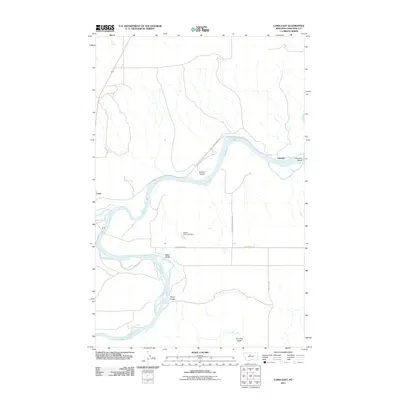 2011 Loma East2011 Print · USGSChouteau County's river-driven landscape is captured here in the early twenty-first century, centered on the historic Missouri River corridor. Genealogists and researchers can trace local landmarks like Loma Ferry, the settlement at Lippard, and the high ground of Churchill Butte.
 - 2014 Map of Loma East, 2014 Print
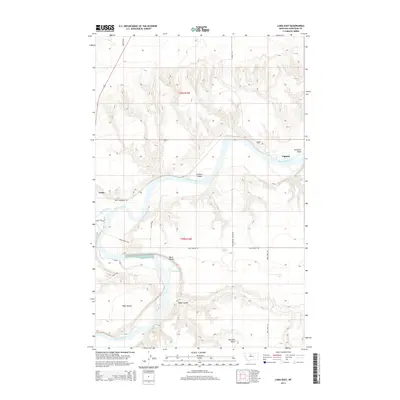 2014 Loma East2014 Print · USGSThe confluence of the Missouri and Marias Rivers defines this Chouteau County landscape as it appeared in the early 21st century. Researchers can trace the river's path from the Loma settlement and Fort Piegan to landmarks like Black Bluff Rapids and Rowe Bayou.
 - 2017 Map of Loma East, 2017 Print
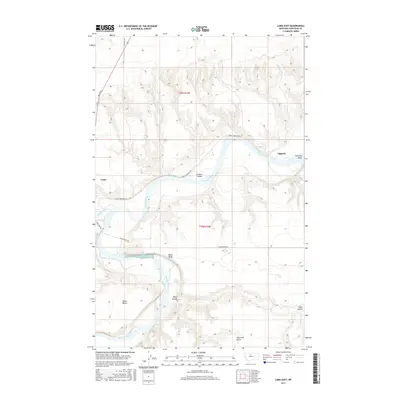 2017 Loma East2017 Print · USGSChouteau County in the early twenty-first century remains a place where the river is the primary architect of the land. Researchers can trace the junction of the Marias River and Missouri River, alongside landmarks like Rowe Bayou and the high Rowe Bench.
 - 2020 Map of Loma East, 2020 Print
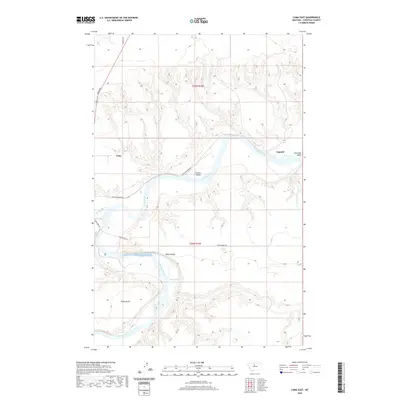 2020 Loma East2020 Print · USGSChouteau County's river valleys and high benches are documented here in the early twenty-first century. Researchers can trace the river-based geography of Loma and Lippard, locating landforms like Black Bluff Rapids and the historic route of Loma Ferry Rd.
 - 2024 Map of Loma East, 2024 Print
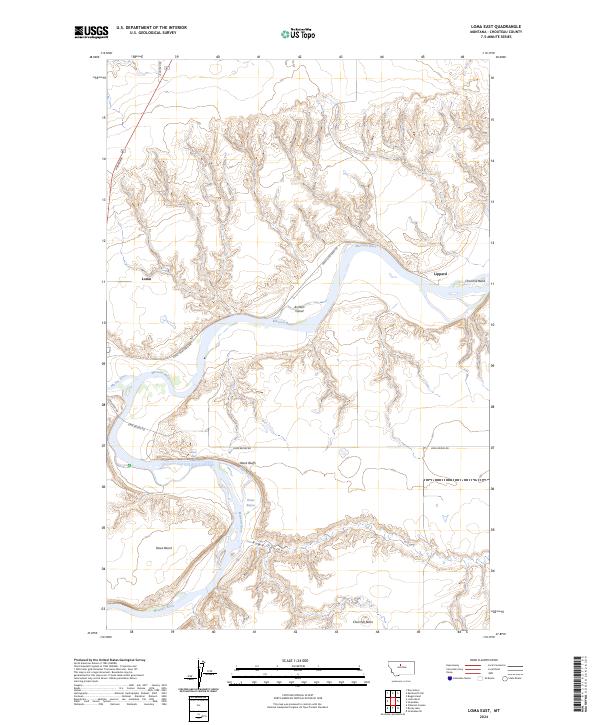 2024 Loma East2024 Print · USGSChouteau County's river valleys come into focus in this contemporary survey of the Missouri-Marias confluence. Researchers can trace the river economy through landmarks like Loma Ferry Rd, the settlement of Lippard, and the sprawling Rowe Bench.
End of results
Showing maps 1-12 of 12
Frequently asked questions
- What are the different types of historical maps available for Lippard?
- What is the oldest map of Lippard?
- Where can I purchase historical maps of Lippard for my home or office?
- Where can I download high-res historical maps of Lippard?
- Are there historical topographic maps available for Lippard?
- Is there historical aerial imagery available for Lippard?
- Where are historical maps of Lippard sourced from?