Old Maps of Varney, Montana for Genealogy
Trace your family roots with 17 historic maps of Varney. These high-res maps reveal old neighborhoods, homesites, landmarks, and streets — helping you uncover where your ancestors lived and how the area evolved over time.
- Explore historic neighborhoods: Identify where your relatives may have lived in the 1800s or 1900s.
- Compare maps over time: Trace the changes in streets, buildings, and landmarks for multi-generational research.
- Perfect for genealogy & ancestry research: Used by family historians and researchers to map out lineage and migration.
These maps are an incredible resource for exploring your personal connection to Varney's past.
Varney, MT maps
(17)- 1888 Map of Three Forks
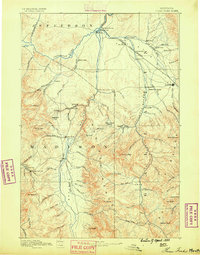 1888 Three Forks1888 Print · USGSSouthwestern Montana was a land of mining camps and river junctions in the late nineteenth century, as the railroad began to connect established valleys. Genealogists can trace family roots through pioneer settlements like Virginia City, Salesville, and Spring Hill, or locate early crossings at Barton's Bridge.
 - 1894 Map of Three Forks
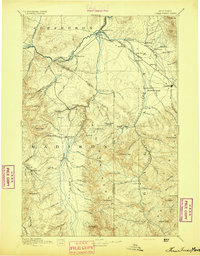 1894 Three Forks1894 Print · USGSSouthwestern Montana thrives along the river forks and rail lines during the mid-1880s. Genealogists and historians can trace early town sites like Pony, Logan, and Salesville while locating river crossings such as Fly's Bridge and Shedds Bridge.
 - 1895 Map of Three Forks
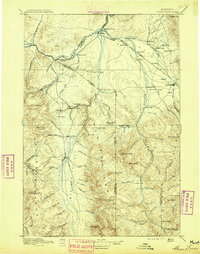 1895 Three Forks1895 Print · USGSSouthern Montana was a landscape of emerging rail towns and gold-country gulches during the mid-1890s. Genealogists and historians can trace the early footprints of Bozeman, locate Guns Ranch, and follow the Northern Pacific Railroad through Three Forks.5 unique versions available
 - 1947 Map of Bozeman, 1948 Print
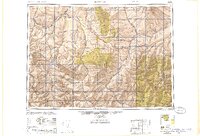 1947 Bozeman1948 Print · USGSBozeman and the surrounding mountain ranges are captured here just after the war, showing the vital rail and river networks of southwestern Montana. Genealogists and historians can trace routes to early settlements like Virginia City, Gallatin Gateway, and the mountain community of Jardine.
 - 1948 Map of Bozeman, 1951 Print
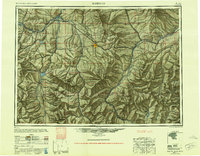 1948 Bozeman1951 Print · USGSSouthern Montana in the late 1940s is shown as a high-country crossroads of rail lines and river headwaters. Genealogists and historians can trace old town sites like Virginia City and McLeod alongside the Northern Pacific and Milwaukee Road railroads.
 - 1949 Map of Varney, 1952 Print
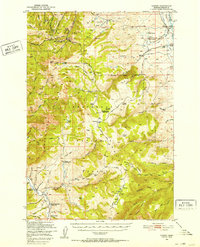 1949 Varney1952 Print · USGSMadison County ranching and high-altitude mining define this post-war landscape as it transitioned into modern land management. Researchers can trace historic mineral claims like the Marietta Mine and Summit Mine or locate family ranch holdings including the Rankin Ranch and Hudson Ranch.3 unique versions available
 - 1955 Map of Bozeman
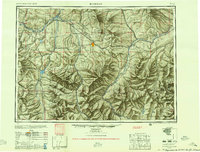 1955 Bozeman1955 Print · USGSBozeman and the upper Missouri River headwaters are captured here during the mid-fifties, showing the vital rail and river networks of southwestern Montana. Local historians can trace the routes of the Northern Pacific railroad through Livingston and locate smaller settlements like Trident, Anceney, and Jardine.
 - 1958 Map of Bozeman, 1968 Print
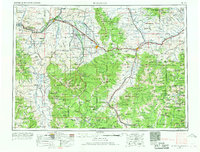 1958 Bozeman1968 Print · USGSThe Gallatin and Madison River valleys are captured here in the late fifties, showing the region's transition into a modern mountain hub. Genealogists and historians can trace the paths of the Northern Pacific RR, locate the Anceney School, and see the early layout of Bozeman.3 unique versions available
 - 1965 Map of Bozeman
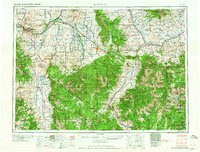 1965 Bozeman1965 Print · USGSSouthwestern Montana's river valleys and mountain ranges appear in detail during the early 1960s. Genealogists and historians can trace rail-era settlements like Trident, locate the Anceney School, and see the early footprint of Montana State College.
 - 1988 Map of Varney, 1989 Print
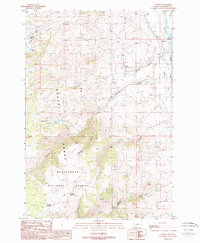 1988 Varney1989 Print · USGSThe Madison River valley and Gravelly Range are captured in the late eighties, documenting the area's transition from riverbed to forest. Researchers can trace land use through the Ennis National Fish Hatchery, the Varney settlement, and Axolotl Lake.
 - 1989 Map of Ennis, 1990 Print
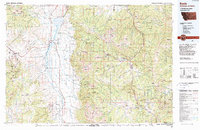 1989 Ennis1990 Print · USGSMadison County ranching and the rise of mountain tourism define this region during the 1980s. Genealogists and historians can trace the development of Ennis, find historic mining sites like the Missouri Mine, or locate the settlements at Virginia City and McAllister.
 - 1997 Map of Varney, 2002 Print
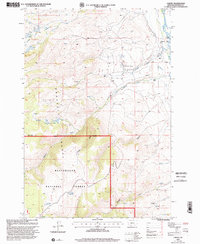 1997 Varney2002 Print · USGSThe Madison River valley and Gravelly Range come alive in the late 1990s as this survey documents ranching outposts and high-country waters. Researchers can locate family landmarks like Kent Ranch and Woodward Place alongside the Ennis National Fish Hatchery.
 - 2011 Map of Varney, 2011 Print
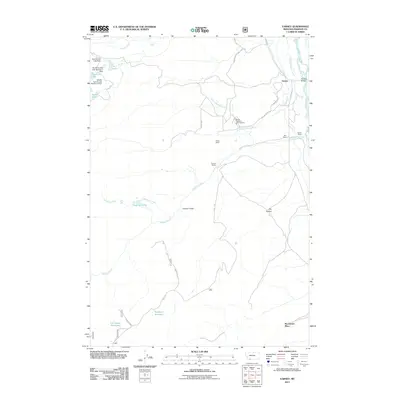 2011 Varney2011 Print · USGSThe Madison River valley and its high-country ranch lands are preserved in this 2011 map of the Varney area. Researchers can trace historic family holdings like the Rankin Ranch and Woodward Place or locate the Ennis National Fish Hatchery.
 - 2014 Map of Varney, 2014 Print
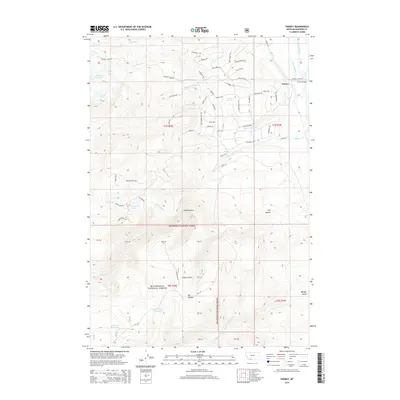 2014 Varney2014 Print · USGSThe Madison River valley and the surrounding high timberlands are documented here during the early twenty-first century. Researchers can trace forest access routes like Cow Camp Trl and Varney Rd to landmarks such as Axolotl Lake and the Varney Bridge.
 - 2017 Map of Varney, 2017 Print
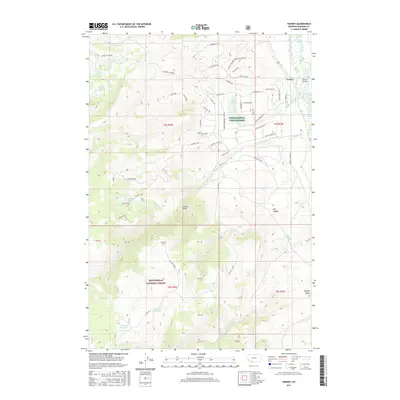 2017 Varney2017 Print · USGSMadison County ranching and river life are captured here in the late twenty-teens. Trace the Madison River through the valley and locate the small settlement of Varney, showing how these waterways and modest outposts anchor this high-elevation landscape.
 - 2020 Map of Varney, 2020 Print
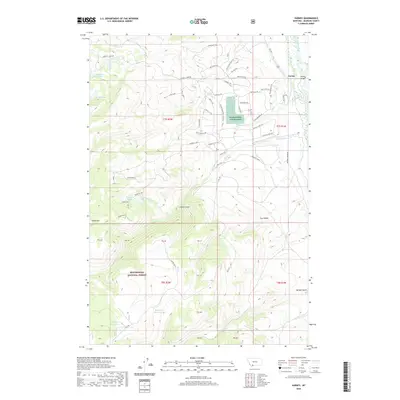 2020 Varney2020 Print · USGSMadison County's river valley and high timberline are captured here in recent years, showing the intersection of ranching land and federal forest. Researchers can trace water sources from Blaine Spring to the Ennis National Fish Hatchery and Axolotl Lake.
 - 2024 Map of Varney, 2024 Print
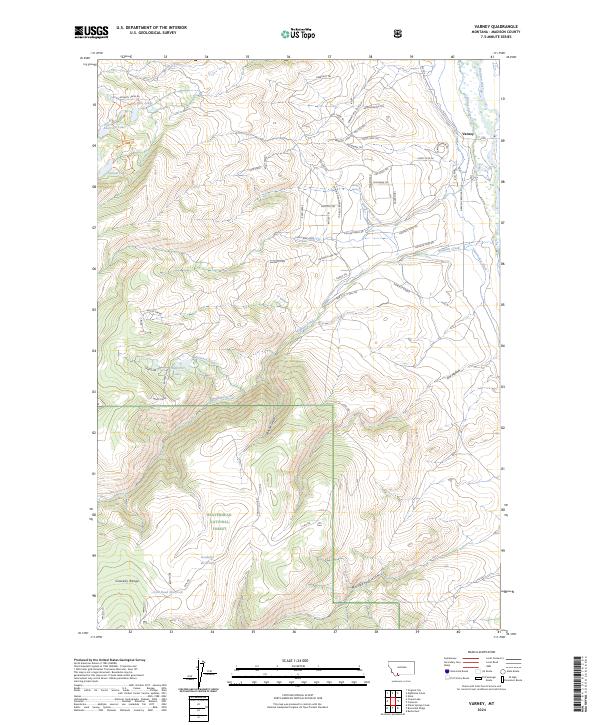 2024 Varney2024 Print · USGSMadison County's river-bottom lands and high forest ridges come into sharp focus in this recent study of the area south of Ennis. Researchers can trace the Madison River floodplain, the infrastructure of the Ennis National Fish Hatchery, and remote landmarks like Boiler Spring.
End of results
Showing maps 1-17 of 17
Top cities near Varney
Frequently asked questions
- What are the different types of historical maps available for Varney?
- What is the oldest map of Varney?
- Where can I purchase historical maps of Varney for my home or office?
- Where can I download high-res historical maps of Varney?
- Are there historical topographic maps available for Varney?
- Is there historical aerial imagery available for Varney?
- Where are historical maps of Varney sourced from?