1900s (20th Century) Maps of St. Johns Precinct, Nebraska
Explore 14 historic maps of St. Johns Precinct from the 1900s (20th Century). These maps offer a rare glimpse into what life looked like during the 1900s — showing old roads, neighborhoods, homes, and landmarks that have changed or disappeared over time.
Whether you're researching your family's past, planning a metal detecting trip, or studying how St. Johns Precinct's landscape evolved across the 1900s, these high-resolution maps are a powerful tool for exploring the history of this region.
- Focus on a specific era: All maps on this page are from the 1900s, giving you a focused view of this time period.
- See what’s changed: Compare century-old streets, trails, and buildings to today's modern landscape using overlays and satellite layers.
- Research with precision: Use these maps for genealogy, historical research, land use analysis, or educational projects.
- View, download, or print: Maps are fully viewable online in high resolution, and can be downloaded or printed for your own records.
Start exploring St. Johns Precinct's history through authentic maps from the 1900s. This is your window into the past.
St. Johns Precinct, NE maps
(14)- 1901 Map of Elk Point
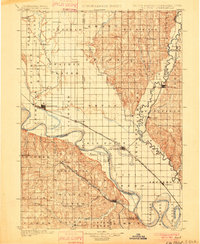 1901 Elk Point1901 Print · USGSThe tri-state borderlands of South Dakota, Nebraska, and Iowa are captured here at the turn of the century during the peak of the steam rail era. Researchers can trace the original paths of the Chicago Milwaukee and St. Paul Ry. and locate early settlements like Spirit Mound, Newcastle, and Burbank.
 - 1907 Map of Elk Point
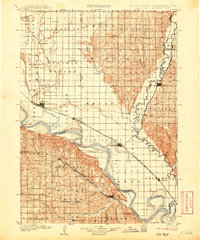 1907 Elk Point1907 Print · USGSThe tri-state borderlands of South Dakota, Nebraska, and Iowa are shown here at the start of the century, centered on the Missouri and Big Sioux river valleys. Researchers can trace the river's old path through oxbows like Mc Cook Lake and locate early river crossings including Vermilion Ferry and Ponca Ferry.6 unique versions available
 - 1955 Map of Sioux City, 1959 Print
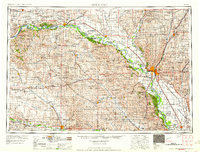 1955 Sioux City1959 Print · USGSThe Missouri River valley in the mid-fifties is captured here during a time of major engineering and social transition. Genealogists and historians can trace the foundations of Gavins Point Dam, tribal boundaries on the Santee Sioux Indian Reservation, and local landmarks like the Norfolk State Hospital.4 unique versions available
 - 1958 Map of Sioux City
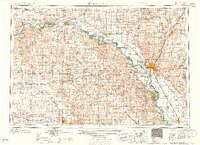 1958 Sioux City1958 Print · USGSThe Missouri River valley in the late fifties was a bustling intersection of tribal lands, rail corridors, and river towns. Genealogists can trace family roots through specific rural sites like Daisy Valley School, St Johns Church and School, and Yankton State Hospital.
 - 1959 Map of Sioux City
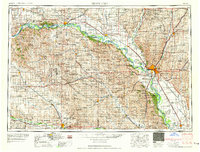 1959 Sioux City1959 Print · USGSThe tri-state region surrounding the Missouri River is captured here in the late fifties, showing the convergence of Nebraska, South Dakota, and Iowa. Researchers can trace rural lineages through numerous country schoolhouses like Cemetery School and the many numbered Washington School districts.
 - 1963 Map of Jefferson, 1964 Print
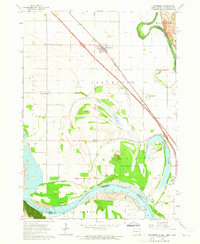 1963 Jefferson1964 Print · USGSThe borderlands of South Dakota, Iowa, and Nebraska are captured in the early sixties as the interstate system arrived. Genealogists can trace family footprints at Civil Bend Cem, Montagne Sch, and the old rail line of the Milwaukee Road.4 unique versions available
 - 1964 Map of Ponca, 1966 Print
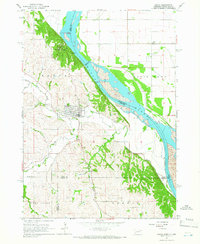 1964 Ponca1966 Print · USGSThe Missouri River bluffs of Northeast Nebraska are captured here in the mid-1960s, showing the intersection of river life and upland farming. Researchers can find country schools like Allard Sch and landmarks including Lookout Hill and Ponca Cem.2 unique versions available
 - 1967 Map of Waterbury, 1969 Print
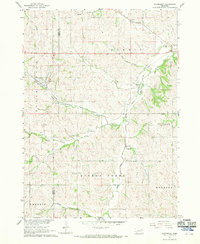 1967 Waterbury1969 Print · USGSDixon and Dakota Counties are shown in the late sixties as the local rail and agricultural networks remained central to rural life. Family historians can trace the exact locations of rural schools and cemeteries, including Way Sch, St Johns Ch, and Woods Cem.
 - 1967 Map of Jackson, 1969 Print
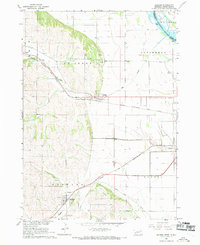 1967 Jackson1969 Print · USGSThe tri-state border region of Nebraska, South Dakota, and Iowa is captured in the late sixties, where the Big Sioux meets the Missouri River. Trace rail history and family sites through Jackson and Hubbard, including St Johns Cem.2 unique versions available
 - 1986 Map of Sioux City North
 1986 Sioux City North1986 Print · USGSThe tri-state borderlands of Iowa, South Dakota, and Nebraska are captured here in the mid-eighties as the region's agricultural and academic centers thrived. Researchers can trace historic rail lines like the Illinois Central Gulf and locate landmarks from Briar Cliff College to the heights of Spirit Mound.2 unique versions available
 - 1986 Map of Sioux City South
 1986 Sioux City South1986 Print · USGSThe tri-state borderlands of Iowa, Nebraska, and South Dakota come into focus in the mid-1980s as a landscape of tribal lands and rail corridors. Researchers can trace the extensive boundaries of the Winnebago Indian Reservation and find local landmarks like Morningside College and Martin Field.2 unique versions available
 - 1993 Map of Jackson, 1995 Print
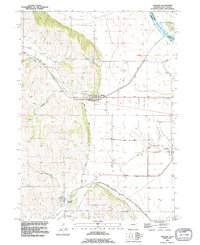 1993 Jackson1995 Print · USGSDakota County, Nebraska, is captured here in the early nineties as the communities of Jackson and Hubbard thrived alongside the river bluffs. Researchers can trace family sites at St Johns Cem and St Marys Cem or locate old transit lines along the Old Grade and Knox Boulevard.
 - 1994 Map of Ponca
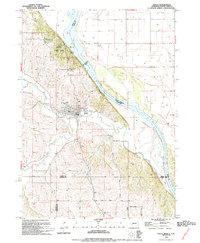 1994 Ponca1994 Print · USGSPonca and the Missouri River bluffs are captured in detail during the early 1990s as the town expanded near the state park. Genealogists and local historians can trace family plots in Ponca Cem and Elmwood Cem or locate old landmarks like the Gaging Sta.
 - 1994 Map of Jefferson, 1995 Print
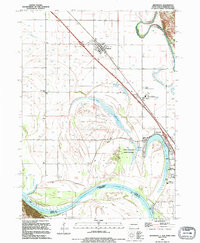 1994 Jefferson1995 Print · USGSThe tri-state borderlands along the Missouri River come alive in this mid-nineties survey of Union County. Genealogists and local historians can trace the foundations of Jefferson and North Sioux City, alongside landmarks like St Peters Cem and the Mc Cook Sch.
End of results
Showing maps 1-14 of 14
Top cities near St. Johns Precinct
- Sioux City historical maps
- South Sioux City historical maps
- Dakota Dunes historical maps
- North Sioux City historical maps
- Elk Point historical maps
- Dakota City historical maps
See more
Top neighborhoods of St. Johns Precinct
Frequently asked questions
- What are the different types of historical maps available for St. Johns Precinct?
- What is the oldest map of St. Johns Precinct?
- Where can I purchase historical maps of St. Johns Precinct for my home or office?
- Where can I download high-res historical maps of St. Johns Precinct?
- Are there historical topographic maps available for St. Johns Precinct?
- Is there historical aerial imagery available for St. Johns Precinct?
- Where are historical maps of St. Johns Precinct sourced from?