Old Maps of Monroe, New Hampshire for Hiking & Exploration
Hike through history with 39 historic maps of Monroe. Explore old trails, ghost towns, and forgotten backroads — perfect for outdoor adventurers and local explorers.
- Rediscover forgotten places: Map out old mining camps, roads, and footpaths that no longer exist on modern maps.
- Layer with modern tools: Combine with LiDAR or satellite views to plan hikes through historical terrain.
- Made for exploration: Popular among hikers, overlanders, and local history lovers.
Use these maps to find adventure and explore the hidden past of Monroe.
Monroe, NH maps
(39)- 1931 Map of Littleton
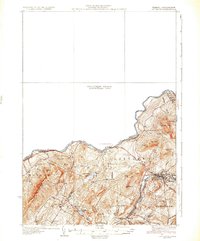 1931 Littleton1931 Print · USGSUpper Connecticut River Valley life is recorded here in the early thirties, just as aerial photography began to modernize topographic surveying. Genealogists can locate family-named hills and district schools like the Walker Hill Sch and Gilmanton Sch.2 unique versions available
 - 1931 Map of Woodsville
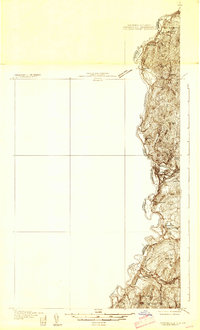 1931 Woodsville1931 Print · USGSThe Upper Connecticut River Valley in the early 1930s reveals a landscape of riverside rail towns and debated state boundaries. Genealogists and historians can trace the foundations of local life through labels like the North Monroe Ch, Blackmount Sta, and the County Poor Farm.
 - 1932 Map of Littleton
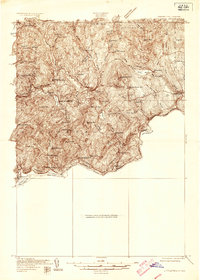 1932 Littleton1932 Print · USGSThe Upper Connecticut River valley and the hills of Vermont's Northeast Kingdom appear here in the early thirties. Trace family connections through numerous rural schoolhouses like Sugar Hill Sch or locate the old Kirby Mtn Quarries and the original path of the Maine Central Railroad.3 unique versions available
 - 1935 Map of Woodsville
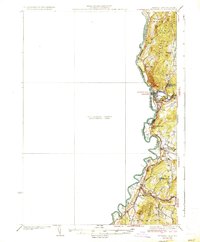 1935 Woodsville1935 Print · USGSThe Connecticut River valley in the mid-1930s is captured here in detail along the Vermont-New Hampshire border. Researchers can trace the legacy of local institutions and transport at the County Poor Farm, the Blackmount Sta rail stop, and The Oxbow.5 unique versions available
 - 1935 Map of Littleton
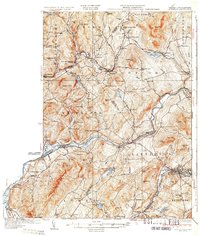 1935 Littleton1935 Print · USGSThe Upper Connecticut River Valley comes alive in the mid-1930s, showing the borderlands of Vermont and New Hampshire during a period of hydroelectric and rail expansion. Researchers can trace the legacy of local education and industry through sites like the Kirby Mtn Quarries, the Frank D. Comerford Hydro-Electric Plant, and the Slate Ledge Sch.4 unique versions available
 - 1938 Map of St. Johnsbury
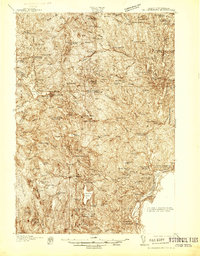 1938 St. Johnsbury1938 Print · USGSNorthern Vermont in the late thirties reveals a landscape of rail-connected valley towns and upland farming districts. Locate old schoolhouses like Stark Sch, trace the St Johnsbury and Lake Champlain RR, and find family landmarks near Harvey Lake.
 - 1941 Map of Woodsville
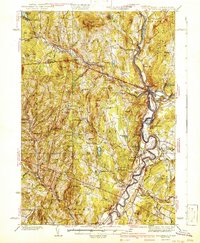 1941 Woodsville1941 Print · USGSThe Connecticut River valley was a bustling corridor of granite quarries and rail junctions just before the war. You can trace the legacy of local industry and education through landmarks like Gibson Quarry, the County Poor Farm, and Town Farm Sch.4 unique versions available
 - 1943 Map of St. Johnsbury
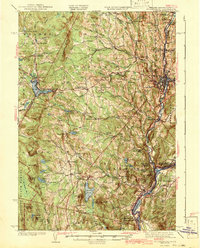 1943 St. Johnsbury1943 Print · USGSUpper Vermont and New Hampshire communities thrive along the Connecticut and Passumpsic rivers during the early war years. Genealogists can trace family names at Walden Four Corners, find rural schoolhouses like Stanton Sch, or locate the Goslants Mill site.3 unique versions available
 - 1949 Map of St. Johnsbury, 1957 Print
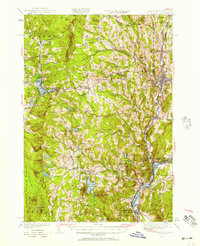 1949 St. Johnsbury1957 Print · USGSCaledonia County and the upper Connecticut River valley are captured here just after the war, showing a landscape defined by rail and river. Genealogists and local historians can locate early landmarks like Walden Four Corners, the Frank D Comerford Hydro-electric Plant, and the historic Hazen Road.3 unique versions available
 - 1950 Map of Lake Champlain
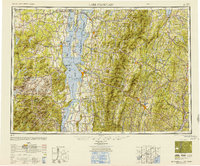 1950 Lake Champlain1950 Print · USGSThe Lake Champlain valley and its surrounding peaks are captured in detail during the late 1940s, showing the vital rail and road connections between New York and Vermont. Researchers can trace the routes of the Central Vermont Railway or locate old industrial centers like Mineville and Witherbee.2 unique versions available
 - 1950 Map of Lewiston
 1950 Lewiston1950 Print · USGSThe Maine and New Hampshire borderlands come alive in this post-war survey of the White Mountains and Androscoggin valley. Genealogists and historians can trace rail lines like the Maine Central Railroad and find high-altitude landmarks from Mount Washington to Bretton Woods.2 unique versions available
 - 1956 Map of Lewiston, 1975 Print
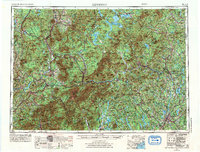 1956 Lewiston1975 Print · USGSThe Northern New England interior is documented here in the mid-fifties, from the industrial Androscoggin River to the high peaks of the White Mountains. Trace the Grand Trunk Railway through mountain passes or locate family landmarks near Sabbathday Lake and Bretton Woods.
 - 1958 Map of Lake Champlain
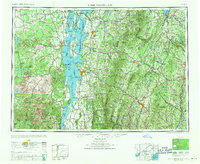 1958 Lake Champlain1958 Print · USGSThe Champlain Valley and surrounding high peaks are captured here in the late fifties, showcasing the cross-border region from the Adirondacks to the Green Mountains. Researchers can trace historic rail routes like the Rutland Railway or locate old valley settlements such as Keeseville and Vergennes.2 unique versions available
 - 1961 Map of Lewiston
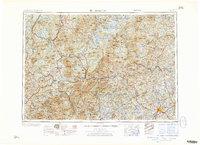 1961 Lewiston1961 Print · USGSWestern Maine and the White Mountains appear here during the early sixties, showing the industrial river towns and vast timberlands before the modern interstate era. Genealogists and historians can trace the Grand Trunk RR through Berlin or locate landmarks like Old Speck Mountain and Elephant Mountain.
 - 1962 Map of Lewiston
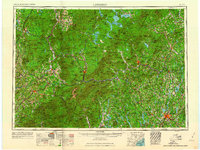 1962 Lewiston1962 Print · USGSThe industrial river valleys and high peaks of Maine and New Hampshire define the region in the early sixties. Trace the rail-and-river network from Lewiston to the White Mountains, passing through mill towns like Berlin and Rumford.
 - 1962 Map of Lake Champlain, 1975 Print
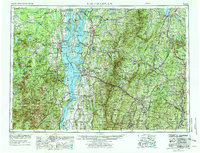 1962 Lake Champlain1975 Print · USGSLake Champlain and the high peaks of the Adirondacks and Green Mountains are captured here during the mid-twentieth century. Researchers can trace the industrial legacy of the Lyon Mountain Mine and the rail corridors of the Central Vermont RR and Delaware & Hudson RR.3 unique versions available
 - 1967 Map of Lower Waterford, 1973 Print
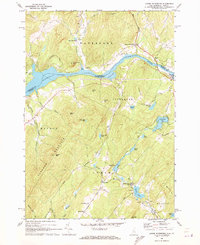 1967 Lower Waterford1973 Print · USGSThe Connecticut River corridor at the Vermont and New Hampshire border is captured here in the late sixties. Genealogists can trace family names at Riverside Cem and Center Cem or locate the Ogontz White Mtn Camp and Tinkerville.3 unique versions available
 - 1969 Map of Lewiston
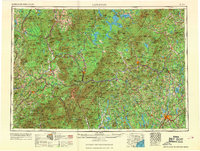 1969 Lewiston1969 Print · USGSThe northern New England highlands come into focus during the mid-fifties, showing the vital rail and river networks connecting industrial centers to the deep woods. Researchers can trace the path of the Grand Trunk RR or locate landmarks like Mt Washington and Rangeley Lake.
 - 1973 Map of Woodsville, 1976 Print
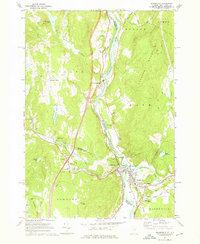 1973 Woodsville1976 Print · USGSThe river-and-rail hub of Woodsville and Wells River is captured here in the early 1970s, where Vermont and New Hampshire meet. Genealogists can locate numerous burial sites including St Josephs Cem and Mills Mem Cem, or trace the path of the Boston and Maine through town.3 unique versions available
 - 1983 Map of Barnet
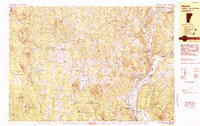 1983 Barnet1983 Print · USGSThe Vermont and New Hampshire borderlands come alive in the early eighties, centered on the river-and-rail corridor of the Connecticut River. Researchers can trace the Canadian Pacific tracks through Barnet and locate small hamlets like Ewells Mills and Mosquitoville.
 - 1986 Map of Mount Washington
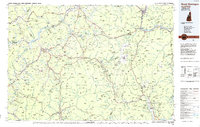 1986 Mount Washington1986 Print · USGSThe northern New England highlands are shown here in the mid-eighties, centered on the high peaks and river valleys of the New Hampshire borderlands. Researchers can trace historic transportation lines like the Mount Washington Cog Railway and the Maine Central Railroad near Gorham and Lancaster.
 - 1988 Map of Montpelier
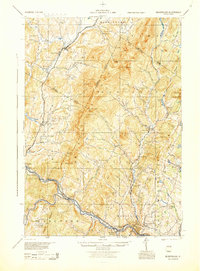 1988 Montpelier1988 Print · USGSThe area surrounding Vermont’s capital city appears here during the early 1940s, showing the vital rail-and-river network. Genealogists can trace family names across a dozen district schools and rural sites like Middlesex Center and the Talc Mine.2 unique versions available
 - 1988 Map of Mount Washington, 1989 Print
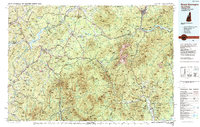 1988 Mount Washington1989 Print · USGSThe New Hampshire high country in the late 1980s is defined by its iconic peaks and the legacy of mountain tourism. Trace the routes of the historic Mount Washington Cog Railway and the Maine Central RR through the gaps of Crawford Notch State Park.
 - 1999 Map of Woodsville, 2000 Print
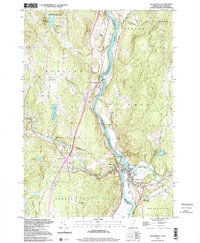 1999 Woodsville2000 Print · USGSThe upper Connecticut River valley at the turn of the millennium shows the enduring rail-and-river geography of the New Hampshire-Vermont border. Genealogists can locate family landmarks like St Josephs Cem, the Cottage Hospital, and the Covered Bridge at Woodsville.
 - 2012 Map of Woodsville, 2012 Print
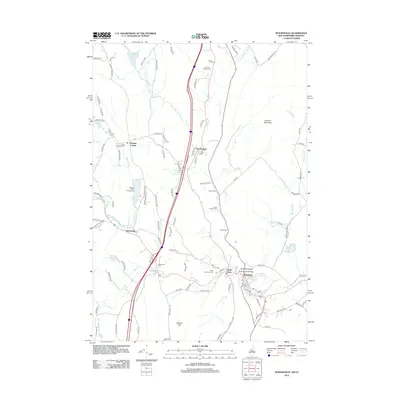 2012 Woodsville2012 Print · USGSThe upper Connecticut River valley at the turn of the decade shows the shared history of two states at the crossing between Wells River and Woodsville. Genealogists can locate several burial sites including Boltonville Cem and Hamm Cem, or trace the span of the Bath-Haverhill Bridge.
Showing maps 1-25 of 39
Top cities near Monroe
- Saint Johnsbury historical maps
- Littleton historical maps
- Haverhill historical maps
- Danville historical maps
- Newbury historical maps
- Newbury Village historical maps
See more
Frequently asked questions
- What are the different types of historical maps available for Monroe?
- What is the oldest map of Monroe?
- Where can I purchase historical maps of Monroe for my home or office?
- Where can I download high-res historical maps of Monroe?
- Are there historical topographic maps available for Monroe?
- Is there historical aerial imagery available for Monroe?
- Where are historical maps of Monroe sourced from?