Old Maps of Hooksett, New Hampshire for Academic Research
Study the evolution of Hooksett with 31 high-resolution historic maps. Whether you're teaching, researching, or modeling changes in land use, these maps provide essential visual documentation of urban, environmental, and geographic change.
- Analyze long-term change: Track patterns in development, transportation, and natural features.
- Ideal for environmental or urban studies: Support academic projects with primary historical map data.
- Use in the classroom or lab: Educators and researchers rely on these maps to bring historical context to life.
These maps are a powerful tool for teaching, research, and visualizing how Hooksett has changed over the decades.
Hooksett, NH maps
(31)- 1921 Map of Suncook
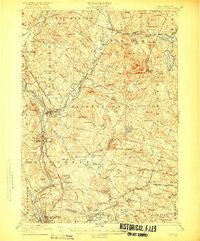 1921 Suncook1921 Print · USGSMerrimack and Suncook River valleys thrive in the early 1920s as bustling centers of rail travel and local education. Genealogists can locate family homesteads near dozens of rural schoolhouses like Borough School or trace the old Boston and Maine Railroad through Suncook and Hooksett.5 unique versions available
 - 1927 Map of Concord
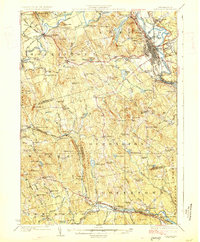 1927 Concord1927 Print · USGSMerrimack and Hillsborough counties show a landscape of river-driven industry and rural school districts during the mid-twenties. Genealogists can trace family lines through dozens of local schoolhouses and institutions like St Pauls School or the Quaker Church.6 unique versions available
 - 1944 Map of Suncook
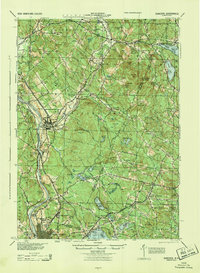 1944 Suncook1944 Print · USGSSuncook and the surrounding New Hampshire hill towns are captured in the 1940s as industry met a rugged landscape. Trace ancestral homes and community hubs like Candia Station, the Sanitarium, and the Buck Street Sch during this era of transition.
 - 1949 Map of Portland
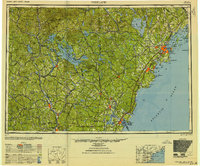 1949 Portland1949 Print · USGSCoastal Maine and the New Hampshire interior are shown in detail during the late forties, from the bustling harbors to the lakeside villages. Researchers can trace historical rail networks like the Boston & Maine RR and locate coastal defenses such as Fort Preble.3 unique versions available
 - 1949 Map of Concord, 1954 Print
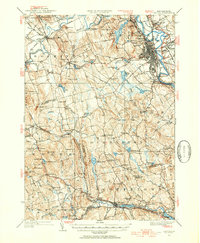 1949 Concord1954 Print · USGSMerrimack County at the close of the 1940s shows a capital city and its surrounding hill towns in transition. Genealogists and local historians can pinpoint family-named landmarks like Putney Hill, rural schoolhouses such as Waite School, and the quiet Quaker Church.4 unique versions available
 - 1956 Map of Portland, 1963 Print
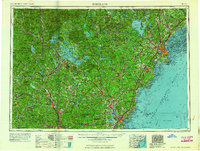 1956 Portland1963 Print · USGSSouthern Maine and eastern New Hampshire are captured here in the mid-fifties, during a time of major highway expansion and military growth. You can trace the path of the Maine Turnpike and locate landmarks like the Portsmouth Naval Shipyard and Sebago Lake.4 unique versions available
 - 1957 Map of Suncook, 1959 Print
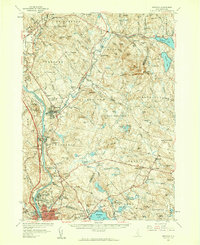 1957 Suncook1959 Print · USGSCentral New Hampshire comes into focus during the late fifties, capturing the growth of Manchester and the surrounding river valleys. Genealogists can trace family names at Pembroke Cem or locate historic schools like Pembroke Academy and Center Sch.4 unique versions available
 - 1959 Map of Portland
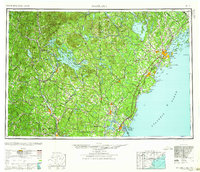 1959 Portland1959 Print · USGSThe Maine and New Hampshire coastlines meet in this mid-century portrait of maritime commerce and inland rail networks. Researchers can trace the legacy of coastal defense at Fort Williams and follow the historic path of the Maine Central RR through the White Mountain National Forest.2 unique versions available
 - 1963 Map of Portland
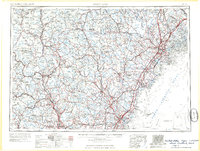 1963 Portland1963 Print · USGSCoastal Maine and New Hampshire thrived as maritime and industrial hubs during the mid-sixties, linked by a dense network of rail and river. Researchers can trace historic transit corridors like the Maine Central RR and locate key sites such as the Portsmouth Naval Shipyard or Pease Air Force Base.3 unique versions available
 - 1968 Map of Manchester North, 1971 Print
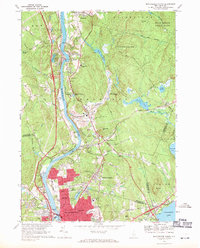 1968 Manchester North1971 Print · USGSThe northern edge of Manchester and the river-bound community of Hooksett are captured here in the late sixties as urban growth meets the wooded New Hampshire hills. Local historians can trace the paths of the Boston and Maine Railroad and find long-standing landmarks like Mt Saint Mary College and the Martin Cem.3 unique versions available
 - 1969 Map of Goffstown, 1971 Print
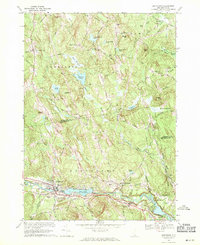 1969 Goffstown1971 Print · USGSGoffstown and Dunbarton are captured here in the late sixties as the Piscataquog valley balanced its industrial rail heritage with residential growth. Genealogists can trace family plots in Westlawn Cem or Holy Trinity Cemetery and locate civic landmarks like the County Home.3 unique versions available
 - 1969 Map of Candia, 1971 Print
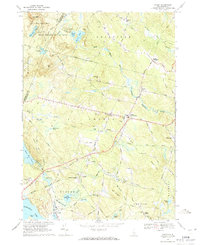 1969 Candia1971 Print · USGSRockingham County in the late sixties shows a landscape of wooded state parks and quiet rail corridors. Genealogists can locate family landmarks like the Holbrook Cem, the Moore Sch, and the Boston and Maine Railroad grade.2 unique versions available
 - 1977 Map of Manchester North, 1981 Print
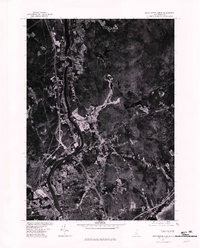 1977 Manchester North1981 Print · USGSThe Merrimack River valley in the late seventies shows a landscape undergoing rapid modernization and highway expansion. Genealogists and local historians can trace the street grids of Manchester as they meet landmarks like Hooksett and Massabesic Lake.
 - 1986 Map of Concord
 1986 Concord1986 Print · USGSCentral New Hampshire in the mid-eighties shows a landscape of river-valley cities and rural villages connected by the growing interstate system. Genealogists and historians can trace old community centers like Gilmanton Ironworks or follow the Boston and Maine Railroad through Concord and Tilton.
 - 1988 Map of Concord
 1988 Concord1988 Print · USGSCentral New Hampshire in the late eighties centers on the industrial and political hub of Concord. Researchers can trace the Boston and Maine RR along the Merrimack River or locate recreation landmarks like Bear Brook State Park and Massabesic Lake.
 - 1995 Map of Goffstown, 1999 Print
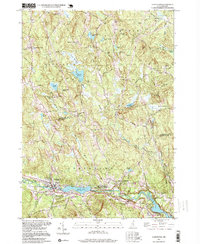 1995 Goffstown1999 Print · USGSMerrimack County in the mid-1990s shows a transition from river-valley settlements to upland pond and hill country. Researchers can trace local history through sites like Holy Trinity Cemetery, the old crossroads at Dunbarton Center, and industrial landmarks near Goffstown.
 - 2012 Map of Candia, 2012 Print
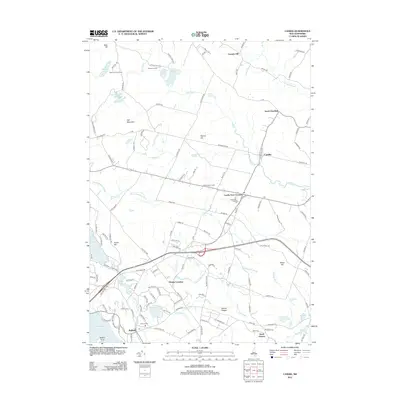 2012 Candia2012 Print · USGSNear the turn of the twenty-first century, the communities of Candia and Auburn maintained their character amidst a landscape of high hills and historic camps. Researchers can trace local lineage through Holbrook Cem or explore the water network of Massabesic Lake and Tower Hill Pond.
 - 2012 Map of Goffstown, 2012 Print
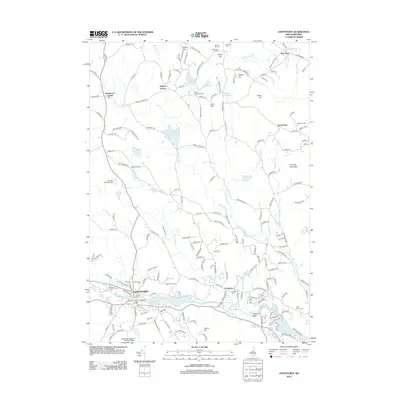 2012 Goffstown2012 Print · USGSGoffstown and the surrounding hillsides of Hillsborough County are shown here in the early twenty-first century. Researchers can trace historical footprints through Westlawn Cem, the Goffstown Covered Railroad Bridge, and the Hillsborough County Farm.
 - 2012 Map of Manchester North, 2012 Print
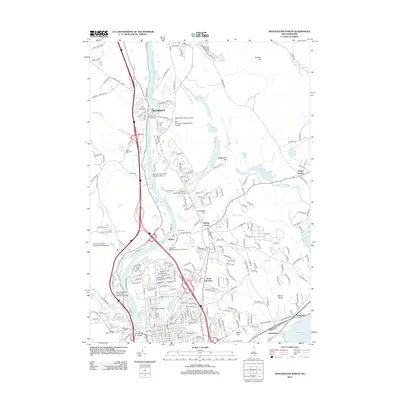 2012 Manchester North2012 Print · USGSManchester and Hooksett are shown during a period of significant collegiate and suburban expansion along the Merrimack River. Local researchers can trace family histories at the West River Road Cem or locate the historic Weston Observatory and Notre Dame College.
 - 2015 Map of Candia, 2015 Print
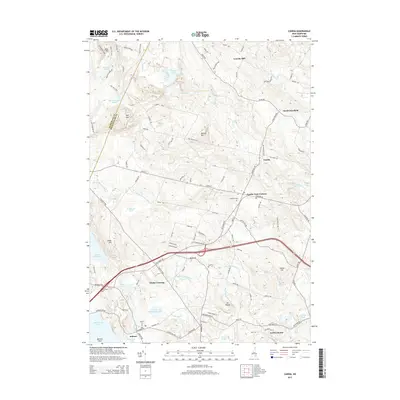 2015 Candia2015 Print · USGSThe rural landscapes of Rockingham and Merrimack counties are captured here in the mid-2010s, showcasing the transition from upland hills to the shores of Massabesic Lake. Genealogists and local historians can trace family locations near Candia Four Corners, Hooks Crossing, and the Auburn Cemetery.
 - 2015 Map of Goffstown, 2015 Print
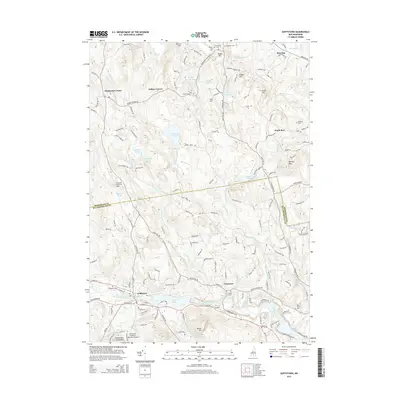 2015 Goffstown2015 Print · USGSThe Piscataquog River valley and the hills of southern New Hampshire are captured here in the mid-2010s. Genealogists can trace family plots at Hillside Cem and Holy Trinity Cem or locate the historic Goffstown Covered Railroad Bridge.
 - 2015 Map of Manchester North, 2015 Print
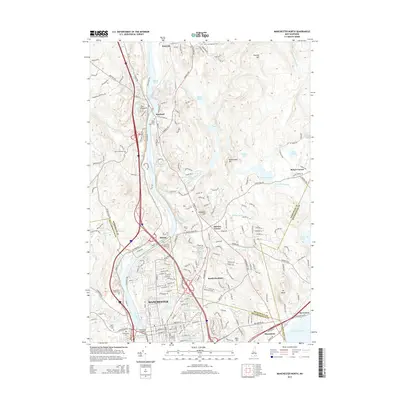 2015 Manchester North2015 Print · USGSManchester and Hooksett are shown at a peak of modern development along the Merrimack River corridor in the mid-2010s. Researchers can locate family landmarks and institutions like Saint Jean Baptiste Cem, Southern New Hampshire Univ, and Heads Pond.
 - 2018 Map of Goffstown, 2018 Print
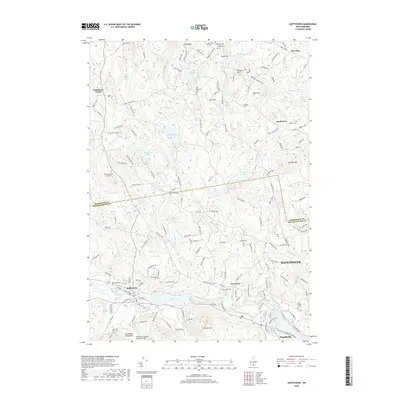 2018 Goffstown2018 Print · USGSGoffstown and the surrounding Merrimack and Hillsborough county line are captured in detail during the late 2010s. Researchers can trace local history through sites like the Goffstown Covered Railroad Bridge, Hillside Cem, and the historic village of Dunbarton Center.
 - 2018 Map of Manchester North, 2018 Print
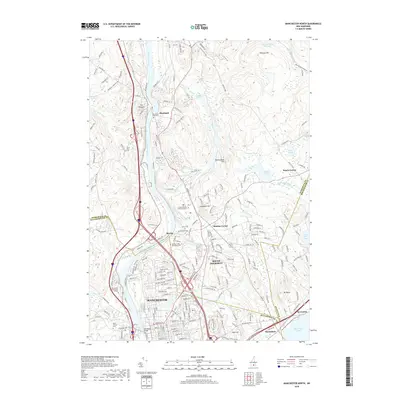 2018 Manchester North2018 Print · USGSManchester and Hooksett thrive along the Merrimack River in the late 2010s, showing a blend of historic town centers and modern academic campuses. Genealogists and researchers can locate numerous burial sites like Mount Calvary Cem and trace the landscape from The Pinnacle to Massabesic Lake.
 - 2018 Map of Candia, 2018 Print
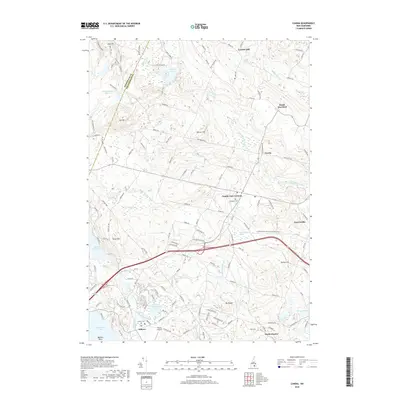 2018 Candia2018 Print · USGSMerrimack and Rockingham counties meet here in the late 2010s, where traditional New England village centers sit among high peaks and lakes. Genealogists and hikers can trace connections between Candia Four Corners, Holbrook Cem, and the heights of Mt Pisgah.
Showing maps 1-25 of 31
Top cities near Hooksett
- Manchester historical maps
- Concord historical maps
- Derry historical maps
- Salem historical maps
- Merrimack historical maps
- Londonderry historical maps
See more
Top neighborhoods of Hooksett
- Martin historical maps
- Martins Corner historical maps
- Rowes Corner historical maps
- South Hooksett historical maps
Frequently asked questions
- What are the different types of historical maps available for Hooksett?
- What is the oldest map of Hooksett?
- Where can I purchase historical maps of Hooksett for my home or office?
- Where can I download high-res historical maps of Hooksett?
- Are there historical topographic maps available for Hooksett?
- Is there historical aerial imagery available for Hooksett?
- Where are historical maps of Hooksett sourced from?