1940s Maps of Tabernacle, Lower Township
Explore 6 historic maps of Tabernacle from the 1940s. These maps offer a rare glimpse into what life looked like during the 1940s — showing old roads, neighborhoods, homes, and landmarks that have changed or disappeared over time.
Whether you're researching your family's past, planning a metal detecting trip, or studying how Tabernacle's landscape evolved across the 1940s, these high-resolution maps are a powerful tool for exploring the history of this region.
- Focus on a specific era: All maps on this page are from the 1940s, giving you a focused view of this time period.
- See what’s changed: Compare century-old streets, trails, and buildings to today's modern landscape using overlays and satellite layers.
- Research with precision: Use these maps for genealogy, historical research, land use analysis, or educational projects.
- View, download, or print: Maps are fully viewable online in high resolution, and can be downloaded or printed for your own records.
Start exploring Tabernacle's history through authentic maps from the 1940s. This is your window into the past.
Tabernacle, Lower Township maps
(6)- 1940 Map of Cape May, 1941 Print
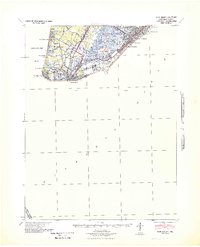 1940 Cape May1941 Print · USGSCape May County's southern tip was a critical defensive and resort hub during the early fortie. Genealogists and researchers can trace the precise streets of Wildwood, identify the military footprint at the Naval Res, and locate vanished landmarks at South Cape May.
 - 1941 Map of Cape May
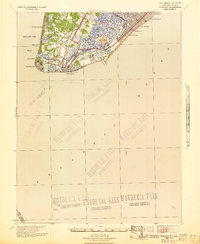 1941 Cape May1941 Print · USGSCape May County is caught at a pivotal moment in the early 1940s as coastal defenses and resort life coexist. Researchers can trace the legacy of vanished landmarks and transit routes like the Reading Lines railroad, South Cape May, and the U. S. Naval Res.
 - 1944 Map of Cape May
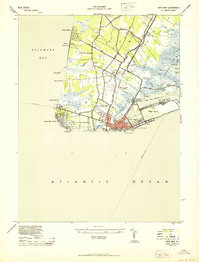 1944 Cape May1944 Print · USGSCoastal New Jersey during the mid-forties shows the strategic importance of the peninsula during the war years. Local historians can trace the new Cape May Canal, the Cape May Coast Artillery Reserve, and the rails of the Reading Seashore Lines.2 unique versions available
 - 1946 Map of Salisbury, 1948 Print
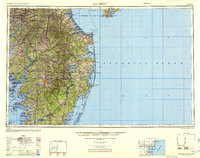 1946 Salisbury1948 Print · USGSThe Delmarva Peninsula in the late nineteen-forties shows a landscape defined by its deep river arteries and emerging coastal defenses. Genealogists and historians can trace rail-connected towns like Federalsburg or locate maritime landmarks such as the Ocean City Seaplane Base and Fort Miles Military Reservation.4 unique versions available
 - 1947 Map of Salisbury, 1948 Print
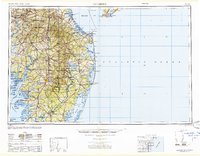 1947 Salisbury1948 Print · USGSThe Delmarva Peninsula in the late forties reveals a coastal landscape of maritime defense and growing seaside towns. Trace the post-war footprint of Salisbury, the strategic Fort Miles Military Reservation, and the Ocean City Seaplane Base.
 - 1948 Map of Salisbury, 1951 Print
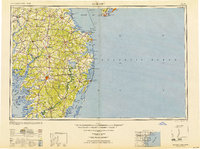 1948 Salisbury1951 Print · USGSThe Delmarva Peninsula in the late 1940s is shown here as a busy network of rail-towns and coastal outposts. Researchers can trace the legacy of the Pennsylvania Railroad through inland hubs like Georgetown or the maritime reaches of Crisfield and Cape May.
End of results
Showing maps 1-6 of 6
Top cities near Tabernacle
- Lower Township historical maps
- Middle Township historical maps
- Upper Township historical maps
- Villas historical maps
- Maurice River Township historical maps
- Wildwood historical maps
See more
Frequently asked questions
- What are the different types of historical maps available for Tabernacle?
- What is the oldest map of Tabernacle?
- Where can I purchase historical maps of Tabernacle for my home or office?
- Where can I download high-res historical maps of Tabernacle?
- Are there historical topographic maps available for Tabernacle?
- Is there historical aerial imagery available for Tabernacle?
- Where are historical maps of Tabernacle sourced from?