1900s (20th Century) Maps of San Antonio, New Mexico
Explore 7 historic maps of San Antonio from the 1900s (20th Century). These maps offer a rare glimpse into what life looked like during the 1900s — showing old roads, neighborhoods, homes, and landmarks that have changed or disappeared over time.
Whether you're researching your family's past, planning a metal detecting trip, or studying how San Antonio's landscape evolved across the 1900s, these high-resolution maps are a powerful tool for exploring the history of this region.
- Focus on a specific era: All maps on this page are from the 1900s, giving you a focused view of this time period.
- See what’s changed: Compare century-old streets, trails, and buildings to today's modern landscape using overlays and satellite layers.
- Research with precision: Use these maps for genealogy, historical research, land use analysis, or educational projects.
- View, download, or print: Maps are fully viewable online in high resolution, and can be downloaded or printed for your own records.
Start exploring San Antonio's history through authentic maps from the 1900s. This is your window into the past.
San Antonio, NM maps
(7)- 1954 Map of Gallup, 1973 Print
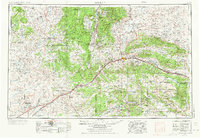 1954 Gallup1973 Print · USGSNative American tribal lands and the railroad corridor of the Southwest appear here at the midpoint of the century. Trace historic sites and remote settlements from Window Rock to the Fort Wingate Army Depot and Bibo.2 unique versions available
 - 1958 Map of Gallup
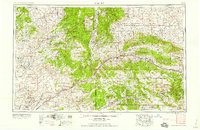 1958 Gallup1958 Print · USGSThe high desert of Western New Mexico and Eastern Arizona is captured here in the late fifties, dominated by the Navajo and Zuni homelands. Researchers can trace the path of US 66 through Gallup or locate historic industry at the Navajo Coal Mine and Gibson Coal Mine.
 - 1959 Map of Gallup
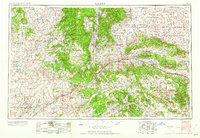 1959 Gallup1959 Print · USGSThe high desert corridor of northwestern New Mexico and eastern Arizona comes alive in the late fifties, following the path of Route 66 and the rail lines. Trace established landmarks like Zuni Pueblo, the Fort Wingate Military Reservation, and the Coolidge Post Office.
 - 1962 Map of Gallup
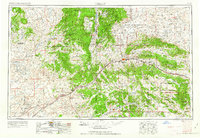 1962 Gallup1962 Print · USGSThe high plateau and mountains surrounding Gallup in the early sixties reveal a landscape defined by tribal lands, coal mining, and the rail corridor. Researchers can locate remote trading posts, the Gibson Coal Mine, and the historic Window Rock capital.
 - 1963 Map of Thoreau, 1966 Print
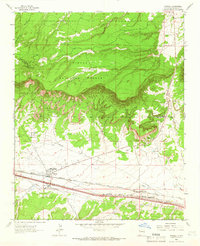 1963 Thoreau1966 Print · USGSMcKinley County, New Mexico, is captured here during the mid-sixties transition between the historic Mother Road and the interstate era. Genealogists and rail historians can trace the Atchison Topeka and Santa Fe line through Thoreau and Mitchell.3 unique versions available
 - 1967 Map of Gallup
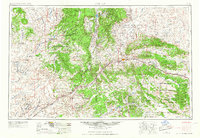 1967 Gallup1967 Print · USGSThe high desert of New Mexico and Arizona comes into focus in the mid-1960s, centered on the railroad and ranching hub of Gallup. Genealogists and historians can trace routes through Zuni Pueblo, identify old rail stops like Houck, or locate the Aqua Fria Post Office.
 - 1981 Map of Zuni
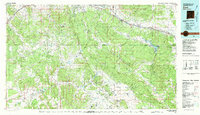 1981 Zuni1981 Print · USGSThe high plateau and mountains of western New Mexico are captured here in the early eighties, showcasing the intersection of tribal lands and national forests. Genealogists and researchers can trace local landmarks from Upper Nutria to the Black Rock Hospital and the historic Fort Wingate.2 unique versions available
End of results
Showing maps 1-7 of 7
Top cities near San Antonio
Frequently asked questions
- What are the different types of historical maps available for San Antonio?
- What is the oldest map of San Antonio?
- Where can I purchase historical maps of San Antonio for my home or office?
- Where can I download high-res historical maps of San Antonio?
- Are there historical topographic maps available for San Antonio?
- Is there historical aerial imagery available for San Antonio?
- Where are historical maps of San Antonio sourced from?