1900s (20th Century) Maps of Jemez Pueblo, New Mexico
Explore 12 historic maps of Jemez Pueblo from the 1900s (20th Century). These maps offer a rare glimpse into what life looked like during the 1900s — showing old roads, neighborhoods, homes, and landmarks that have changed or disappeared over time.
Whether you're researching your family's past, planning a metal detecting trip, or studying how Jemez Pueblo's landscape evolved across the 1900s, these high-resolution maps are a powerful tool for exploring the history of this region.
- Focus on a specific era: All maps on this page are from the 1900s, giving you a focused view of this time period.
- See what’s changed: Compare century-old streets, trails, and buildings to today's modern landscape using overlays and satellite layers.
- Research with precision: Use these maps for genealogy, historical research, land use analysis, or educational projects.
- View, download, or print: Maps are fully viewable online in high resolution, and can be downloaded or printed for your own records.
Start exploring Jemez Pueblo's history through authentic maps from the 1900s. This is your window into the past.
Jemez Pueblo, NM maps
(12)- 1939 Map of San Ysidro, 1958 Print
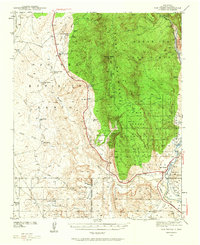 1939 San Ysidro1958 Print · USGSCentral New Mexico in the late 1930s is revealed here as a land of sprawling Indian Reservations and high-desert ranching. Genealogists and historians can trace family locations at Rincon Ranch, locate the CCC Camp No 8 N, or follow the Santa Fe Northwestern rail line.
 - 1943 Map of San Ysidro
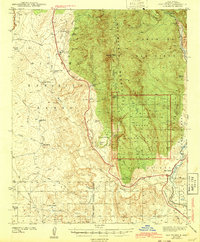 1943 San Ysidro1943 Print · USGSSandoval County in the late 1930s is a landscape of high-altitude ranching and rugged mountain passes just as the local rail industry began to fade. Researchers can trace the Santa Fe Northwestern rail grade or locate remote outposts like CCC Camp No 8 N and Marquez Ranch.
 - 1943 Map of Jemez
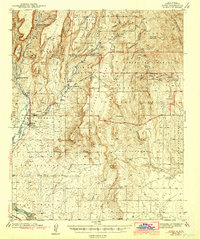 1943 Jemez1943 Print · USGSSandoval County at the end of the 1930s shows a landscape of expansive pueblo grants and former rail corridors. You can trace the Santa Fe Northwestern (RR Abandoned) line and locate the Paliza C C C Camp and Spanish Queen Mine.4 unique versions available
 - 1952 Map of Jemez, 1962 Print
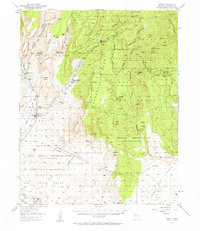 1952 Jemez1962 Print · USGSSandoval County's canyon lands and pueblo grants are captured here during the early fifties, showing a transition from traditional land use to modern forestry and mining. Genealogists and historians can trace the foundations of Jemez Pueblo, the Spanish Queen Mine, and the route of the Bland Bear Springs Trail.
 - 1958 Map of Albuquerque
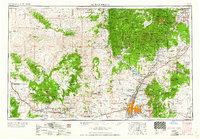 1958 Albuquerque1958 Print · USGSAlbuquerque and the surrounding high desert are captured here during a period of massive federal expansion and postwar growth. Researchers can trace the development of Kirtland Air Force Base, find ancestral homes in Pueblo de Santa Ana, or locate industrial sites like the Jackpile Mine.
 - 1962 Map of Albuquerque
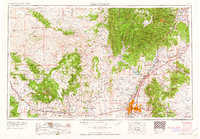 1962 Albuquerque1962 Print · USGSAlbuquerque and the surrounding high desert are captured here in the early 1960s during a period of intense mineral and military growth. Genealogists and historians can locate early schools like the Pueblo Pintado School, major industrial sites like the Jackpile Mine, and the sprawling Kirtland Air Force Base.
 - 1963 Map of Albuquerque, 1965 Print
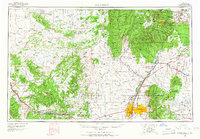 1963 Albuquerque1965 Print · USGSMid-century New Mexico unfolds across this map, showcasing the intersection of ancient pueblos, modern military bases, and historic mining districts. Trace family roots and local history through the Ortiz Mine, Seven Lakes Trading Post, and Alameda.3 unique versions available
 - 1969 Map of San Ysidro, 1972 Print
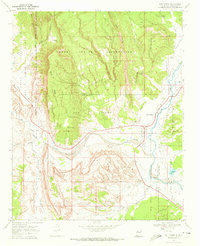 1969 San Ysidro1972 Print · USGSSandoval County at the end of the sixties reveals a landscape shaped by tribal lands and traditional water rights. Trace the path of the Old Railroad Grade and locate historical landmarks like the Mexican Ditch, Zia Pueblo, and White Mesa.2 unique versions available
 - 1969 Map of Jemez Pueblo, 1972 Print
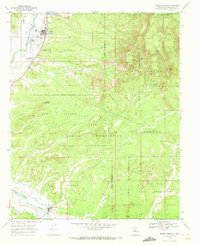 1969 Jemez Pueblo1972 Print · USGSTraditional Pueblo lands and intricate irrigation networks define this Sandoval County territory during the late sixties. Researchers can trace ancestral boundaries and water features like Jemez Pueblo, the Zia North Side Canal, and Ojo Chamisa.2 unique versions available
 - 1970 Map of Ponderosa, 1973 Print
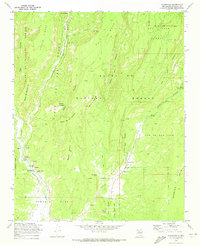 1970 Ponderosa1973 Print · USGSThe high mesas of Sandoval County come alive in this early 1970s survey, showing a landscape shaped by canyon-floor villages and ancient heights. Researchers can trace the cultural history of Ponderosa and Cañon through landmarks like Santo Toribio Ch and the Spanish Queen Mine.2 unique versions available
 - 1978 Map of Los Alamos
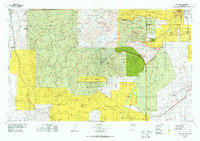 1978 Los Alamos1978 Print · USGSThe Jemez Mountains and Rio Grande valley come together in the late seventies, showing a land defined by volcanic peaks and ancient pueblos. Trace the footprints of Bandelier National Monument, find the rail line of the Atchison Topeka and Santa Fe, and locate historic settlements like Jemez Pueblo.
 - 1983 Map of Albuquerque, 1984 Print
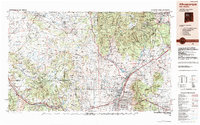 1983 Albuquerque1984 Print · USGSCentral New Mexico in the early eighties shows a landscape where ancient pueblos and modern aerospace hubs meet. Trace the routes of the Atchison Topeka and Santa Fe RR or locate landmarks like Kirtland Air Force Base, Madrid, and the Sandia Mountains.
End of results
Showing maps 1-12 of 12
Top cities near Jemez Pueblo
- Rio Rancho historical maps
- Eastern Navajo Agency historical maps
- Jemez Springs historical maps
- San Ysidro historical maps
Top neighborhoods of Jemez Pueblo
Frequently asked questions
- What are the different types of historical maps available for Jemez Pueblo?
- What is the oldest map of Jemez Pueblo?
- Where can I purchase historical maps of Jemez Pueblo for my home or office?
- Where can I download high-res historical maps of Jemez Pueblo?
- Are there historical topographic maps available for Jemez Pueblo?
- Is there historical aerial imagery available for Jemez Pueblo?
- Where are historical maps of Jemez Pueblo sourced from?