1900s (20th Century) Maps of Kingston, New Mexico
Explore 7 historic maps of Kingston from the 1900s (20th Century). These maps offer a rare glimpse into what life looked like during the 1900s — showing old roads, neighborhoods, homes, and landmarks that have changed or disappeared over time.
Whether you're researching your family's past, planning a metal detecting trip, or studying how Kingston's landscape evolved across the 1900s, these high-resolution maps are a powerful tool for exploring the history of this region.
- Focus on a specific era: All maps on this page are from the 1900s, giving you a focused view of this time period.
- See what’s changed: Compare century-old streets, trails, and buildings to today's modern landscape using overlays and satellite layers.
- Research with precision: Use these maps for genealogy, historical research, land use analysis, or educational projects.
- View, download, or print: Maps are fully viewable online in high resolution, and can be downloaded or printed for your own records.
Start exploring Kingston's history through authentic maps from the 1900s. This is your window into the past.
Kingston, NM maps
(7)- 1935 Map of Hillsboro
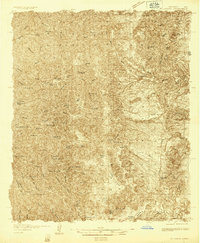 1935 Hillsboro1935 Print · USGSHillsboro and Kingston are documented here in the mid-1930s, surrounded by the busy mining and ranching country of the Black Range. Genealogists and historians can locate family landmarks like the J P Nunn Ranch and Wilson Ranch or trace the footprint of the Silver Tail Mine.2 unique versions available
 - 1940 Map of Hillsboro
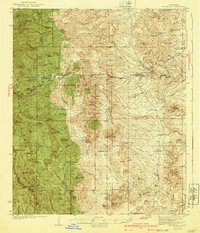 1940 Hillsboro1940 Print · USGSSierra County mountain life in the mid-1930s centers on mining outposts and remote cattle ranches within the Black Range. Genealogists and historians can trace family operations at the JP Nunn Ranch and Wilson Ranch or locate the historic Gray Eagle Mine near Kingston.2 unique versions available
 - 1955 Map of Las Cruces, 1963 Print
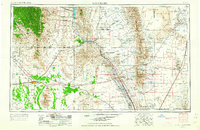 1955 Las Cruces1963 Print · USGSSouthern New Mexico comes into focus during the mid-fifties, showing the growth of Las Cruces alongside major military and scientific installations. Genealogists and historians can trace the Southern Pacific tracks through small rail towns like Cambray and Afton, or locate family sites near Hatch and Deming.3 unique versions available
 - 1958 Map of Las Cruces
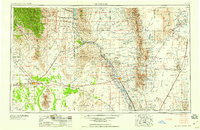 1958 Las Cruces1958 Print · USGSSouthern New Mexico in the late fifties was a landscape of rapid scientific and military growth centered on the Rio Grande. Local historians can trace the development of Las Cruces, the campus of New Mexico A and M College, and remote rail sidings like Aden Siding.
 - 1982 Map of Hatch
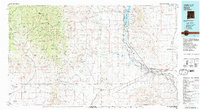 1982 Hatch1982 Print · USGSThe Rio Grande valley and the rugged Mimbres Mountains meet in this early 1980s overview of southern New Mexico. Researchers can trace the path of the Atchison Topeka and Santa Fe railroad or locate historic mining hubs like Hillsboro and Lake Valley.
 - 1985 Map of Kingston
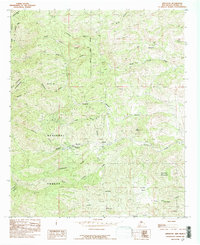 1985 Kingston1985 Print · USGSKingston was a vital node in the high country of Sierra County during the mid-eighties, surrounded by the protected wilds of the Gila. Researchers can trace the legacy of mining and early settlement through sites like the USLM No 3, several Mine locations, and the quiet clearing at Trujillo Park.
 - 1999 Map of Kingston, 2002 Print
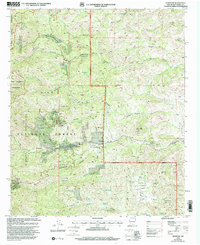 1999 Kingston2002 Print · USGSThe mining district around Kingston is captured here during the late nineties, showcasing a landscape shaped by mineral extraction and forest management. Researchers can trace the legacy of the Gray Eagle Mine and find local landmarks like the Cem and Athletic Field.
End of results
Showing maps 1-7 of 7
Frequently asked questions
- What are the different types of historical maps available for Kingston?
- What is the oldest map of Kingston?
- Where can I purchase historical maps of Kingston for my home or office?
- Where can I download high-res historical maps of Kingston?
- Are there historical topographic maps available for Kingston?
- Is there historical aerial imagery available for Kingston?
- Where are historical maps of Kingston sourced from?