1900s (20th Century) Maps of Ward, New York
Explore 12 historic maps of Ward from the 1900s (20th Century). These maps offer a rare glimpse into what life looked like during the 1900s — showing old roads, neighborhoods, homes, and landmarks that have changed or disappeared over time.
Whether you're researching your family's past, planning a metal detecting trip, or studying how Ward's landscape evolved across the 1900s, these high-resolution maps are a powerful tool for exploring the history of this region.
- Focus on a specific era: All maps on this page are from the 1900s, giving you a focused view of this time period.
- See what’s changed: Compare century-old streets, trails, and buildings to today's modern landscape using overlays and satellite layers.
- Research with precision: Use these maps for genealogy, historical research, land use analysis, or educational projects.
- View, download, or print: Maps are fully viewable online in high resolution, and can be downloaded or printed for your own records.
Start exploring Ward's history through authentic maps from the 1900s. This is your window into the past.
Ward, NY maps
(12)- 1916 Map of Canaseraga
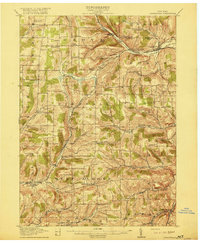 1916 Canaseraga1916 Print · USGSAllegany and Livingston counties appear in the decade before the Great War, during the peak of the local rail era. Genealogists can locate dozens of numbered schoolhouses and family-named landmarks like Whitney Crossings, Karrdale, and the Jersey Hill School.4 unique versions available
 - 1926 Map of Wellsville
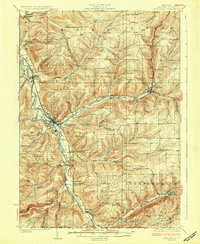 1926 Wellsville1926 Print · USGSAllegany County's southern reaches appear here in the mid-1920s as a hub of river-valley commerce and upland farming. Genealogists can trace early homesteads near Irish Settlement, Stannards Corners, and numerous rural schools like Ford Brook School.5 unique versions available
 - 1940 Map of Canaseraga
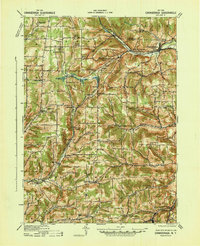 1940 Canaseraga1940 Print · USGSAllegany County's rural township structure is captured here just before the mid-century, showing a landscape tied together by local district schools and the Erie railroad. Researchers can locate early homesteads near Brewer Corners, trace the rail sidings at Garwoods Sta, or find ancestral landmarks like the County House and Jersey Hill School.2 unique versions available
 - 1950 Map of Elmira
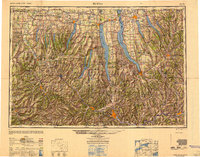 1950 Elmira1950 Print · USGSThe Finger Lakes region thrived in the late 1940s as a hub of industry and transport. Trace family roots and vanished landmarks near Seneca Lake or explore the rail lines of the Erie RR and the sprawling Seneca Ordnance Depot.2 unique versions available
 - 1958 Map of Elmira
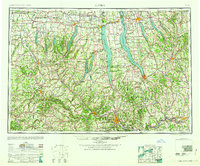 1958 Elmira1958 Print · USGSThe New York Finger Lakes during the late fifties reveal a complex landscape of glacial geology and industrial growth. Researchers can trace historic transport corridors like the Erie Canal and Erie RR, or locate institutional landmarks like Cornell University.2 unique versions available
 - 1962 Map of Elmira, 1969 Print
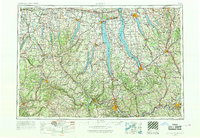 1962 Elmira1969 Print · USGSThe Finger Lakes region and Southern Tier are captured here during a period of industrial maturity and highway expansion. Researchers can trace the path of the Erie Canal, the footprint of the Seneca Army Depot, and legacy rail lines through Elmira and Ithaca.4 unique versions available
 - 1964 Map of Alfred, 1965 Print
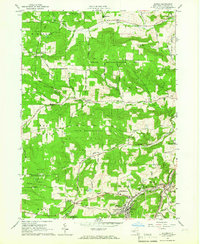 1964 Alfred1965 Print · USGSAllegany County’s collegiate and rural landscape comes into focus in the 1960s as reforestation efforts transform the hills. Genealogists and local historians can trace family-named routes and landmarks like Lippincott Cem, Alfred Station, and the campus of Alfred University.3 unique versions available
 - 1964 Map of West Almond, 1966 Print
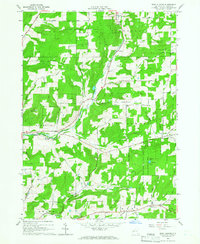 1964 West Almond1966 Print · USGSAllegany County landscape in the mid-1960s shows a region of expanding state forests and quiet upland hamlets. Genealogists and hikers can trace old valley routes like Karr Valley Road or locate the County Home and the Lookout Tower on Jersey Hill.2 unique versions available
 - 1965 Map of Elmira
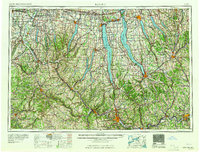 1965 Elmira1965 Print · USGSThe Finger Lakes and Southern Tier regions are captured in the mid-sixties, showcasing a landscape of deep glacial valleys and heavy rail infrastructure. Trace old railroad corridors like the Pennsylvania RR or visit landmarks like Letchworth State Park and the Seneca Army Depot.
 - 1965 Map of Wellsville North, 1966 Print
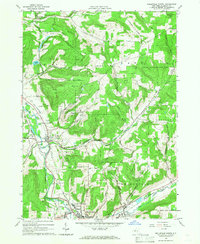 1965 Wellsville North1966 Print · USGSThe Genesee River valley in the mid-1960s reveals a landscape shaped by the rail-and-river economy and early energy extraction. Genealogists and local historians can trace family-named ridges like Oak Hill or locate landmarks such as St Josephs Ch, Rogers Cem, and the village of Scio.3 unique versions available
 - 1965 Map of Andover, 1967 Print
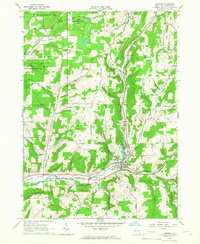 1965 Andover1967 Print · USGSAllegany County in the mid-sixties reveals a landscape of railroad heritage and timber conservation near the village of Andover. Genealogists can trace family names at St Johns Cem and East Valley Cem or locate industrial sites like the many southern Oil Wells.2 unique versions available
 - 1986 Map of Hornell
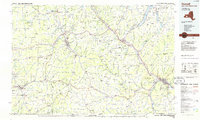 1986 Hornell1986 Print · USGSThe Southern Tier and Finger Lakes region thrive in the 1980s as rail and river corridors link Hornell to Corning. Trace local heritage through landmarks like Alfred University, the Veterans Adm Center, and the shores of Keuka Lake.2 unique versions available
End of results
Showing maps 1-12 of 12
Top cities near Ward
- Hornell historical maps
- Wellsville historical maps
- Alfred historical maps
- Wellsville historical maps
- Hornellsville historical maps
- Alfred historical maps
See more
Top neighborhoods of Ward
Frequently asked questions
- What are the different types of historical maps available for Ward?
- What is the oldest map of Ward?
- Where can I purchase historical maps of Ward for my home or office?
- Where can I download high-res historical maps of Ward?
- Are there historical topographic maps available for Ward?
- Is there historical aerial imagery available for Ward?
- Where are historical maps of Ward sourced from?