Old Maps of Harmony, New York for Metal Detecting
Plan your next treasure hunt with 44 historic maps of Harmony. Find old homesites, ghost towns, trails, and gathering spots that may be lost to time — perfect for identifying promising metal detecting locations.
- Locate forgotten sites: Uncover places like long-lost settlements, abandoned rail lines, or gathering spots.
- Plan better hunts: Use map overlays combined with LiDAR or satellite views to narrow in on historically rich areas.
- Made for detectorists: Thousands of hobbyists use these maps to discover relics, coins, and hidden history.
Use these historic maps to boost your research and find new opportunities beneath the surface of Harmony.
Harmony, NY maps
(44)- 1904 Map of Chautaqua
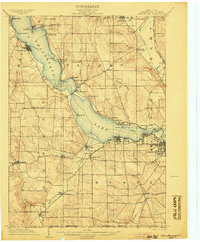 1904 Chautaqua1904 Print · USGSWestern New York at the turn of the century reveals a landscape defined by waterfront resorts and bustling rail corridors. Trace the historic Steamboat Route on Chautauqua Lake or locate old settlements like Bemus Point and Dewittville.6 unique versions available
 - 1905 Map of Clymer
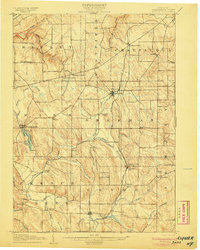 1905 Clymer1905 Print · USGSWestern Chautauqua County at the turn of the century shows a landscape of busy rail corridors and small rural hamlets. Genealogists can trace family roots through crossroads like Sheldon Corners or follow the old tracks through Sherman and Panama Sta.4 unique versions available
 - 1926 Map of Youngsville, 1961 Print
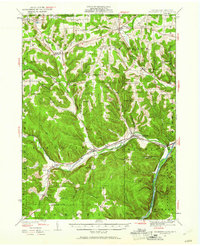 1926 Youngsville1961 Print · USGSWarren County at the dawn of the motorized age shows a landscape of small valley towns and isolated hill farms. Local researchers can trace old schoolhouse locations like White Sch and family-named landmarks such as Pikes Rocks and Cole Hill Fire Tower.
 - 1929 Map of Corry
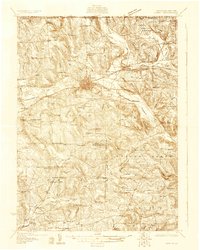 1929 Corry1929 Print · USGSThe industrial hub of Corry and the rural expanses of Erie and Crawford counties are captured here just before the Great Depression. Genealogists can trace family roots through numerous remote schools and churches, from Harbor Hall Ch to the tiny settlement of Hatchtown.2 unique versions available
 - 1929 Map of Youngsville
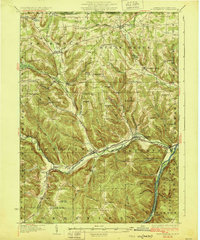 1929 Youngsville1929 Print · USGSWarren County at the close of the twenties shows a landscape of busy rail junctions and upland farm communities. You can trace early family sites through dozens of named schoolhouses like Yankebush Sch, find the Cole Hill Fire Tower, or follow the Erie RR through Bear Lake.5 unique versions available
 - 1932 Map of Corry
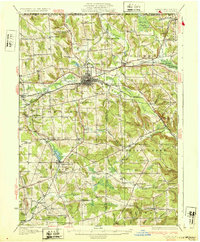 1932 Corry1932 Print · USGSThe industrial crossroads at the junction of the Pennsylvania and Erie Railroads come to life in the early 1930s. Trace old family roots and rural schoolhouses like Picidilli Sch and Daytown Sch near Spartansburg and Corry.3 unique versions available
 - 1939 Map of Clymer, 1957 Print
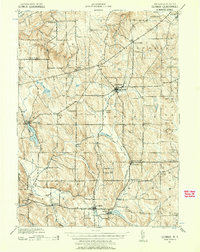 1939 Clymer1957 Print · USGSChautauqua County’s rural uplands are shown here just before the 1940s, highlighting a network of rail-side hamlets and crossroads. Genealogists can locate family-named sites like Raters Corners and Sheldon Corners or trace the Pennsylvania rail line.4 unique versions available
 - 1941 Map of Chautauqua
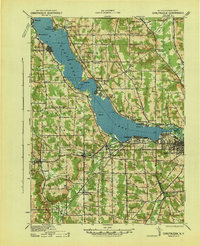 1941 Chautauqua1941 Print · USGSChautauqua Lake was a bustling hub of rail and water travel in the early 1940s. Genealogists and local historians can trace family-named sites like Starr Farm and Jones Corners alongside the path of the Chautauqua Traction Co.
 - 1941 Map of Clymer, 1945 Print
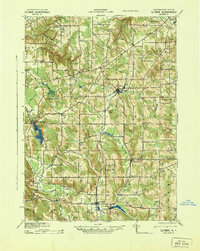 1941 Clymer1945 Print · USGSChautauqua County at the start of the 1940s reveals a landscape of highland dairy farms and vital rail links. Genealogists can trace family footprints at Sheldon Corners, find the Nettle Hill Sch, or follow the Pennsylvania RR through Sherman.
 - 1943 Map of Youngsville
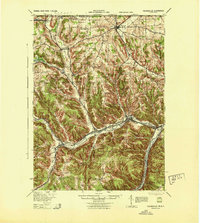 1943 Youngsville1943 Print · USGSThe valleys and ridges of Warren County appear in detail during the early 1940s, highlighting the rail-to-river economy along the Allegheny River. Genealogists can trace family roots through numerous hill schools and rural churches like Davy Hill Ch and Vankirkbush Sch.
 - 1954 Map of Panama, 1957 Print
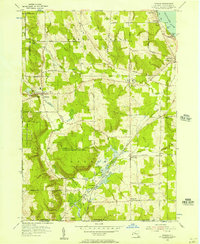 1954 Panama1957 Print · USGSChautauqua County in the mid-fifties shows a landscape of reforestation and lakeside living along Chautauqua Lake. Researchers can trace the Erie Railroad through Watts Flats and Niobe, or locate family sites like Greenwood Cem and Union Cem.2 unique versions available
 - 1954 Map of North Clymer, 1957 Print
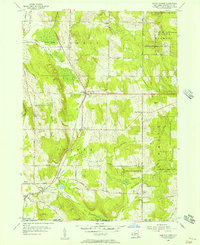 1954 North Clymer1957 Print · USGSThe dairy lands of Chautauqua County appear here in the mid-1950s, as rural settlements and railroads still define the local economy. Researchers can trace family homesteads along Petit Road, locate the old Panama Sta along the Pennsylvania Railroad, or find the Clymer Hill Ch.3 unique versions available
 - 1957 Map of Warren, 1964 Print
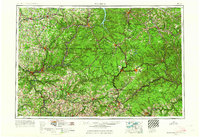 1957 Warren1964 Print · USGSThe northern Pennsylvania oil and timber country comes into focus in the mid-fifties, showing the region before modern highway expansions. Trace the industrial rail networks of the Pennsylvania RR and the early Allegheny River Reservoir near Warren and Oil City.4 unique versions available
 - 1958 Map of Warren
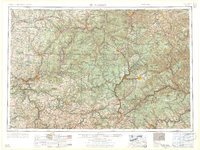 1958 Warren1958 Print · USGSNorthern Pennsylvania’s timber and oil country is captured here during the late fifties, showing the interplay of industrial valleys and vast state forests. Genealogists can trace family connections across the Cornplanter Indian Reservation or through rail hubs like Oil City and Saint Marys.
 - 1959 Map of Warren
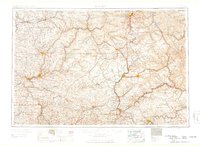 1959 Warren1959 Print · USGSNorthern Pennsylvania's oil and timber country comes alive in this late-fifties study of the forest-clad plateaus. Trace the historic Cornplanter (Indian Reservation), the sprawling Oil Field, and the rail lines of the Pennsylvania RR.2 unique versions available
 - 1960 Map of Buffalo
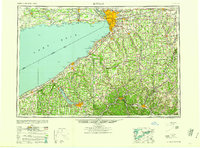 1960 Buffalo1960 Print · USGSWestern New York and the Niagara Peninsula thrive during the mid-twentieth century industrial peak. Genealogists and historians can trace family-named points and early settlements from Dunkirk Light to the Allegany Indian Reservation.
 - 1962 Map of Buffalo, 1980 Print
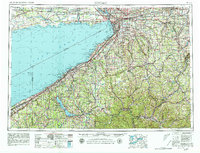 1962 Buffalo1980 Print · USGSThe Niagara Frontier and Western New York are captured here in the early sixties, showing the vital industrial and maritime nexus between the U.S. and Canada. Researchers can trace the path of the Welland Canal, locate the Allegany Indian Reservation, or find family sites near Chautauqua Lake.2 unique versions available
 - 1967 Map of Buffalo
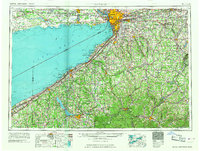 1967 Buffalo1967 Print · USGSWestern New York and the Lake Erie shoreline are shown here during the mid-1960s industrial peak. Researchers can trace the massive rail networks of the Erie Railroad, locate the Cattaraugus Indian Reservation, or find historic sites like Fort Erie.
 - 1968 Map of Columbus, 1971 Print
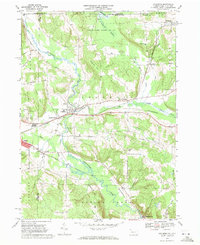 1968 Columbus1971 Print · USGSWarren County at the end of the 1960s shows a landscape defined by the winding Brokenstraw Creek and a dense network of competing railroads. Researchers can trace historic family properties near Westlawn Cem or follow the rail lines through Columbus and Spring Creek.4 unique versions available
 - 1968 Map of Lottsville, 1971 Print
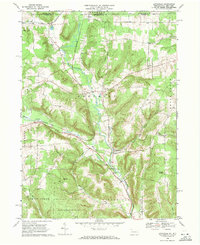 1968 Lottsville1971 Print · USGSWarren County’s northern borderlands in the late sixties remain a landscape of creek-side villages and family-named landmarks. Genealogists and local historians can trace burial sites at Bear Lake Cem or Brooks Hill Cem and follow the old Erie-Lackawanna rail line.3 unique versions available
 - 1971 Map of Warren
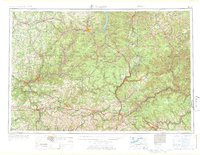 1971 Warren1971 Print · USGSNorth Central Pennsylvania is captured here in the early seventies, showing a landscape defined by industrial centers and massive state forests. Genealogists and historians can trace the rail lines of the Penn Central and Erie Lackawanna connecting towns like Warren, Kane, and Du Bois.
 - 1973 Map of Buffalo
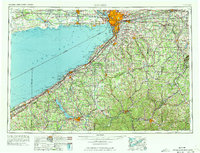 1973 Buffalo1973 Print · USGSWestern New York and Ontario's Golden Horseshoe meet in the early seventies, spanning from the industrial waterfronts of Buffalo to the hills of Allegany State Park. Trace the paths of the Welland Canal and Erie Lackawanna railroad through the lakefront towns of Dunkirk and Port Colborne.
 - 1983 Map of Warren, 1984 Print
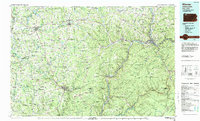 1983 Warren1984 Print · USGSNorthwestern Pennsylvania at the dawn of the 1980s reveals a landscape defined by the petroleum industry and expansive public lands. Trace the legacy of early oil at Drake Well Memorial Park and Pithole City Historical Site, or locate family sites near Warren State Hospital and Kellettville.
 - 1986 Map of Jamestown
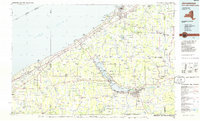 1986 Jamestown1986 Print · USGSChautauqua County and the Lake Erie shoreline are captured in the mid-eighties as the region balanced its industrial rail hubs with lakeside culture. Local historians can trace the grounds of the Chautauqua Institution, the expansion of Jamestown, and rural landmarks like Sunset Hill Cemetery.2 unique versions available
 - 2010 Map of Panama, 2010 Print
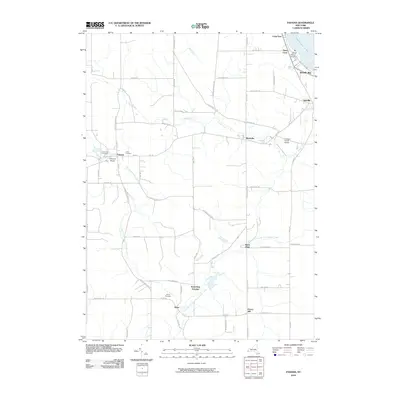 2010 Panama2010 Print · USGSChautauqua County at the start of the twenty-first century reveals a landscape of enduring rural hamlets and creek-carved valleys. Genealogists and local historians can trace family plots at Union Cemetery or explore the early settlements of Watts Flats and Niobe.
Showing maps 1-25 of 44
Top cities near Harmony
- Jamestown historical maps
- Ellicott historical maps
- Busti historical maps
- Corry historical maps
- Westfield historical maps
- Ellery historical maps
See more
Top neighborhoods of Harmony
- Blockville historical maps
- Cherry Hill historical maps
- Niobe historical maps
- North East Junction historical maps
- Watts Flats historical maps
- Panama historical maps
Frequently asked questions
- What are the different types of historical maps available for Harmony?
- What is the oldest map of Harmony?
- Where can I purchase historical maps of Harmony for my home or office?
- Where can I download high-res historical maps of Harmony?
- Are there historical topographic maps available for Harmony?
- Is there historical aerial imagery available for Harmony?
- Where are historical maps of Harmony sourced from?