1900s (20th Century) Maps of Lexington, New York
Explore 25 historic maps of Lexington from the 1900s (20th Century). These maps offer a rare glimpse into what life looked like during the 1900s — showing old roads, neighborhoods, homes, and landmarks that have changed or disappeared over time.
Whether you're researching your family's past, planning a metal detecting trip, or studying how Lexington's landscape evolved across the 1900s, these high-resolution maps are a powerful tool for exploring the history of this region.
- Focus on a specific era: All maps on this page are from the 1900s, giving you a focused view of this time period.
- See what’s changed: Compare century-old streets, trails, and buildings to today's modern landscape using overlays and satellite layers.
- Research with precision: Use these maps for genealogy, historical research, land use analysis, or educational projects.
- View, download, or print: Maps are fully viewable online in high resolution, and can be downloaded or printed for your own records.
Start exploring Lexington's history through authentic maps from the 1900s. This is your window into the past.
Lexington, NY maps
(25)- 1900 Map of Phoenicia, 1963 Print
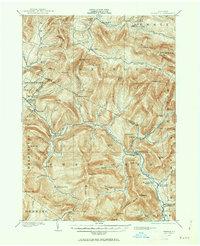 1900 Phoenicia1963 Print · USGSThe high Catskills at the turn of the century are captured here in a moment of emerging tourism and mountain settlement. Genealogists and hikers can trace the original locations of the Grand Hotel, the remote Winnisook Lodge, and the rail stops at Mt Pleasant Station.
 - 1901 Map of Gilboa, 1961 Print
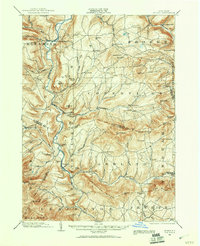 1901 Gilboa1961 Print · USGSThe northern Catskills at the start of the twentieth century reveal a landscape of river-valley hamlets and high mountain peaks. Genealogists and historians can trace original homesteads near Gilboa, Prattsville, and Livingstonville, or find landmarks like Pratt Rocks.
 - 1903 Map of Gilboa
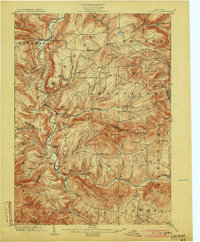 1903 Gilboa1903 Print · USGSThe Schoharie Valley at the turn of the century shows a landscape of clustered hamlets and prominent mountain peaks before major regional changes. Researchers can trace the layout of early settlements like Gilboa and Prattsville, or locate family landmarks such as Pratt Rocks and Manorkill Falls.9 unique versions available
 - 1903 Map of Phoenicia
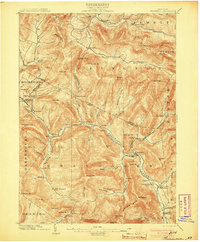 1903 Phoenicia1903 Print · USGSThe Catskills come alive at the turn of the century, showing the mountain rail corridor and early grand resorts. Researchers can trace the Ulster and Delaware line through Phoenicia to the Highmount Grand Hotel and Winnisook Lodge.9 unique versions available
 - 1903 Map of Kaaterskill, 1906 Print
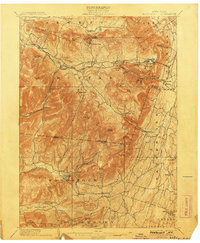 1903 Kaaterskill1906 Print · USGSThe Catskills come alive in the early twentieth century through this record of mountain resorts and steep-grade rail lines. Researchers can trace the legendary Mountain House, the Otis Elevating R.R., and the remote Dutch Settlement.10 unique versions available
 - 1945 Map of West Kill, 1946 Print
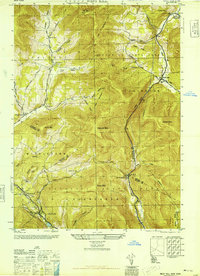 1945 West Kill1946 Print · USGSThe High Peaks region of the Catskills is captured here at the close of the 1940s, showing a landscape defined by deep valleys and timbered ridges. Genealogists can trace family names and sites like Halcott Cem, Bushnellsville, and several local schoolhouses including School No 2.
 - 1945 Map of Prattsville, 1960 Print
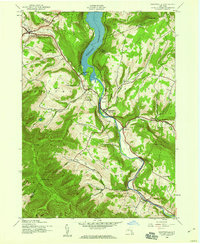 1945 Prattsville1960 Print · USGSThe northern Catskills appear here in the mid-1940s as a landscape of steep ridges and valley settlements tied to the Schoharie Creek. Researchers can trace rural life through sites like School No 1 or family burial grounds such as Huntersfield Cem and Rappleyea Cem.3 unique versions available
 - 1945 Map of Hunter, 1962 Print
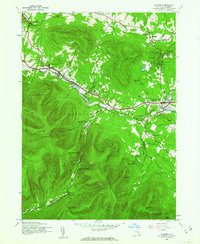 1945 Hunter1962 Print · USGSThe Greene County highlands in the 1940s show a region shaped by high mountain passes and narrow creek valleys. Genealogists and hikers can trace the foundations of Hunter and Tannersville, locating landmarks like Evergreen Cem and Devils Tombstone.2 unique versions available
 - 1945 Map of Ashland, 1963 Print
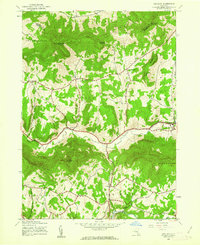 1945 Ashland1963 Print · USGSGreene County in the mid-1940s shows a landscape of upland farming and quiet mountain hamlets before modern development altered these rural valleys. Researchers can locate family sites and landmarks like North Settlement Cem, School No 3, and the village of Ashland.3 unique versions available
 - 1946 Map of Hunter
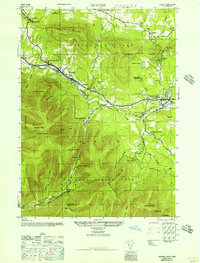 1946 Hunter1946 Print · USGSThe northern Catskills appear in the mid-1940s, showing a landscape of mountain resorts and close-knit villages. Genealogists can locate family landmarks like EVERGREEN CEM, St Johns Ch, and the many camps dotting Schoharie Creek.
 - 1946 Map of Lexington
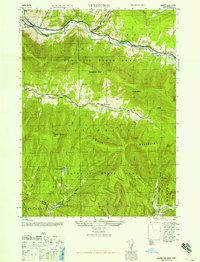 1946 Lexington1946 Print · USGSThe Greene and Ulster county line crosses these high peaks in the mid-1940s, showing a landscape defined by deep hollows and high summits. Genealogists can locate family landmarks like Parker Cem, the Broadstreet Sch, and the seasonal Camp Allegro.
 - 1946 Map of Prattsville
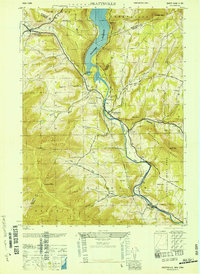 1946 Prattsville1946 Print · USGSThe Catskills in the 1940s reveal a landscape of high peaks and managed waters. Genealogists can trace family roots through numerous small burial grounds like Fairlawn Cem and Huggins Cem, or locate local landmarks like School No 1.
 - 1946 Map of Phoenicia
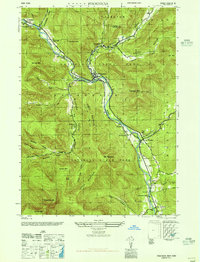 1946 Phoenicia1946 Print · USGSThe Esopus Creek valley in the mid-1940s served as a bustling mountain corridor for the New York Central railroad. Genealogists can locate family landmarks like the Shandaken Rural Cem and early landmarks such as the Lookout Tower on Tremper Mtn.
 - 1946 Map of Ashland
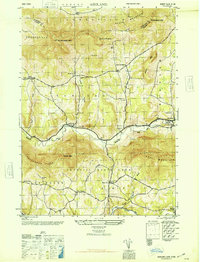 1946 Ashland1946 Print · USGSGreene County high country in the mid-1940s reveals a landscape of high peaks and scattered valley settlements. Genealogists can locate family burial grounds like Freese Cem and Ashland Cem, or trace rural schools and the Catskill State Park boundary.
 - 1948 Map of Binghamton, 1980 Print
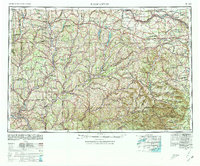 1948 Binghamton1980 Print · USGSCentral New York and the Southern Tier thrive in the late 1940s as a hub of rail traffic and mountain industry. Researchers can trace historic transit lines like the Erie Railroad through Binghamton or find old valley settlements near Oneonta and Delhi.
 - 1950 Map of Binghamton
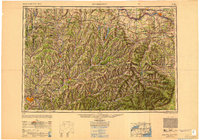 1950 Binghamton1950 Print · USGSBinghamton and the surrounding Southern Tier are shown in the mid-century era, highlighting the intricate rail and river networks that drove local industry. Researchers can trace the path of the Erie Railroad and locate landmarks from Otsego Lake to Sidney Mountain.2 unique versions available
 - 1958 Map of Binghamton
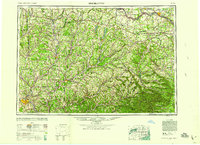 1958 Binghamton1958 Print · USGSCentral New York in the late fifties was a network of manufacturing cities and river valleys connected by vital rail lines. Genealogists and historians can trace family roots in Oneonta, Norwich, and Cooperstown or locate long-standing farms along Schoharie Creek.
 - 1960 Map of Lexington, 1961 Print
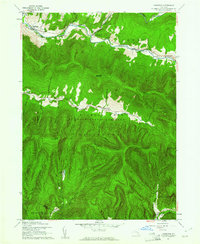 1960 Lexington1961 Print · USGSThe Greene and Ulster County borderlands are surveyed here during the early sixties, showing the high peaks and river hamlets of the Catskills. Genealogists can locate family names at Maplewood Cem or Parker Cem, and trace the route of the Ulster and Delaware Railroad near Lanesville.3 unique versions available
 - 1960 Map of West Kill, 1962 Print
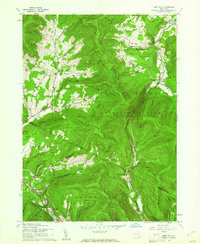 1960 West Kill1962 Print · USGSThe high Catskills of Greene, Ulster, and Delaware counties appear in this mid-century survey as a landscape of isolated mountain hollows and narrow valley roads. Genealogists and local historians can locate Halcott Cem, trace the New York Central rail line near Highmount, and find early school sites like the Hunter Tannersville Central Sch.3 unique versions available
 - 1960 Map of Phoenicia, 1962 Print
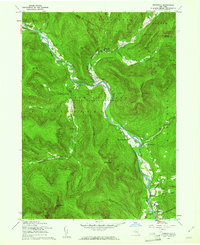 1960 Phoenicia1962 Print · USGSThe Catskill peaks and narrow creek valleys of Ulster County are shown here as they appeared in the early sixties. Genealogists and hikers can trace old homesteads and landmarks like Shandaken Rural Cem, the New York Central line, and Phoenicia.5 unique versions available
 - 1963 Map of Binghamton
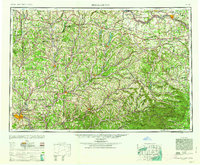 1963 Binghamton1963 Print · USGSThe Southern Tier and Catskill peaks are shown in the early sixties as new reservoirs reshaped the valleys. Trace historic rail corridors like the Erie Lackawanna RR and explore lakeside settlements such as Cooperstown and Oneonta.
 - 1980 Map of Hunter
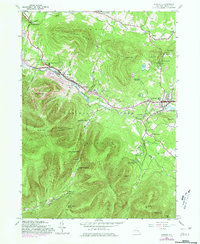 1980 Hunter1980 Print · USGSThe Catskill high country comes into focus in this study of the mountain corridor before the modern era. Genealogists can trace family names at Evergreen Cem or locate historic parish sites like St Johns Ch and East Kill Valley Ch.
 - 1986 Map of Pepacton Reservoir
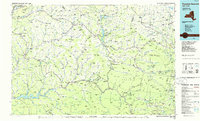 1986 Pepacton Reservoir1986 Print · USGSThe Catskills in the mid-eighties show a landscape shaped by the Pepacton Reservoir and protected wilderness. Local historians can trace mountain rail corridors like the Delaware & Ulster RR and locate high-elevation landmarks from Slide Mountain to Hunter Mountain.2 unique versions available
 - 1997 Map of Hunter, 2001 Print
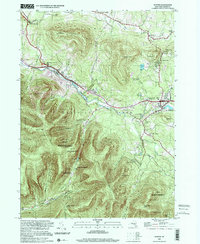 1997 Hunter2001 Print · USGSThe High Catskills at the close of the twentieth century are captured here, centered on the villages of Hunter and Tannersville. Genealogists and local historians can locate several mountain churches, including St Johns Ch, or trace the legacy of the Old Railroad Grade.
 - 1997 Map of Phoenicia, 2001 Print
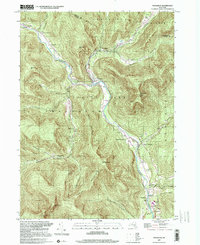 1997 Phoenicia2001 Print · USGSThe Catskills in the late nineties show a landscape shaped by narrow valleys and the winding Esopus Creek. Researchers can trace old family roots at Shandaken Rural Cem or follow the route of the Old Railroad through the hamlet of Phoenicia.
End of results
Showing maps 1-25 of 25
Top cities near Lexington
- Cairo historical maps
- Woodstock historical maps
- Hurley historical maps
- Olive historical maps
- Middletown historical maps
- Hunter historical maps
See more
Top neighborhoods of Lexington
- Mosquito Point historical maps
- North Lexington historical maps
- Spruceton historical maps
- West Kill historical maps
Frequently asked questions
- What are the different types of historical maps available for Lexington?
- What is the oldest map of Lexington?
- Where can I purchase historical maps of Lexington for my home or office?
- Where can I download high-res historical maps of Lexington?
- Are there historical topographic maps available for Lexington?
- Is there historical aerial imagery available for Lexington?
- Where are historical maps of Lexington sourced from?