Old Maps of Croghan, New York for Hiking & Exploration
Hike through history with 73 historic maps of Croghan. Explore old trails, ghost towns, and forgotten backroads — perfect for outdoor adventurers and local explorers.
- Rediscover forgotten places: Map out old mining camps, roads, and footpaths that no longer exist on modern maps.
- Layer with modern tools: Combine with LiDAR or satellite views to plan hikes through historical terrain.
- Made for exploration: Popular among hikers, overlanders, and local history lovers.
Use these maps to find adventure and explore the hidden past of Croghan.
Croghan, NY maps
(73)- 1902 Map of Carthage
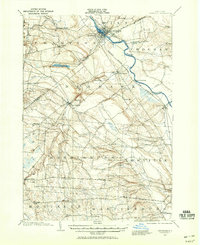 1902 Carthage1902 Print · USGSUpper New York at the turn of the century shows a landscape of river-powered industry and sprawling hill farms. Genealogists can trace family names and old crossroads from Champion Huddle to Gardners Corners, while rail historians can follow the R. W. and O. Div. through the Black River valley.
 - 1904 Map of Carthage
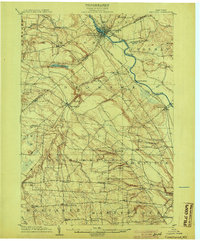 1904 Carthage1904 Print · USGSJefferson and Lewis Counties at the turn of the century show a landscape defined by the Black River valley and its busy rail lines. Genealogists can trace early homesteads in rural outposts like Champion Huddle, Windecker, and Gardners Corners.6 unique versions available
 - 1911 Map of Antwerp
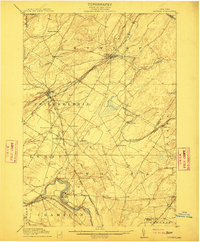 1911 Antwerp1911 Print · USGSJefferson County was a landscape of bustling river towns and intersecting rail lines just after the turn of the century. Trace the early footprints of Antwerp and Sterlingville, or locate family landmarks like Bishops Corners and Woods Mill.6 unique versions available
 - 1911 Map of Lowville, 1959 Print
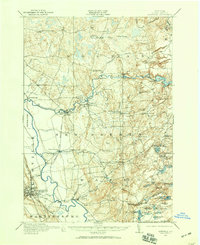 1911 Lowville1959 Print · USGSLewis County at the start of the 1910s reveals a thriving network of river-powered hamlets and rural school districts. Genealogists can locate family landmarks like Bushes Landing, Kirchnerville, and the Wisner School along the Black River valley.2 unique versions available
 - 1912 Map of Number Four
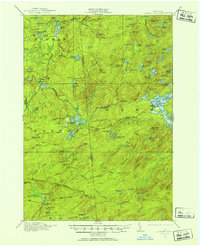 1912 Number Four1912 Print · USGSThe Adirondack wilderness of Herkimer and Lewis counties is captured here in the early twentieth century before modern development. Trace the remote waterways from the Oswegatchie River down to Soft Maple Dam or locate family landmarks near Balsam Flats and Stillwater Mtn.
 - 1913 Map of Lowville
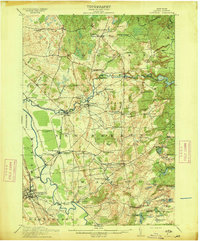 1913 Lowville1913 Print · USGSLewis County in the early twentieth century is captured here as a landscape of river-powered industry and dispersed rural settlements. Genealogists can locate family-named landmarks like Petries Corners, trace the Lowville and Utica Line, and find dozens of local schools including Henry School and Osson School.5 unique versions available
 - 1913 Map of Lake Bonaparte, 1956 Print
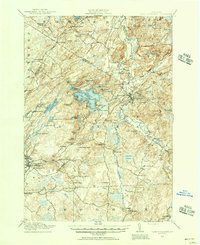 1913 Lake Bonaparte1956 Print · USGSThe Lewis and Jefferson County borderlands come to life in this pre-World War I survey of the Lake Bonaparte region. Researchers can trace the old New York Central rail line past historic landmarks like Kimball Mill and the French Settlement School.
 - 1915 Map of Number Four
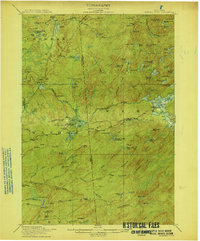 1915 Number Four1915 Print · USGSThe wilderness of the North Country comes into focus in this pre-war survey of the Lewis and Herkimer county line. Researchers can trace the remote settlement of Number Four and locate early landmarks like Silver Mine Dam and Stillwater Mtn.5 unique versions available
 - 1916 Map of Lake Bonaparte
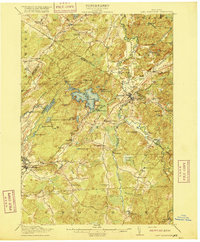 1916 Lake Bonaparte1916 Print · USGSUpper New York State at the dawn of the twentieth century shows a landscape defined by isolated settlements and a budding rail network. Researchers can trace the legacy of early families and industry through sites like Kimball Mill, Natural Bridge, and the French Settlement School.5 unique versions available
 - 1916 Map of Oswegatchie
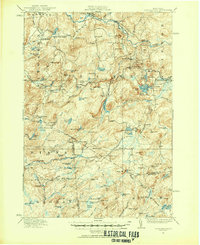 1916 Oswegatchie1916 Print · USGSSt. Lawrence County industry and wilderness meet in the early twentieth century along the Oswegatchie River. Genealogists and historians can trace rail-tied settlements at Benson Mines, remote schools like White School, and numerous named lumber and sporting camps.3 unique versions available
 - 1918 Map of Oswegatchie
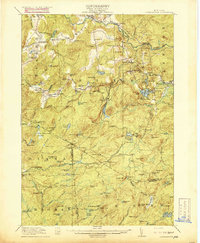 1918 Oswegatchie1918 Print · USGSThe Adirondack wilderness in the 1910s reveals a hardworking landscape of iron mines and timber camps. Genealogists and historians can trace family roots at Benson Mines, locate remote schoolhouses like White School, and follow the path of the Lumber R. R.5 unique versions available
 - 1943 Map of Carthage
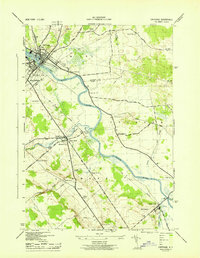 1943 Carthage1943 Print · USGSIn the early 1940s, the industrial hub of Carthage and the surrounding river townships relied heavily on the Black River and the New York Central rail line. Researchers can trace rural school districts and family cemeteries like Swinburne Cem and Sunny Side Cem.4 unique versions available
 - 1948 Map of Ogdensburg, 1973 Print
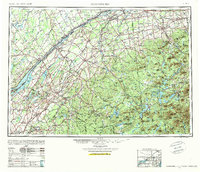 1948 Ogdensburg1973 Print · USGSThe international border along the St Lawrence River comes to life in the late 1940s, showing the vital rail and water connections between New York and Ontario. Researchers can trace the grounds of St Lawrence University, the massive Camp Drum military reservation, and the historic Rideau River and Canal.2 unique versions available
 - 1949 Map of Antwerp, 1953 Print
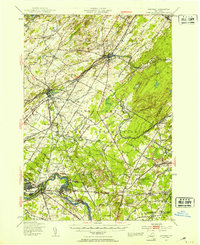 1949 Antwerp1953 Print · USGSNorthern Jefferson County during the late 1940s is defined here by the massive footprint of the Pine Camp Military Reservation. You can trace rural life and ancestry through dozens of schoolhouses and family landmarks like Bishops Corners and Woods Mill.2 unique versions available
 - 1949 Map of North Wilna, 1973 Print
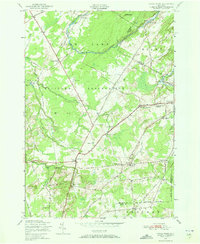 1949 North Wilna1973 Print · USGSJefferson and Lewis Counties in the late 1940s are defined by the intersection of military expansion and rural tradition. Genealogists and local historians can trace family locations through numerous rural school sites like Hosford School No 7 and vanished hamlets such as Woods Mill and Fargo.2 unique versions available
 - 1950 Map of Utica, 1951 Print
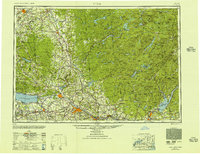 1950 Utica1951 Print · USGSCentral New York in the post-war era showcases the industrial Mohawk Valley and the pristine Adirondack interior. Researchers can trace transportation networks like the New York Central Railroad and find early Cold War sites such as Griffiss Air Force Base.
 - 1951 Map of North Wilna
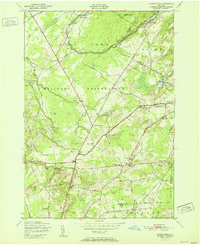 1951 North Wilna1951 Print · USGSThe Jefferson and Lewis County line area is shown here in the early fifties, featuring the large Pine Camp Military Reservation and its surrounding rural hamlets. Local researchers can trace family-named sites like Ormiston Corners, old district schoolhouses, and the Natural Bridge Cemetery near the Indian River.
 - 1951 Map of Ogdensburg
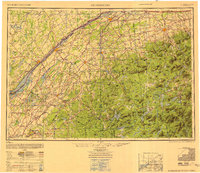 1951 Ogdensburg1951 Print · USGSThe St. Lawrence frontier and the North Country are captured here during the post-war era, from the river ports to the high Adirondacks. Genealogists and historians can trace the rail-and-river economy through Ogdensburg, the Rutland rail lines, and Potsdam.
 - 1951 Map of Remington Corners, 1952 Print
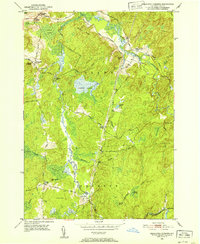 1951 Remington Corners1952 Print · USGSThe Adirondack foothills of Lewis County appear in the early fifties as a landscape of isolated river settlements and mountain timberlands. Genealogists and hikers can trace old family-named crossroads like Tinney Corners and Oswegatchie Corners, or locate historic mill sites at Kimball Mill.4 unique versions available
 - 1951 Map of Natural Bridge, 1953 Print
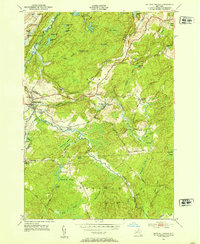 1951 Natural Bridge1953 Print · USGSThe Jefferson and Lewis county line comes alive in the early fifties, showing a landscape shaped by the New York Central railroad and military expansion. Genealogists can locate family landmarks like Hillside Cem, Blanchard Corners, and the settlement at Natural Bridge.4 unique versions available
 - 1953 Map of Ogdensburg
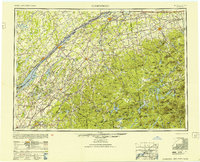 1953 Ogdensburg1953 Print · USGSThe North Country and St. Lawrence Valley are shown here in the early fifties, just as the region’s rail-and-river economy remained in full swing. Genealogists and historians can trace family-named corners and rural hubs along the Rutland railroad or locate heritage sites near Ogdensburg, Potsdam, and the St Regis Indian Reservation.
 - 1957 Map of Utica
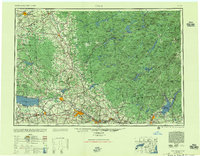 1957 Utica1957 Print · USGSCentral New York and the Adirondack foothills are captured here in the mid-fifties, showing a landscape defined by the Mohawk River corridor and the growing highway system. Genealogists and researchers can trace the rail lines of the New York Central and locate communities from Lowville to Gloversville.
 - 1957 Map of Number Four, 1964 Print
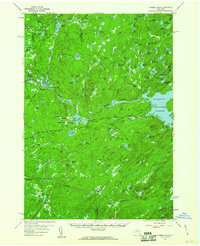 1957 Number Four1964 Print · USGSThe western Adirondacks during the mid-1950s reveal a landscape of managed wilderness and remote settlements. Researchers can trace historic access routes like Prentice Road or locate the Lookout Tower near Number Four and Stillwater.4 unique versions available
 - 1961 Map of Ogdensburg
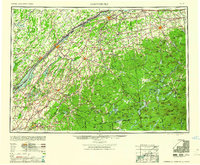 1961 Ogdensburg1961 Print · USGSThe St. Lawrence valley and the Adirondack high country meet in this early sixties survey during a peak era for rail and river commerce. Genealogists and historians can trace the paths of the New York Central railroad through remote settlements like Wanakena, Conifer, and Piercefield.
 - 1962 Map of Utica
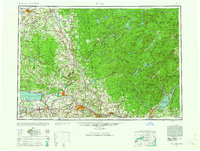 1962 Utica1962 Print · USGSCentral New York and the Adirondack wilderness are captured here during the mid-century era of highway and industrial expansion. Genealogists and historians can trace the development of the New York State Thruway and local rail lines connecting Utica, Rome, and Gloversville.3 unique versions available
Showing maps 1-25 of 73
Top cities near Croghan
- Wilna historical maps
- Lowville historical maps
- Lowville historical maps
- Carthage historical maps
- New Bremen historical maps
- Denmark historical maps
See more
Top neighborhoods of Croghan
- Belfort historical maps
- Beaver Falls historical maps
- Forest City historical maps
- Naumburg historical maps
- Jerden Falls historical maps
- Indian River historical maps
See more
Frequently asked questions
- What are the different types of historical maps available for Croghan?
- What is the oldest map of Croghan?
- Where can I purchase historical maps of Croghan for my home or office?
- Where can I download high-res historical maps of Croghan?
- Are there historical topographic maps available for Croghan?
- Is there historical aerial imagery available for Croghan?
- Where are historical maps of Croghan sourced from?