Old Maps of New York Mills, New York for Academic Research
Study the evolution of New York Mills with 16 high-resolution historic maps. Whether you're teaching, researching, or modeling changes in land use, these maps provide essential visual documentation of urban, environmental, and geographic change.
- Analyze long-term change: Track patterns in development, transportation, and natural features.
- Ideal for environmental or urban studies: Support academic projects with primary historical map data.
- Use in the classroom or lab: Educators and researchers rely on these maps to bring historical context to life.
These maps are a powerful tool for teaching, research, and visualizing how New York Mills has changed over the decades.
New York Mills, NY maps
(16)- 1895 Map of Oriskany
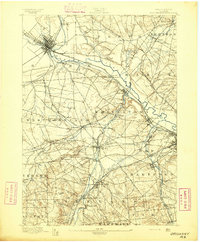 1895 Oriskany1895 Print · USGSOneida County at the end of the nineteenth century reveals a landscape defined by the great Mohawk valley canals and emerging industrial hamlets. Researchers can trace the path of the Erie Canal, find the Franklin Iron Works, and locate early educational landmarks like College Hill.
 - 1898 Map of Oriskany
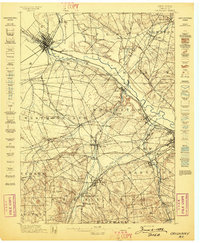 1898 Oriskany1898 Print · USGSOneida County at the close of the nineteenth century reveals a landscape defined by the intersection of the Erie Canal and major rail lines. Genealogists can trace family homes in Spencer Settlement, locate industrial sites like Hecla Works, or find the historic Oriskany Battle Monument.10 unique versions available
 - 1947 Map of Rome, 1952 Print
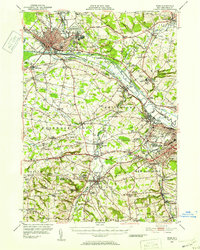 1947 Rome1952 Print · USGSMid-century Oneida County is captured here during the height of its industrial and military significance. Researchers can trace the paths of the Old Erie Canal, locate family roots near St Johns Cem, or study the grounds of Hamilton College.3 unique versions available
 - 1949 Map of Utica West
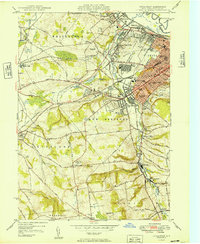 1949 Utica West1949 Print · USGSOneida County's industrial and institutional heart comes into focus just after the war as the mill towns along Sauquoit Creek expand. Trace family roots and local history at the Utica State Hospital, Washington Mills, and the Crown Hill Memorial Park Cemetery.
 - 1950 Map of Utica, 1951 Print
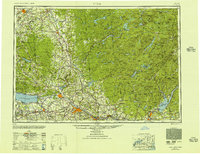 1950 Utica1951 Print · USGSCentral New York in the post-war era showcases the industrial Mohawk Valley and the pristine Adirondack interior. Researchers can trace transportation networks like the New York Central Railroad and find early Cold War sites such as Griffiss Air Force Base.
 - 1955 Map of Utica West, 1957 Print
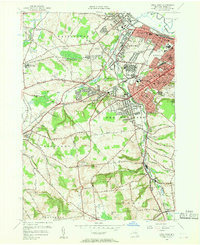 1955 Utica West1957 Print · USGSThe industrial corridor of the Mohawk Valley is captured here during the mid-fifties, showing the growth of Utica and New York Mills along the rail lines. Researchers can trace family roots through numerous sites like Holy Trinity Cem, St John Ch, and the Utica State Hospital grounds.2 unique versions available
 - 1957 Map of Utica
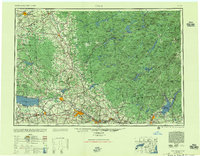 1957 Utica1957 Print · USGSCentral New York and the Adirondack foothills are captured here in the mid-fifties, showing a landscape defined by the Mohawk River corridor and the growing highway system. Genealogists and researchers can trace the rail lines of the New York Central and locate communities from Lowville to Gloversville.
 - 1962 Map of Utica
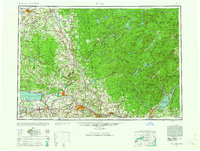 1962 Utica1962 Print · USGSCentral New York and the Adirondack wilderness are captured here during the mid-century era of highway and industrial expansion. Genealogists and historians can trace the development of the New York State Thruway and local rail lines connecting Utica, Rome, and Gloversville.3 unique versions available
 - 1964 Map of Utica
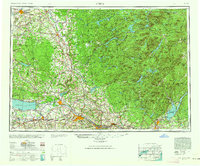 1964 Utica1964 Print · USGSCentral New York and the high wilderness of the Adirondacks are captured here during the post-war era of infrastructure expansion. Researchers can trace the development of the New York State Thruway alongside historic corridors like the Oneida Lake (Barge Canal Route) and the N. Y. Central railroad.
 - 1967 Map of Utica
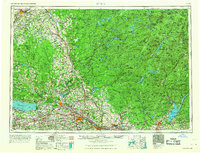 1967 Utica1967 Print · USGSCentral New York's industrial Mohawk Valley meets the Adirondack wilderness in the 1960s, showing the region's transition from manufacturing hubs to state-managed parklands. Trace historic settlements and sites like Griffiss Air Force Base, Colgate University, and the Lyons Falls Paper Mill.
 - 1985 Map of Utica, 1986 Print
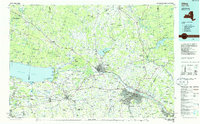 1985 Utica1986 Print · USGSThe Mohawk Valley in the mid-eighties shows a landscape of industrial river cities and high-tech military hubs before the post-Cold War transition. Trace the development of Rome and Utica, the operations at Griffiss Air Force Base, and the lakeside activity at Oneida Lake.2 unique versions available
 - 2010 Map of Utica West, 2010 Print
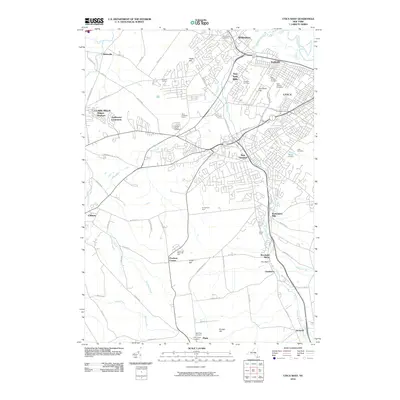 2010 Utica West2010 Print · USGSThe industrial corridor south of Utica thrives in the early 21st century along the banks of Sauquoit Creek. Researchers can trace local development across New York Mills, New Hartford, and Chuckery Corners.
 - 2013 Map of Utica West, 2013 Print
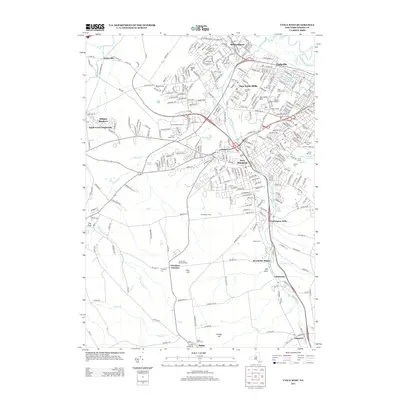 2013 Utica West2013 Print · USGSOneida County's industrial corridors and suburban growth are on display here in the early twenty-first century. Researchers can trace genealogical roots through numerous sites like Crown Hill Memorial Park, Chuckery Corners, and New York Mills.
 - 2016 Map of Utica West, 2016 Print
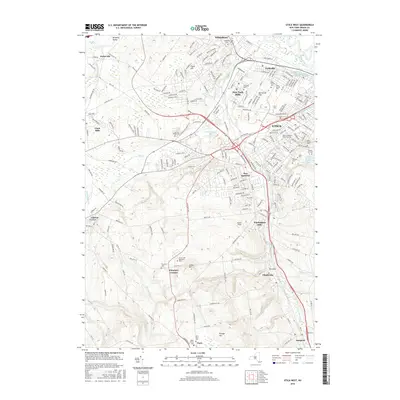 2016 Utica West2016 Print · USGSOneida County's industrial and residential heartland is shown in detail during a period of modern growth in the Mohawk Valley. Genealogists and historians can trace the footprint of several mill towns and dozens of local burial grounds like Israel Cem, Holy Trinity Cem, and Crown Hill Memorial Park.
 - 2019 Map of Utica West, 2019 Print
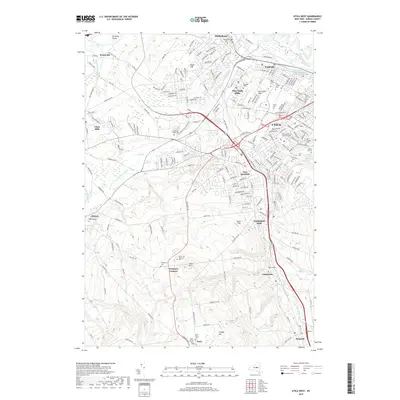 2019 Utica West2019 Print · USGSOneida County's industrial and collegiate history is preserved here in this recent survey of the Mohawk Valley south of the river. Genealogists and historians can trace the many commemorative sites and parish grounds like Crown Hill Memorial Park, Chuckery Corners, and Saint Joseph Cem.
 - 2023 Map of Utica West, 2023 Print
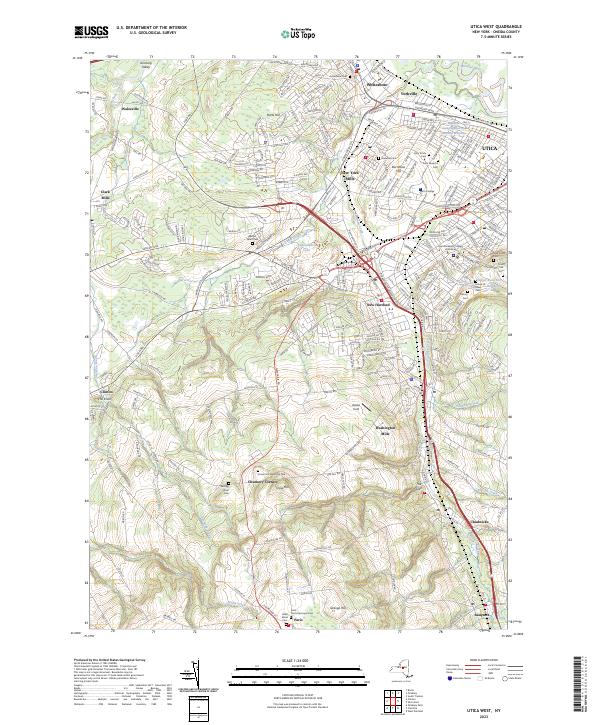 2023 Utica West2023 Print · USGSThe industrial and residential heart of Oneida County is captured here in the contemporary era, centered on the Sauquoit Creek valley. Genealogists and historians can locate numerous burial sites and institutions, from Crown Hill Memorial Park to the Kellogg Street Cem and New York Mills.
End of results
Showing maps 1-16 of 16
Top cities near New York Mills
- Utica historical maps
- Rome historical maps
- New Hartford historical maps
- Whitestown historical maps
- German Flatts historical maps
- Kirkland historical maps
See more
Frequently asked questions
- What are the different types of historical maps available for New York Mills?
- What is the oldest map of New York Mills?
- Where can I purchase historical maps of New York Mills for my home or office?
- Where can I download high-res historical maps of New York Mills?
- Are there historical topographic maps available for New York Mills?
- Is there historical aerial imagery available for New York Mills?
- Where are historical maps of New York Mills sourced from?