Old Maps of Wallkill, New York for Metal Detecting
Plan your next treasure hunt with 52 historic maps of Wallkill. Find old homesites, ghost towns, trails, and gathering spots that may be lost to time — perfect for identifying promising metal detecting locations.
- Locate forgotten sites: Uncover places like long-lost settlements, abandoned rail lines, or gathering spots.
- Plan better hunts: Use map overlays combined with LiDAR or satellite views to narrow in on historically rich areas.
- Made for detectorists: Thousands of hobbyists use these maps to discover relics, coins, and hidden history.
Use these historic maps to boost your research and find new opportunities beneath the surface of Wallkill.
Wallkill, NY maps
(52)- 1904 Map of Ellenville, 1956 Print
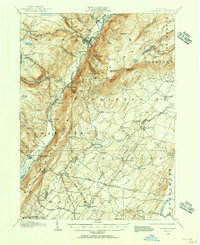 1904 Ellenville1956 Print · USGSThe Shawangunk Mountains and Wallkill Valley are captured here at the start of the twentieth century, showing a landscape of high ridges and industrial valleys. Researchers can trace the D. & H. Canal (Abandoned), the New York Ontario and Western RR, and historic centers like Ellenville or Wurtsboro.
 - 1906 Map of Ellenville
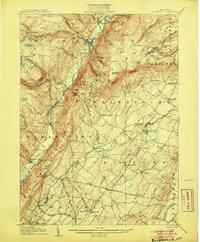 1906 Ellenville1906 Print · USGSThe Shawangunk ridge and Mamakating Hollow are captured here in the early 1900s, showing the region's shift from canal to rail transport. Genealogists can locate family homes and landmarks across Ellenville, Cragsmoor, and Wurtsboro, or trace the Delaware and Hudson Canal.7 unique versions available
 - 1906 Map of Port Jervis, 1956 Print
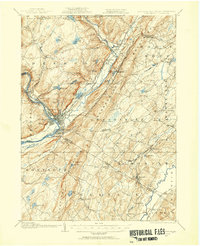 1906 Port Jervis1956 Print · USGSPort Jervis sits at the confluence of the Delaware and Neversink rivers during the height of the railroad era. Genealogists and local historians can trace the paths of the Erie RR, find vanished hamlets like Logtown, and locate the Old Bolton Basin along the river.
 - 1906 Map of Goshen, 1959 Print
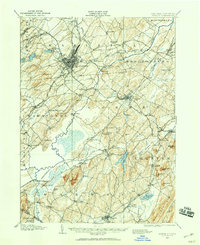 1906 Goshen1959 Print · USGSOrange County at the start of the twentieth century was a vital junction of rail lines and dairy country. Genealogists and historians can trace the early footprints of Middletown and Goshen, alongside smaller junctions like Campbell Hall and Pine Island.2 unique versions available
 - 1908 Map of Goshen
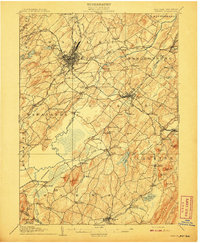 1908 Goshen1908 Print · USGSOrange County's agricultural and railroad heartland is captured here in the early 1900s as a complex web of small villages and connecting lines. Genealogists and historians can trace family locations near Middletown, the rural Wisner PO, or the lowlands of Pellets Island.6 unique versions available
 - 1908 Map of Port Jervis
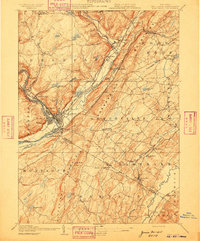 1908 Port Jervis1908 Print · USGSThe tri-state border region comes alive at the start of the twentieth century, focused on the rail-and-river hub of Port Jervis. Genealogists and historians can trace family locations across Matamoras, Unionville, and Westtown, or locate landmarks like Tristate Rock and Old Bolton Basin.4 unique versions available
 - 1938 Map of Goshen
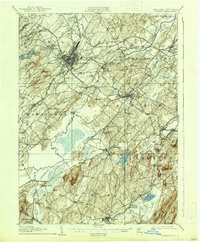 1938 Goshen1938 Print · USGSOrange County was a vital rail and agricultural corridor during the early twentieth century. Researchers can trace the path of the Erie RR through Middletown and explore long-standing farming communities like Florida and Orange Farm.
 - 1942 Map of Goshen, 1956 Print
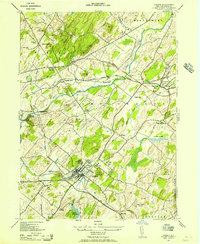 1942 Goshen1956 Print · USGSOrange County's agricultural and rail infrastructure is well-defined in the early 1940s as local hubs like Goshen and Campbell Hall expand. Genealogists and researchers can locate landmarks like Bordens Dairy, Blessed Sacrament Academy, and the Wallkill Cemetery.
 - 1942 Map of Middletown, 1959 Print
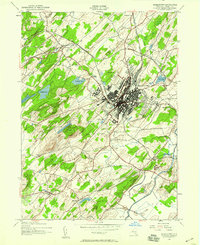 1942 Middletown1959 Print · USGSOrange County's industrial and institutional landscape is captured here during the 1940s as the rail networks of the ERIE and NEW YORK AND WESTERN converge. Genealogists and local historians can trace family locations near Hillside Cemetery, the State Hospital, or old rural schoolhouses like Wallkill School No 11.
 - 1942 Map of Otisville, 1959 Print
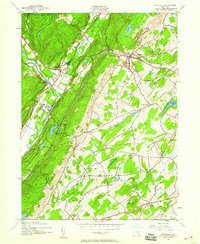 1942 Otisville1959 Print · USGSWestern Orange County during the early 1940s shows a landscape shaped by mountain ridges and the intersecting lines of the Erie RR and the New York Ontario and Western RR. Genealogists can locate family landmarks such as Mount Hope Cem or the local Godeffroy Sch.
 - 1943 Map of Goshen
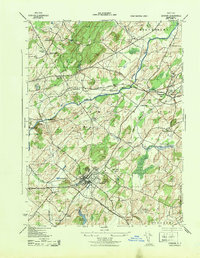 1943 Goshen1943 Print · USGSOrange County's agricultural and rail infrastructure is captured here during the Second World War as the region supported local industry and institutions. Genealogists can locate family landmarks like Bordens Dairy, the Sara Wells Airport, and schools such as Our Lady of the Blessed Sacrament Academy.
 - 1943 Map of Otisville
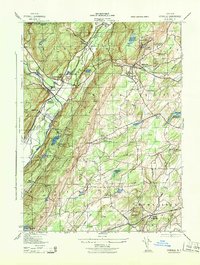 1943 Otisville1943 Print · USGSOrange and Sullivan Counties are shown in the 1940s as a hub of rail infrastructure and public health institutions. Researchers can trace the legacy of the N Y City Municipal Sanatorium, the Erie RR corridor, and local landmarks like Mount Hope Cemetery.
 - 1943 Map of Pinebush, 1944 Print
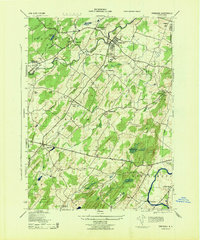 1943 Pinebush1944 Print · USGSThe rural borderlands of Orange and Ulster counties come alive in the 1940s, anchored by the rail hub at Pinebush. Genealogists can trace family homesteads like C. Judson and M. Durnin or locate landmarks like the Brimstone School and Hopewell Cemetery.
 - 1943 Map of Wurtsboro, 1954 Print
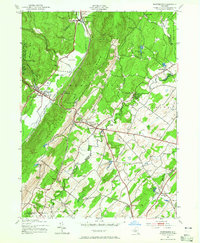 1943 Wurtsboro1954 Print · USGSSullivan and Orange County hillsides were undergoing a transit transition during the early years of the war. Researchers can trace the legacy of the Delaware and Hudson Canal, find family names at Sylvan Cem, and locate rural landmarks like Prosperous Valley Sch.3 unique versions available
 - 1946 Map of Goshen
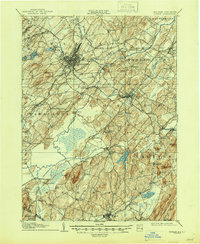 1946 Goshen1946 Print · USGSOrange County was a bustling crossroads of the Erie RR and several other lines during the early twentieth century. Genealogists and local historians can trace family-named hills and vanished rail stops from Pellets Island to Van Burenville and Stony Ford.
 - 1950 Map of Scranton, 1952 Print
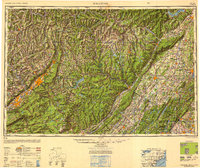 1950 Scranton1952 Print · USGSMid-century Northeast Pennsylvania and the Hudson Valley come alive in this survey of the tri-state region. Genealogists and historians can trace the dense rail networks of the Erie RR and DL&W RR between industrial hubs like Scranton and Wilkes-Barre.
 - 1953 Map of Scranton
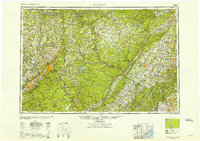 1953 Scranton1953 Print · USGSNortheastern Pennsylvania and the Catskills are shown in great detail during the early fifties, a time when rail lines and river valleys dictated the region's growth. Genealogists and historians can trace the industrial hearts of Scranton and Wilkes-Barre or locate remote landmarks like High Point and Lake Wallenpaupack.
 - 1956 Map of Pine Bush, 1958 Print
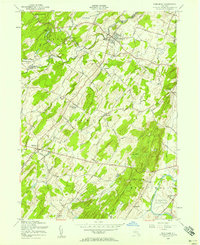 1956 Pine Bush1958 Print · USGSIn the mid-1950s, this area of the Hudson Valley maintained a rural character defined by the Erie RR and small valley settlements. Researchers can trace family history through sites like Howell Cem, St Pauls Ch, and the hamlet of Ulsterville.3 unique versions available
 - 1957 Map of Goshen, 1959 Print
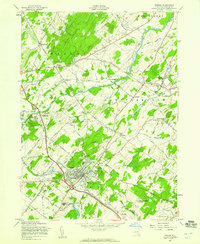 1957 Goshen1959 Print · USGSOrange County in the late fifties remains a landscape of harness racing tracks and quiet rural hamlets connected by the Erie Railroad. You can trace the village layout of Goshen or find ancestral sites like St Johns Cem and the Blessed Sacrament Academy.3 unique versions available
 - 1959 Map of Scranton
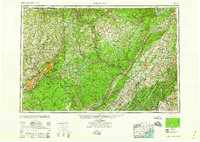 1959 Scranton1959 Print · USGSThe northern coalfields and the Hudson Valley meet in this mid-century survey of the Pennsylvania and New York borderlands. Genealogists and historians can trace the intricate rail networks of the Erie Railroad and the vast waters of Lake Wallenpaupack.2 unique versions available
 - 1962 Map of Scranton, 1977 Print
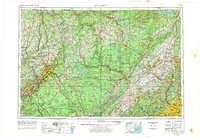 1962 Scranton1977 Print · USGSThe industrial heart of eastern Pennsylvania and the New York Catskills are captured here in the early sixties. Genealogists and historians can trace the dense valley settlements from Scranton to Wilkes-Barre and the rail lines of the Erie Lackawanna Railroad.2 unique versions available
 - 1965 Map of Scranton
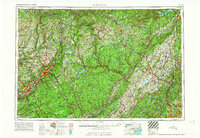 1965 Scranton1965 Print · USGSThe tri-state highlands of Pennsylvania, New York, and New Jersey come alive in the mid-sixties as industry and recreation converge. Trace the intricate rail lines of the Erie Lackawanna RR or locate landmarks like the U S Military Academy.2 unique versions available
 - 1969 Map of Otisville, 1971 Print
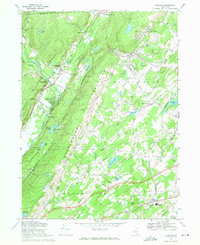 1969 Otisville1971 Print · USGSOrange and Sullivan Counties are shown in the late sixties as the ridge of the Shawangunk Mountains separates the Neversink and Shawangunk valleys. Genealogists and historians can locate the State Training School for Boys, Mount Hope Cem, and several old hamlets along the Erie Lackawanna Railroad.2 unique versions available
 - 1969 Map of Middletown, 1971 Print
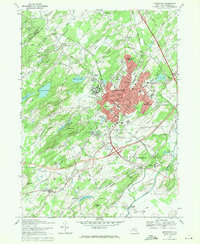 1969 Middletown1971 Print · USGSOrange County's urban and agricultural mix is on full display here in the late sixties. Genealogists and historians can trace the grounds of the State Hospital, find Randall Airport, and locate family names in Hillside Cemetery.2 unique versions available
 - 1969 Map of Wurtsboro, 1971 Print
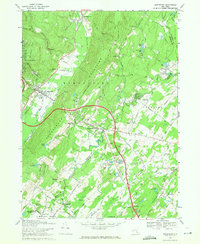 1969 Wurtsboro1971 Print · USGSSullivan and Orange County settlements are captured here in the late sixties, showing the alignment of the Shawangunk Mountains and the Basher Kill valley. Genealogists can locate family landmarks like Stanton Memorial Cem or the Chase Sch near Wurtsboro.3 unique versions available
Showing maps 1-25 of 52
Top cities near Wallkill
- Palm Tree historical maps
- Kiryas Joel historical maps
- Warwick historical maps
- Middletown historical maps
- New Windsor historical maps
- Vernon Township historical maps
See more
Top neighborhoods of Wallkill
- Crystal Run Station historical maps
- Stony Ford Station historical maps
- Fair Oaks historical maps
- Circleville historical maps
- Midway Park historical maps
- Rockville historical maps
See more
Frequently asked questions
- What are the different types of historical maps available for Wallkill?
- What is the oldest map of Wallkill?
- Where can I purchase historical maps of Wallkill for my home or office?
- Where can I download high-res historical maps of Wallkill?
- Are there historical topographic maps available for Wallkill?
- Is there historical aerial imagery available for Wallkill?
- Where are historical maps of Wallkill sourced from?