Old Maps of East Nassau, Nassau for Hiking & Exploration
Hike through history with 44 historic maps of East Nassau. Explore old trails, ghost towns, and forgotten backroads — perfect for outdoor adventurers and local explorers.
- Rediscover forgotten places: Map out old mining camps, roads, and footpaths that no longer exist on modern maps.
- Layer with modern tools: Combine with LiDAR or satellite views to plan hikes through historical terrain.
- Made for exploration: Popular among hikers, overlanders, and local history lovers.
Use these maps to find adventure and explore the hidden past of East Nassau.
East Nassau, Nassau maps
(44)- 1888 Map of Berlin
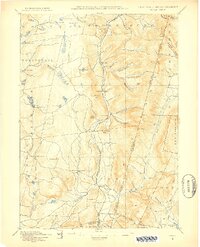 1888 Berlin1888 Print · USGSRensselaer County at the close of the nineteenth century was a region of high ridges and narrow rail-linked valleys. Researchers can trace the path of the Lebanon Springs Railroad and locate vanished farmsteads in Barber Hollow or Mc Master Hollow.2 unique versions available
 - 1890 Map of Berlin
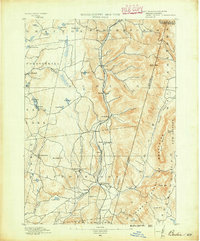 1890 Berlin1890 Print · USGSThe New York and Massachusetts borderlands in the 1880s were a landscape of steep ridges and rail-connected valley towns. Genealogists and historians can trace the old corridors of the Lebanon Springs Railroad and locate vanished family landmarks near Berlin Center, Garfield, and East Poestenkill.
 - 1893 Map of Troy
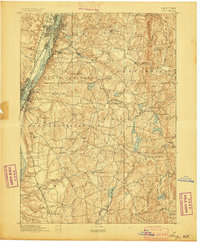 1893 Troy1893 Print · USGSThe Hudson River valley at the end of the nineteenth century was a bustling hub of commerce where the Erie Canal met the Troy waterfront. Researchers can trace the early rail networks of the Boston and Albany Railroad or locate vanished sites like Schodack Depot and the industrial hamlet of Glass House.
 - 1894 Map of Berlin
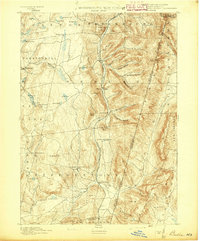 1894 Berlin1894 Print · USGSThe Rensselaer and Berkshire borderlands come alive in the late nineteenth century, showing a landscape of valley settlements and upland hollows. Trace the path of the Lebanon Springs Railroad as it connects Berlin Center, North Stephentown, and Garfield.
 - 1895 Map of Troy
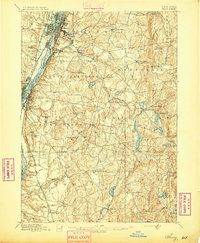 1895 Troy1895 Print · USGSThe Hudson River valley at the close of the nineteenth century was a bustling nexus of river, rail, and canal traffic. Genealogists and historians can trace family-named hills and early hamlets from Troy to the lakes of Sand Lake, including Glass House and Sliter.
 - 1898 Map of Berlin
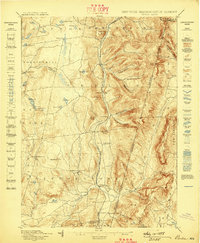 1898 Berlin1898 Print · USGSRensselaer County valley towns and the Taconic highlands are captured in the late nineteenth century as the Lebanon Springs Railroad linked the region. Genealogists can trace family locations in Berlin, Stephentown, and Hancock, or find landmarks like Buckwheat Hill and Barber Hollow.10 unique versions available
 - 1898 Map of Troy
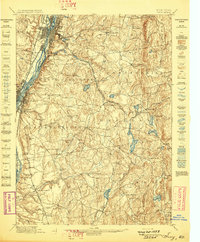 1898 Troy1898 Print · USGSThe Hudson River valley at the turn of the century shows a bustling corridor of industry and rail before modern expansion transformed the capital region. Researchers can trace historic riverfront districts like Greenbush and Bath or locate vanished rail stops such as Schodack Depot and the Erie Canal route.8 unique versions available
 - 1900 Map of Taconic
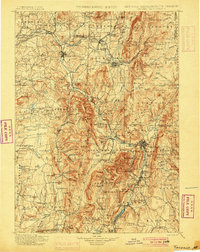 1900 Taconic1900 Print · USGSThe tri-state border region of the Taconic Mountains thrived at the turn of the century as a hub of rail travel and valley industry. Genealogists and historians can trace the early footprints of Hoosick Falls, Bennington, and the winding path of the Rutland R.R.4 unique versions available
 - 1903 Map of Kinderhook
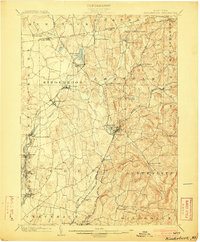 1903 Kinderhook1903 Print · USGSColumbia County at the turn of the century shows a landscape defined by the intersection of water power and rail. Trace the industrial heritage of Stuyvesant Falls and White Mills or locate ancestral homes in Old Chatham and Valatie.6 unique versions available
 - 1925 Map of Troy
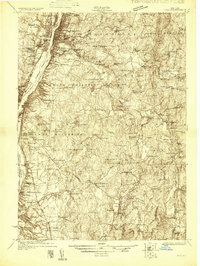 1925 Troy1925 Print · USGSRensselaer County at the mid-twenties shows a landscape of established mill towns and developing lakefront retreats. Genealogists can trace family roots through numerous sites like St Josephs Cemetery, Teller Mill, and early schoolhouses from Albia to Hoags Corners.
 - 1928 Map of Troy
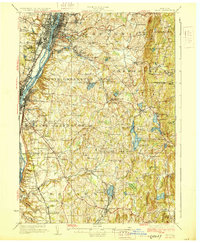 1928 Troy1928 Print · USGSThe Hudson River valley at the height of its industrial era features the dense centers of Troy and Watervliet. Researchers can trace old neighborhoods near Rensselaer Polytechnic Institute or locate family plots in St Agnes Cemetery and St Marys Cemetery.5 unique versions available
 - 1933 Map of Kinderhook
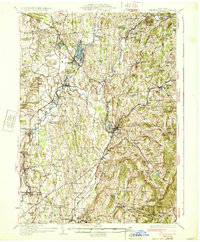 1933 Kinderhook1933 Print · USGSColumbia County in the early thirties is a landscape of thriving mill towns and rail junctions. Genealogists and historians can locate family-named schoolhouses like Woltermire Sch or trace the grounds of the Martin Van Buren Homestead.3 unique versions available
 - 1945 Map of Stephentown Center, 1958 Print
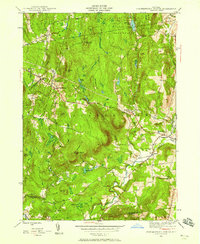 1945 Stephentown Center1958 Print · USGSRensselaer County's rugged eastern borderlands are captured here just after the war, showing the network of valley hamlets and highland ridges. Genealogists can locate ancestors at Hillside Cem or Sacred Heart Cem and trace the paths through Dunham Hollow and West Stephentown.4 unique versions available
 - 1947 Map of Stephentown Center
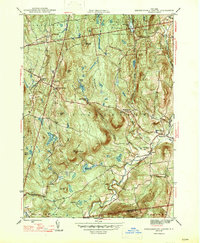 1947 Stephentown Center1947 Print · USGSRensselaer County at the end of the 1940s reveals a patchwork of highland forests and tight-knit valley hamlets connected by the Rutland railroad. Genealogists can locate family burial sites at Hillside Cem and Sacred Heart Cem or trace old property lines near Stephentown Center.2 unique versions available
 - 1948 Map of Stephentown Center
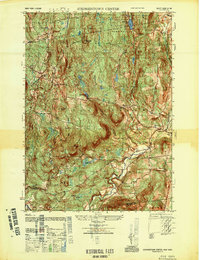 1948 Stephentown Center1948 Print · USGSRensselaer County’s eastern uplands are shown in detail in the late 1940s, highlighting a landscape defined by state forests and small valley hamlets. Researchers can trace the Rutland rail line or locate family sites near Hillside Cem and Garfield.
 - 1948 Map of Albany, 1951 Print
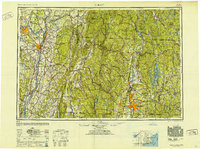 1948 Albany1951 Print · USGSThe Hudson and Connecticut River valleys are captured here in the late 1940s, showing the vital rail and water corridors of the Northeast. You can trace the Boston and Maine tracks past Mt Greylock or locate early settlements like Great Barrington and Bennington.
 - 1949 Map of Kinderhook
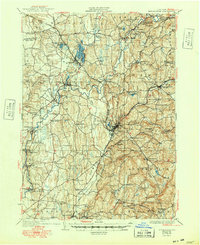 1949 Kinderhook1949 Print · USGSColumbia County’s landscape is captured here during the post-war era, showing a region shaped by both rail-borne industry and early American history. Genealogists and historians can trace the Boston and Albany tracks to landmarks like the Martin Van Buren Homestead and the Ichabod Crane Sch.
 - 1950 Map of Troy
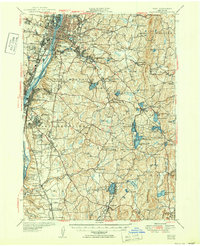 1950 Troy1950 Print · USGSThe Hudson River valley and the Rensselaer hills are shown here just after the war, capturing a landscape of dense industrial riverfronts and rural upland hamlets. Genealogists can trace family sites at Albany Rural Cemetery, identify early landmarks like Draper School No 9, or locate rail stops at East Greenbush Station.
 - 1953 Map of Nassau, 1955 Print
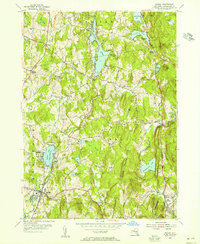 1953 Nassau1955 Print · USGSRensselaer County in the early fifties shows a landscape of upland lakes and small crossroads settlements during a period of growing lakeside recreation. Genealogists and local historians can trace old family sites at Sliters and Hoag Corners or locate the YMCA Camp and Totem Lodge.4 unique versions available
 - 1953 Map of East Chatham, 1955 Print
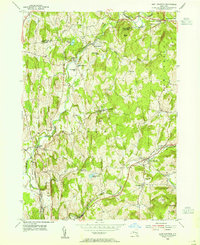 1953 East Chatham1955 Print · USGSColumbia County’s rural landscape is preserved in this mid-century survey as the New York Central railroad still wound through the valley. Researchers can trace ancestral roots at The Maples Cem or locate the Shaker Museum and Riders Mills Sch in their original settings.3 unique versions available
 - 1956 Map of Albany, 1968 Print
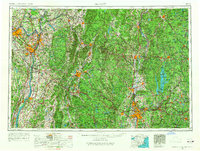 1956 Albany1968 Print · USGSThe industrial heart of the Northeast is revealed in the mid-1950s, from the Hudson Valley to the Connecticut River. Researchers can trace the legacy of the Quabbin Reservoir, locate Westover Air Force Base, or follow the Rutland RR through the Green Mountains.2 unique versions available
 - 1957 Map of Albany
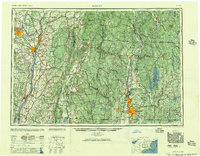 1957 Albany1957 Print · USGSThe Tri-State region and Connecticut River Valley are captured here during a period of significant postwar growth and infrastructure expansion. Genealogists and historians can trace the rail-and-river economy through landmarks like the Boston and Maine railroad, Quabbin Reservoir, and Westover Air Force Base.
 - 1959 Map of Albany
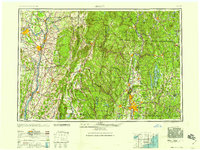 1959 Albany1959 Print · USGSThe Hudson and Connecticut River valleys are captured here during the late fifties, showing the region's dense rail networks and massive water projects. Researchers can trace the New York State Thruway or locate local landmarks like Mt Greylock and the Quabbin Reservoir.
 - 1962 Map of Albany
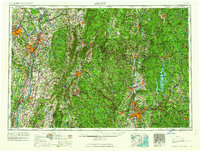 1962 Albany1962 Print · USGSThe Hudson and Connecticut River valleys meet the Green Mountains and Berkshires in this mid-century overview of the Northeast. Genealogists and historians can trace the industrial hearts of Albany and Springfield or locate features like Quabbin Reservoir and Westover Air Force Base.
 - 1986 Map of Albany
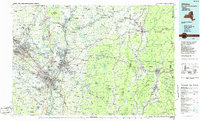 1986 Albany1986 Print · USGSThe Capital District and the tri-state highlands come into focus during the mid-eighties as urban growth meets the edge of the Green Mountains. Researchers can trace historic industrial sites and landmarks like the Watervliet Arsenal, the Bennington Battle Monument, and the grounds of Rensselaer Polytechnic Institute.
Showing maps 1-25 of 44
Top cities near East Nassau
- Albany historical maps
- Colonie historical maps
- Troy historical maps
- Pittsfield historical maps
- Cohoes historical maps
- East Greenbush historical maps
See more
Top neighborhoods of East Nassau
Frequently asked questions
- What are the different types of historical maps available for East Nassau?
- What is the oldest map of East Nassau?
- Where can I purchase historical maps of East Nassau for my home or office?
- Where can I download high-res historical maps of East Nassau?
- Are there historical topographic maps available for East Nassau?
- Is there historical aerial imagery available for East Nassau?
- Where are historical maps of East Nassau sourced from?