Old Maps of Duanesburg, New York for Academic Research
Study the evolution of Duanesburg with 69 high-resolution historic maps. Whether you're teaching, researching, or modeling changes in land use, these maps provide essential visual documentation of urban, environmental, and geographic change.
- Analyze long-term change: Track patterns in development, transportation, and natural features.
- Ideal for environmental or urban studies: Support academic projects with primary historical map data.
- Use in the classroom or lab: Educators and researchers rely on these maps to bring historical context to life.
These maps are a powerful tool for teaching, research, and visualizing how Duanesburg has changed over the decades.
Duanesburg, NY maps
(69)- 1895 Map of Amsterdam
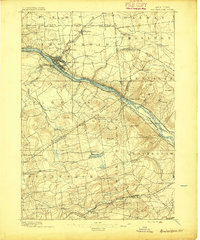 1895 Amsterdam1895 Print · USGSThe Mohawk River valley thrives in the late nineteenth century as a corridor of heavy rail and canal traffic. Trace the historic paths of the Erie Canal and West Shore R.R. past Amsterdam and the old Hoffman Ferry crossing.7 unique versions available
 - 1896 Map of Fonda
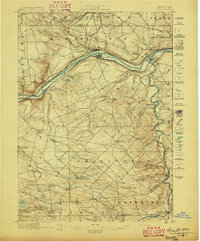 1896 Fonda1896 Print · USGSThe Mohawk Valley was a technological corridor in the 1890s, defined by the convergence of major rail lines and the Erie Canal. Genealogists and historians can trace the old post offices and hamlet life at Yatesville Randall P.O., Auriesville, and Rural Grove.
 - 1898 Map of Fonda
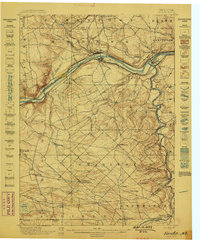 1898 Fonda1898 Print · USGSThe Mohawk Valley at the close of the 19th century was a powerhouse of transit and industry. Genealogists and historians can trace the bustling Erie Canal corridor through Fonda, the upland reaches of Charleston, and the path of the West Shore R. R.
 - 1898 Map of Schoharie, 1963 Print
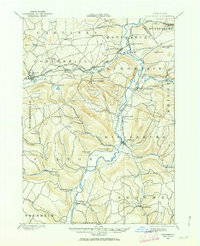 1898 Schoharie1963 Print · USGSSchoharie County in the late nineteenth century was a landscape of vital river valleys and developing rail lines. Local historians can trace the paths of the Delaware and Hudson RR or locate old hamlets like Breakabeen and Fultonham.
 - 1900 Map of Schoharie
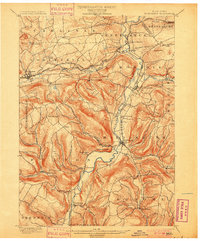 1900 Schoharie1900 Print · USGSSchoharie County at the turn of the century shows a landscape defined by the winding Schoharie Creek and vital rail connections. Genealogists can trace family roots through specific locations like Howe Cave, Mineral Springs, and the various stops along the Middleburg and Schoharie RR.8 unique versions available
 - 1900 Map of Schoharie, 1944 Print
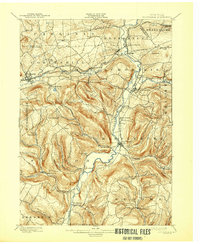 1900 Schoharie1944 Print · USGSSchoharie County at the close of the nineteenth century centers on a thriving valley rail network and small industrial settlements. Genealogists and historians can trace the paths of the Middleburg and Schoharie railroad and locate rural landmarks like Howes Cave and Boucks Falls.
 - 1900 Map of Berne, 1954 Print
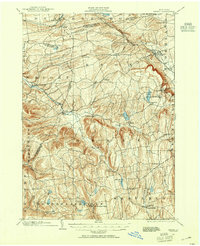 1900 Berne1954 Print · USGSAlbany County hill towns and the Helderberg Escarpment are captured here at the turn of the century as rural life centered on upland hamlets and rocky creek valleys. Researchers can trace old family sites and forgotten crossroads like Van Leuvans Corners, Chesterville, and Quaker Street.2 unique versions available
 - 1902 Map of Fonda
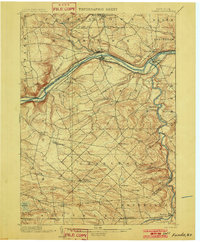 1902 Fonda1902 Print · USGSThe Mohawk Valley at the close of the nineteenth century reveals a critical junction of the Erie Canal and major railroads. Genealogists and historians can trace old homesteads and local centers like Auriesville, Sammonsville, and the remote Charleston Four Corners.8 unique versions available
 - 1903 Map of Berne
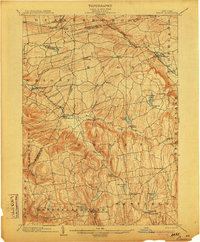 1903 Berne1903 Print · USGSThe Helderberg plateau in the early 1900s reveals a network of isolated hill towns and winding creek valleys. Genealogists can trace family footprints in Rensselaerville, Quaker Street, and the lakeside settlements of Thompsons Lake and Warner Lake.8 unique versions available
 - 1931 Map of Amsterdam
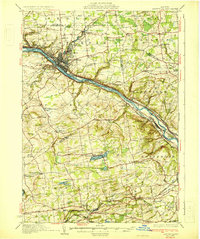 1931 Amsterdam1931 Print · USGSThe Mohawk Valley thrives at the height of its rail and canal era in the late twenties and early thirties. Genealogists can trace family names through dozens of rural schools and churches, from St Marys Ch to the quiet hamlets of Mariaville and Scotch Bush.3 unique versions available
 - 1943 Map of Schoharie, 1959 Print
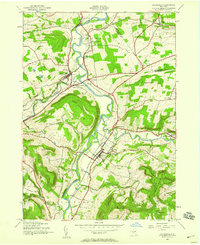 1943 Schoharie1959 Print · USGSThe Schoharie Valley was a vital rail and river corridor during the mid-forties, defined by its small farming hamlets and prominent terrain. Researchers can trace ancestral roots through the Old Stone Fort, several rural schoolhouses, and cemeteries like St Pauls Cem and Central Bridge Cem.4 unique versions available
 - 1943 Map of Esperance, 1959 Print
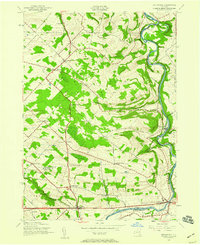 1943 Esperance1959 Print · USGSThe rural borderlands of Montgomery and Schoharie counties appear here during the mid-forties, showing a landscape of scattered crossroads and winding waterways. Family historians can locate family-named landmarks like Kimball Cem and Rockwell Corners or trace old school districts like Carytown Sch.2 unique versions available
 - 1944 Map of Altamont, 1959 Print
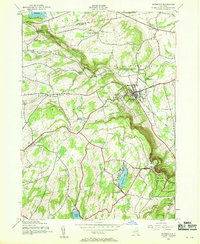 1944 Altamont1959 Print · USGSAlbany County's steep ridges and valley settlements are captured here during the mid-1940s. Trace old family plots at Severson Cem, visit the Lasalette Seminary, or explore the terrain around Indian Ladder.4 unique versions available
 - 1944 Map of Gallupville, 1959 Print
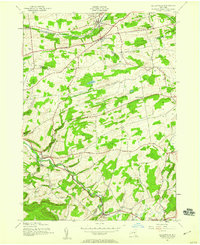 1944 Gallupville1959 Print · USGSNear the intersection of Schenectady, Schoharie, and Albany counties in the 1940s, this area shows a landscape of upland farms and valley hamlets. Researchers can locate numerous rural schoolhouses and cemeteries, including Grove Cem, School No 11, and the village of Gallupville.3 unique versions available
 - 1946 Map of Altamont
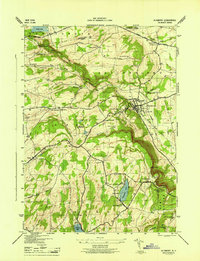 1946 Altamont1946 Print · USGSThe Helderberg Escarpment rises sharply over the village of Altamont in this mid-forties survey of Albany County. Family historians can trace rural roots at Ostrander Cem or locate early landmarks like Indian Ladder and the Lasalette Seminary.
 - 1946 Map of Schoharie
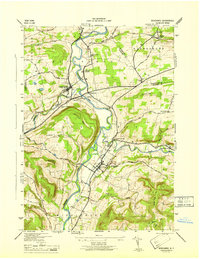 1946 Schoharie1946 Print · USGSThe Schoharie Valley in the mid-1940s remains a landscape of river-bottom farms and rural schoolhouses. Genealogists can trace family roots at St Pauls Cem or locate the site of Old Central Bridge and the Old Stone Fort.
 - 1946 Map of Esperance
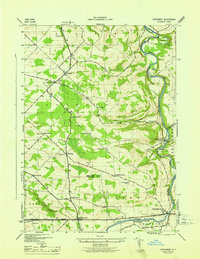 1946 Esperance1946 Print · USGSThe Montgomery and Schoharie County borderlands appear here in the mid-1940s, just as the rural school system and turnpike network remained central to local life. You can trace old property sites near Sloansville, Charleston, and family burials at the Kimball Cem.
 - 1946 Map of Gallupville
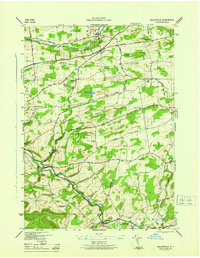 1946 Gallupville1946 Print · USGSThe Schoharie valley was a patchwork of small school districts and country chapels in the mid-1940s. Genealogists can trace family footprints across Zimmer Hill or locate old burial grounds such as Barton Hill Cem and Grove Cem.
 - 1947 Map of Amsterdam, 1963 Print
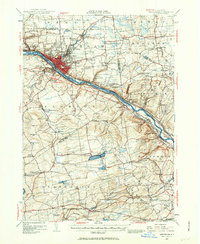 1947 Amsterdam1963 Print · USGSThe Mohawk Valley and its surrounding uplands are captured here in the late 1940s, highlighting the heavy industrial and transit hubs of the day. Researchers can trace the legacy of the Erie Canal, find numerous rural schoolhouses like Log City Sch, and locate the Duanesburg Churches.3 unique versions available
 - 1948 Map of Binghamton, 1980 Print
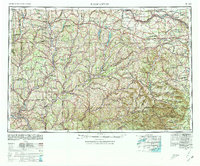 1948 Binghamton1980 Print · USGSCentral New York and the Southern Tier thrive in the late 1940s as a hub of rail traffic and mountain industry. Researchers can trace historic transit lines like the Erie Railroad through Binghamton or find old valley settlements near Oneonta and Delhi.
 - 1949 Map of Amsterdam
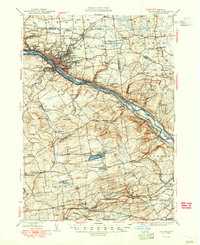 1949 Amsterdam1949 Print · USGSThe Mohawk Valley corridor thrives in the late 1940s as a vital artery for rail, canal, and industry. Researchers can trace the legacy of local education and faith at Duanesburg Churches, School No 7, and the Montgomery County Sanatorium.2 unique versions available
 - 1950 Map of Binghamton
 1950 Binghamton1950 Print · USGSBinghamton and the surrounding Southern Tier are shown in the mid-century era, highlighting the intricate rail and river networks that drove local industry. Researchers can trace the path of the Erie Railroad and locate landmarks from Otsego Lake to Sidney Mountain.2 unique versions available
 - 1954 Map of Duanesburg, 1956 Print
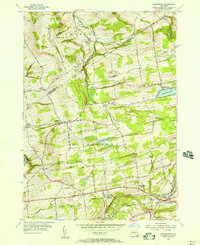 1954 Duanesburg1956 Print · USGSSchenectady and Montgomery counties are captured in the mid-fifties, showing a landscape of upland farms and historic crossroads. Genealogists can trace family names through dozens of small burial sites like Ryderdell Cem or locate the Duane Mansion and Sky Haven Airport.3 unique versions available
 - 1954 Map of Rotterdam Junction, 1956 Print
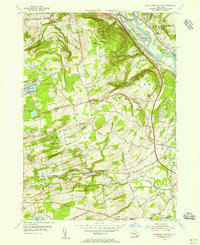 1954 Rotterdam Junction1956 Print · USGSSchenectady County in the mid-fifties shows the busy convergence of the Mohawk River and the then-new New York State Thruway. You can trace the path of the Erie Canal (Abandoned) and locate local landmarks like Gay Valley Air Park and Princetown Ch.4 unique versions available
 - 1954 Map of Pattersonville, 1956 Print
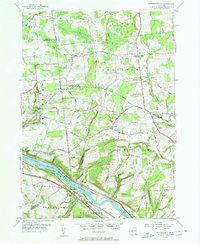 1954 Pattersonville1956 Print · USGSThe Mohawk River valley near Pattersonville was a bustling corridor of rail and water transit in the mid-1950s. Researchers can trace family history through sites like Woestina Cem and early landmarks like the abandoned Erie Canal and Hoffmans.2 unique versions available
Showing maps 1-25 of 69
Top cities near Duanesburg
- Schenectady historical maps
- Guilderland historical maps
- Rotterdam historical maps
- Glenville historical maps
- West Glenville historical maps
- Milton historical maps
See more
Top neighborhoods of Duanesburg
- Scotch Church historical maps
- Braman Corners historical maps
- Duane historical maps
- Eaton Corners historical maps
- Quaker Street historical maps
- Duanesburg historical maps
See more
Frequently asked questions
- What are the different types of historical maps available for Duanesburg?
- What is the oldest map of Duanesburg?
- Where can I purchase historical maps of Duanesburg for my home or office?
- Where can I download high-res historical maps of Duanesburg?
- Are there historical topographic maps available for Duanesburg?
- Is there historical aerial imagery available for Duanesburg?
- Where are historical maps of Duanesburg sourced from?