1900s (20th Century) Maps of Esperance, New York
Explore 16 historic maps of Esperance from the 1900s (20th Century). These maps offer a rare glimpse into what life looked like during the 1900s — showing old roads, neighborhoods, homes, and landmarks that have changed or disappeared over time.
Whether you're researching your family's past, planning a metal detecting trip, or studying how Esperance's landscape evolved across the 1900s, these high-resolution maps are a powerful tool for exploring the history of this region.
- Focus on a specific era: All maps on this page are from the 1900s, giving you a focused view of this time period.
- See what’s changed: Compare century-old streets, trails, and buildings to today's modern landscape using overlays and satellite layers.
- Research with precision: Use these maps for genealogy, historical research, land use analysis, or educational projects.
- View, download, or print: Maps are fully viewable online in high resolution, and can be downloaded or printed for your own records.
Start exploring Esperance's history through authentic maps from the 1900s. This is your window into the past.
Esperance, NY maps
(16)- 1900 Map of Schoharie
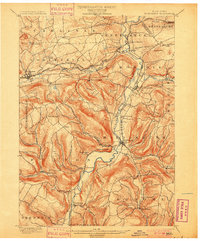 1900 Schoharie1900 Print · USGSSchoharie County at the turn of the century shows a landscape defined by the winding Schoharie Creek and vital rail connections. Genealogists can trace family roots through specific locations like Howe Cave, Mineral Springs, and the various stops along the Middleburg and Schoharie RR.8 unique versions available
 - 1900 Map of Schoharie, 1944 Print
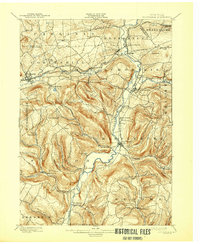 1900 Schoharie1944 Print · USGSSchoharie County at the close of the nineteenth century centers on a thriving valley rail network and small industrial settlements. Genealogists and historians can trace the paths of the Middleburg and Schoharie railroad and locate rural landmarks like Howes Cave and Boucks Falls.
 - 1902 Map of Fonda
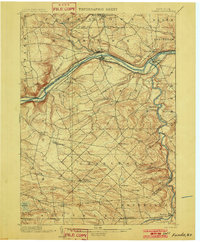 1902 Fonda1902 Print · USGSThe Mohawk Valley at the close of the nineteenth century reveals a critical junction of the Erie Canal and major railroads. Genealogists and historians can trace old homesteads and local centers like Auriesville, Sammonsville, and the remote Charleston Four Corners.8 unique versions available
 - 1931 Map of Amsterdam
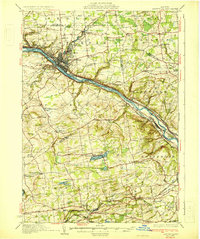 1931 Amsterdam1931 Print · USGSThe Mohawk Valley thrives at the height of its rail and canal era in the late twenties and early thirties. Genealogists can trace family names through dozens of rural schools and churches, from St Marys Ch to the quiet hamlets of Mariaville and Scotch Bush.3 unique versions available
 - 1943 Map of Schoharie, 1959 Print
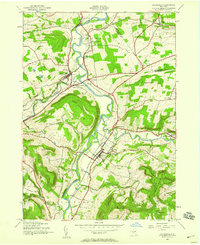 1943 Schoharie1959 Print · USGSThe Schoharie Valley was a vital rail and river corridor during the mid-forties, defined by its small farming hamlets and prominent terrain. Researchers can trace ancestral roots through the Old Stone Fort, several rural schoolhouses, and cemeteries like St Pauls Cem and Central Bridge Cem.4 unique versions available
 - 1943 Map of Esperance, 1959 Print
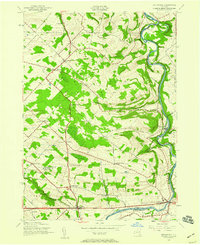 1943 Esperance1959 Print · USGSThe rural borderlands of Montgomery and Schoharie counties appear here during the mid-forties, showing a landscape of scattered crossroads and winding waterways. Family historians can locate family-named landmarks like Kimball Cem and Rockwell Corners or trace old school districts like Carytown Sch.2 unique versions available
 - 1946 Map of Schoharie
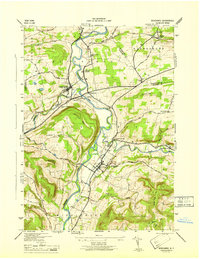 1946 Schoharie1946 Print · USGSThe Schoharie Valley in the mid-1940s remains a landscape of river-bottom farms and rural schoolhouses. Genealogists can trace family roots at St Pauls Cem or locate the site of Old Central Bridge and the Old Stone Fort.
 - 1946 Map of Esperance
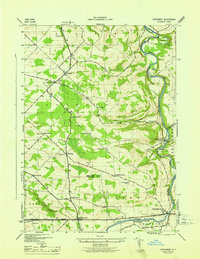 1946 Esperance1946 Print · USGSThe Montgomery and Schoharie County borderlands appear here in the mid-1940s, just as the rural school system and turnpike network remained central to local life. You can trace old property sites near Sloansville, Charleston, and family burials at the Kimball Cem.
 - 1947 Map of Amsterdam, 1963 Print
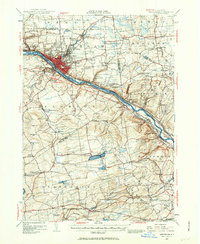 1947 Amsterdam1963 Print · USGSThe Mohawk Valley and its surrounding uplands are captured here in the late 1940s, highlighting the heavy industrial and transit hubs of the day. Researchers can trace the legacy of the Erie Canal, find numerous rural schoolhouses like Log City Sch, and locate the Duanesburg Churches.3 unique versions available
 - 1948 Map of Binghamton, 1980 Print
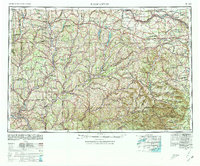 1948 Binghamton1980 Print · USGSCentral New York and the Southern Tier thrive in the late 1940s as a hub of rail traffic and mountain industry. Researchers can trace historic transit lines like the Erie Railroad through Binghamton or find old valley settlements near Oneonta and Delhi.
 - 1949 Map of Amsterdam
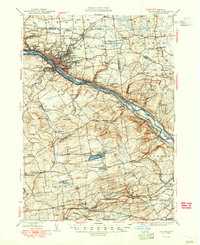 1949 Amsterdam1949 Print · USGSThe Mohawk Valley corridor thrives in the late 1940s as a vital artery for rail, canal, and industry. Researchers can trace the legacy of local education and faith at Duanesburg Churches, School No 7, and the Montgomery County Sanatorium.2 unique versions available
 - 1950 Map of Binghamton
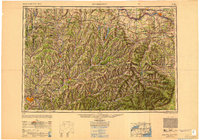 1950 Binghamton1950 Print · USGSBinghamton and the surrounding Southern Tier are shown in the mid-century era, highlighting the intricate rail and river networks that drove local industry. Researchers can trace the path of the Erie Railroad and locate landmarks from Otsego Lake to Sidney Mountain.2 unique versions available
 - 1954 Map of Duanesburg, 1956 Print
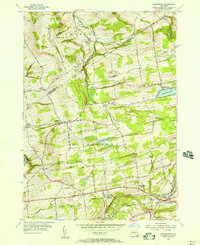 1954 Duanesburg1956 Print · USGSSchenectady and Montgomery counties are captured in the mid-fifties, showing a landscape of upland farms and historic crossroads. Genealogists can trace family names through dozens of small burial sites like Ryderdell Cem or locate the Duane Mansion and Sky Haven Airport.3 unique versions available
 - 1958 Map of Binghamton
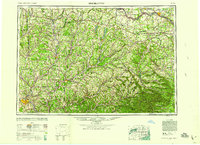 1958 Binghamton1958 Print · USGSCentral New York in the late fifties was a network of manufacturing cities and river valleys connected by vital rail lines. Genealogists and historians can trace family roots in Oneonta, Norwich, and Cooperstown or locate long-standing farms along Schoharie Creek.
 - 1963 Map of Binghamton
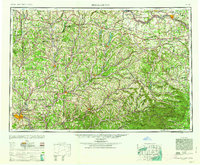 1963 Binghamton1963 Print · USGSThe Southern Tier and Catskill peaks are shown in the early sixties as new reservoirs reshaped the valleys. Trace historic rail corridors like the Erie Lackawanna RR and explore lakeside settlements such as Cooperstown and Oneonta.
 - 1985 Map of Amsterdam, 1986 Print
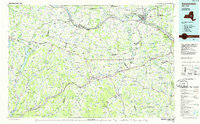 1985 Amsterdam1986 Print · USGSUpstate New York in the mid-1980s reveals a landscape defined by historic river valleys and expanding interstate corridors. Researchers can trace family sites near Stone Arabia Cemetery or explore the civic centers of Amsterdam and Cooperstown near Otsego Lake.2 unique versions available
End of results
Showing maps 1-16 of 16
Top cities near Esperance
- Guilderland historical maps
- Rotterdam historical maps
- Glenville historical maps
- Amsterdam historical maps
- Cobleskill historical maps
- Duanesburg historical maps
See more
Top neighborhoods of Esperance
- Sloansville historical maps
- Schoharie Junction historical maps
- Dwelly Corners historical maps
- Esperance historical maps
Frequently asked questions
- What are the different types of historical maps available for Esperance?
- What is the oldest map of Esperance?
- Where can I purchase historical maps of Esperance for my home or office?
- Where can I download high-res historical maps of Esperance?
- Are there historical topographic maps available for Esperance?
- Is there historical aerial imagery available for Esperance?
- Where are historical maps of Esperance sourced from?