1940s Maps of Gilboa, New York
Explore 10 historic maps of Gilboa from the 1940s. These maps offer a rare glimpse into what life looked like during the 1940s — showing old roads, neighborhoods, homes, and landmarks that have changed or disappeared over time.
Whether you're researching your family's past, planning a metal detecting trip, or studying how Gilboa's landscape evolved across the 1940s, these high-resolution maps are a powerful tool for exploring the history of this region.
- Focus on a specific era: All maps on this page are from the 1940s, giving you a focused view of this time period.
- See what’s changed: Compare century-old streets, trails, and buildings to today's modern landscape using overlays and satellite layers.
- Research with precision: Use these maps for genealogy, historical research, land use analysis, or educational projects.
- View, download, or print: Maps are fully viewable online in high resolution, and can be downloaded or printed for your own records.
Start exploring Gilboa's history through authentic maps from the 1940s. This is your window into the past.
Gilboa, NY maps
(10)- 1943 Map of Breakabeen, 1959 Print
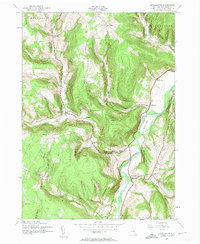 1943 Breakabeen1959 Print · USGSSchoharie County in the 1940s is captured here in the transition from traditional valley farming to modern rural life. Genealogists can trace family homes near Vintonton, locate the Fulton Hill Cem, or explore the riverside layout of Breakabeen.5 unique versions available
 - 1945 Map of Gilboa, 1946 Print
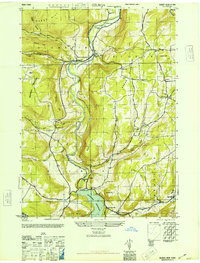 1945 Gilboa1946 Print · USGSSchoharie County in the mid-1940s shows a landscape reshaped by water engineering and the Schoharie Creek valley. Genealogists and local historians can trace family plots at Shafer Cem or locate the old Central Sch near the rising Schoharie Reservoir.5 unique versions available
 - 1945 Map of Stamford, 1960 Print
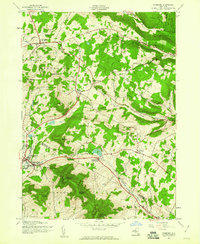 1945 Stamford1960 Print · USGSUpper Delaware valley life is captured here in the mid-1940s, as mountain agriculture and the railroad defined the border of Schoharie and Delaware counties. Researchers can trace the NEW YORK CENTRAL line to South Gilboa Station or locate family plots at Evergreen Cem and Blenheim Hill Cem.4 unique versions available
 - 1945 Map of Prattsville, 1960 Print
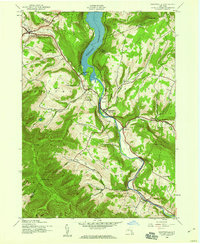 1945 Prattsville1960 Print · USGSThe northern Catskills appear here in the mid-1940s as a landscape of steep ridges and valley settlements tied to the Schoharie Creek. Researchers can trace rural life through sites like School No 1 or family burial grounds such as Huntersfield Cem and Rappleyea Cem.3 unique versions available
 - 1945 Map of Livingstonville, 1966 Print
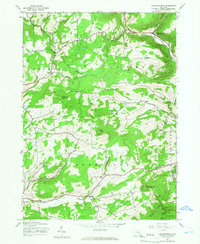 1945 Livingstonville1966 Print · USGSSchoharie County's mountain valleys were still defined by a network of one-room schoolhouses and small hamlets in the mid-1940s. Researchers can trace ancestral sites like Scott Patent Ch or locate rural districts such as School No 8 and School No 13.2 unique versions available
 - 1946 Map of Stamford
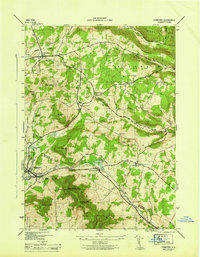 1946 Stamford1946 Print · USGSSchoharie and Delaware counties are shown at the end of the war, where mountain farming and rail transport define the Catskill foothills. Locate old family landmarks like Choate Cem, the South Gilboa Sta, and the high lookout on Utsayantha Mtn.
 - 1946 Map of Breakabeen
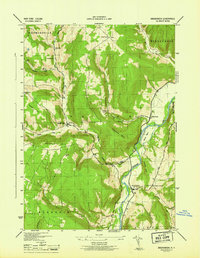 1946 Breakabeen1946 Print · USGSSchoharie County in the mid-1940s is captured here in a transition between its agricultural past and forested future. Researchers can trace family sites from Housons Corners to West Fulton, or locate remote landmarks like Fulton Hill Cem and Boucks Falls.
 - 1946 Map of Prattsville
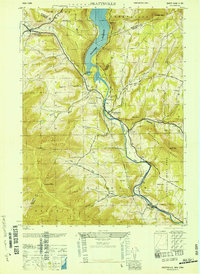 1946 Prattsville1946 Print · USGSThe Catskills in the 1940s reveal a landscape of high peaks and managed waters. Genealogists can trace family roots through numerous small burial grounds like Fairlawn Cem and Huggins Cem, or locate local landmarks like School No 1.
 - 1946 Map of Livingstonville
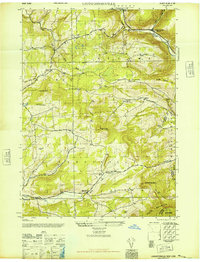 1946 Livingstonville1946 Print · USGSThe Schoharie and Albany county borders meet here in the mid-1940s, showing a landscape of high Catskill peaks and narrow creek valleys. Researchers can locate family roots via several rural schoolhouses and cemeteries like Keyser Cem and School No 12.
 - 1948 Map of Binghamton, 1980 Print
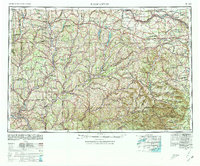 1948 Binghamton1980 Print · USGSCentral New York and the Southern Tier thrive in the late 1940s as a hub of rail traffic and mountain industry. Researchers can trace historic transit lines like the Erie Railroad through Binghamton or find old valley settlements near Oneonta and Delhi.
End of results
Showing maps 1-10 of 10
Top cities near Gilboa
- Cobleskill historical maps
- Middletown historical maps
- Middleburgh historical maps
- Schoharie historical maps
- Hunter historical maps
- Berne historical maps
See more
Top neighborhoods of Gilboa
- Flat Creek historical maps
- Mackey historical maps
- South Gilboa historical maps
- South Gilboa historical maps
- Broome Center historical maps
- Owlsville historical maps
Frequently asked questions
- What are the different types of historical maps available for Gilboa?
- What is the oldest map of Gilboa?
- Where can I purchase historical maps of Gilboa for my home or office?
- Where can I download high-res historical maps of Gilboa?
- Are there historical topographic maps available for Gilboa?
- Is there historical aerial imagery available for Gilboa?
- Where are historical maps of Gilboa sourced from?