1950s Maps of Orange, New York
Explore 6 historic maps of Orange from the 1950s. These maps offer a rare glimpse into what life looked like during the 1950s — showing old roads, neighborhoods, homes, and landmarks that have changed or disappeared over time.
Whether you're researching your family's past, planning a metal detecting trip, or studying how Orange's landscape evolved across the 1950s, these high-resolution maps are a powerful tool for exploring the history of this region.
- Focus on a specific era: All maps on this page are from the 1950s, giving you a focused view of this time period.
- See what’s changed: Compare century-old streets, trails, and buildings to today's modern landscape using overlays and satellite layers.
- Research with precision: Use these maps for genealogy, historical research, land use analysis, or educational projects.
- View, download, or print: Maps are fully viewable online in high resolution, and can be downloaded or printed for your own records.
Start exploring Orange's history through authentic maps from the 1950s. This is your window into the past.
Orange, NY maps
(6)- 1950 Map of Elmira
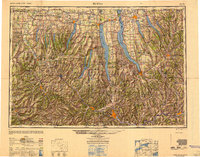 1950 Elmira1950 Print · USGSThe Finger Lakes region thrived in the late 1940s as a hub of industry and transport. Trace family roots and vanished landmarks near Seneca Lake or explore the rail lines of the Erie RR and the sprawling Seneca Ordnance Depot.2 unique versions available
 - 1950 Map of Reading Center, 1964 Print
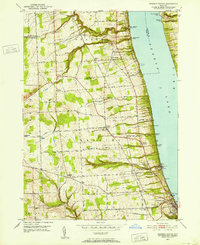 1950 Reading Center1964 Print · USGSThe western banks of Seneca Lake come alive in the early 1950s, showing a landscape defined by deep ravines and lakeside salt works. Researchers can trace historic family landmarks from Gingerbread Corners to Reading Center, alongside old rail stops like Barnes Sta.4 unique versions available
 - 1953 Map of Wayne, 1954 Print
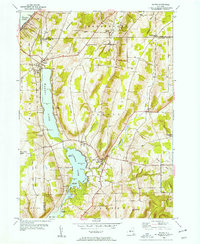 1953 Wayne1954 Print · USGSThe lakeside communities of Schuyler County are pictured in the early fifties, anchored by the waters of Waneta Lake and Lamoka Lake. Researchers can locate family landmarks such as Tyrone Union Cemetery, Waneta Lake Chapel, and the curious crossing at Gingerbread Corners.2 unique versions available
 - 1953 Map of Bradford, 1955 Print
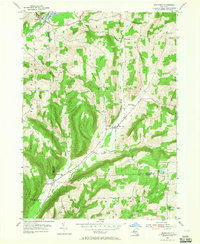 1953 Bradford1955 Print · USGSSchuyler and Steuben Counties are captured here in the early fifties, showing a rural landscape of valley farms and upland forests. Genealogists can trace family names through numerous burial sites like Old Sugar Hill Cem and Maltby Cem, or locate local landmarks like the Star District Sch.3 unique versions available
 - 1953 Map of Beaver Dams, 1955 Print
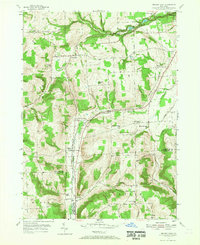 1953 Beaver Dams1955 Print · USGSSchuyler and Chemung counties are seen here in the early 1950s, centered on the railroad corridor and rural hamlets. Researchers can trace family history through local landmarks like Savory Cem, Catlin Center Sch, and the New York Central line at Beaver Dams.3 unique versions available
 - 1958 Map of Elmira
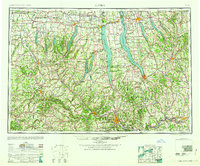 1958 Elmira1958 Print · USGSThe New York Finger Lakes during the late fifties reveal a complex landscape of glacial geology and industrial growth. Researchers can trace historic transport corridors like the Erie Canal and Erie RR, or locate institutional landmarks like Cornell University.2 unique versions available
End of results
Showing maps 1-6 of 6
Top cities near Orange
- Elmira historical maps
- Horseheads historical maps
- Bath historical maps
- Corning historical maps
- Erwin historical maps
- Big Flats historical maps
See more
Top neighborhoods of Orange
Frequently asked questions
- What are the different types of historical maps available for Orange?
- What is the oldest map of Orange?
- Where can I purchase historical maps of Orange for my home or office?
- Where can I download high-res historical maps of Orange?
- Are there historical topographic maps available for Orange?
- Is there historical aerial imagery available for Orange?
- Where are historical maps of Orange sourced from?