Old Maps of Hurley, New York for Academic Research
Study the evolution of Hurley with 51 high-resolution historic maps. Whether you're teaching, researching, or modeling changes in land use, these maps provide essential visual documentation of urban, environmental, and geographic change.
- Analyze long-term change: Track patterns in development, transportation, and natural features.
- Ideal for environmental or urban studies: Support academic projects with primary historical map data.
- Use in the classroom or lab: Educators and researchers rely on these maps to bring historical context to life.
These maps are a powerful tool for teaching, research, and visualizing how Hurley has changed over the decades.
Hurley, NY maps
(51)- 1892 Map of Kaaterskill, 1957 Print
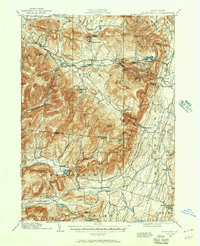 1892 Kaaterskill1957 Print · USGSThe high Catskills of the 1890s reveal a landscape of grand hotels and rugged peaks during the peak of the mountain resort era. Genealogists and historians can trace the foundations of Onteora Park, the route of the Elevating R. R., and lost hamlets like Dutch Settlement.3 unique versions available
 - 1893 Map of Kaaterskill
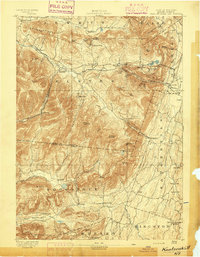 1893 Kaaterskill1893 Print · USGSThe high peaks and resort colonies of the late nineteenth century are mapped here in exceptional detail. Genealogists and rail historians can trace the paths of the Otis Elevating R R and the Catskill Mtn R R or locate old sites like Dutch Settlement and Mountain House.
 - 1894 Map of Kaaterskill
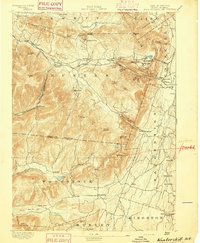 1894 Kaaterskill1894 Print · USGSThe Catskills come alive in the 1890s as a premier destination for mountain tourism and timber. You can trace the early rail lines serving the Mountain House, locate the Victorian-era enclaves of Onteora Park and Twilight Park, or find family roots in Yankeetown.
 - 1899 Map of Kaaterskill
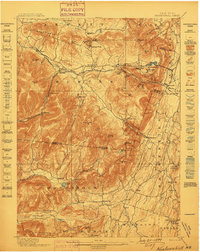 1899 Kaaterskill1899 Print · USGSThe Catskills in the late nineteenth century show a unique landscape of mountain tourism and rail infrastructure. Trace the early hotel era through the Mountain House, the Otis Elevating Ry., and the high-elevation hamlets of Tannersville and Onteora Park.2 unique versions available
 - 1901 Map of Rosendale, 1961 Print
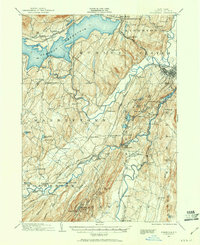 1901 Rosendale1961 Print · USGSUlster County at the dawn of the century shows a landscape in transition as the Ashokan Reservoir reshaped the valley. Genealogists and historians can trace defunct rail stops and early hamlets from Kripplebush and Whiteport to the busy docks at Wilbur.
 - 1903 Map of Rosendale
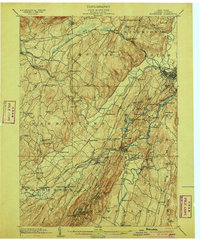 1903 Rosendale1903 Print · USGSUlster County was a hub of canal and rail transport at the turn of the century, centered on the Delaware and Hudson Canal. Genealogists can trace family footprints through historic settlements like Browns Station, Kripplebush, and Lomontville.11 unique versions available
 - 1903 Map of Kaaterskill, 1906 Print
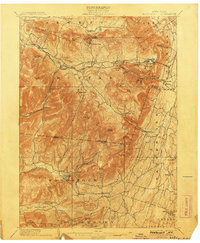 1903 Kaaterskill1906 Print · USGSThe Catskills come alive in the early twentieth century through this record of mountain resorts and steep-grade rail lines. Researchers can trace the legendary Mountain House, the Otis Elevating R.R., and the remote Dutch Settlement.10 unique versions available
 - 1942 Map of Kingston West, 1950 Print
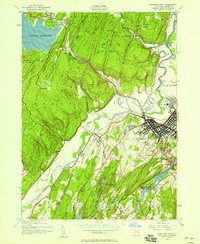 1942 Kingston West1950 Print · USGSThe area around Kingston during the early 1940s reveals a landscape shaped by the rail lines of the New York Central and the waters of the Ashokan Reservoir. Genealogists and historians can locate specific community centers like St Johns Ch, West Hurley RR Station, and the Lower Sawkill School.
 - 1942 Map of Ashokan, 1958 Print
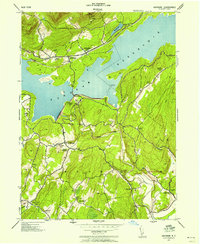 1942 Ashokan1958 Print · USGSUlster County's mountainous terrain and massive water infrastructure are frozen in time during the early 1940s. Genealogists and local historians can trace family-named settlements like Lomontville and Atwood, or locate rural landmarks including the Vly Church and Acorn Hill Chapel.2 unique versions available
 - 1943 Map of Kingston West
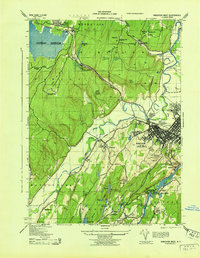 1943 Kingston West1943 Print · USGSMid-century Ulster County comes into focus as the Ashokan Reservoir and the New York Central railroad shape the valley corridor. Genealogists can trace family names at the Boice Brothers Dairy or locate old schoolhouses like the Stony Hollow School and Sawkill School.
 - 1943 Map of Ashokan, 1944 Print
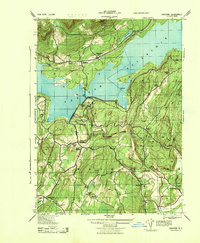 1943 Ashokan1944 Print · USGSMid-century Ulster County is defined by the massive shoreline of the Ashokan Reservoir as it appeared during the war years. Local researchers can trace old family lands and community hubs like Olive Bridge, Atwood, and the Acorn Hill Chapel.
 - 1945 Map of Bearsville, 1962 Print
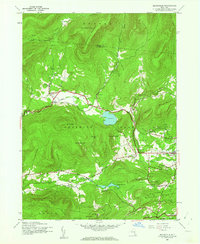 1945 Bearsville1962 Print · USGSThe Woodstock valley and the surrounding Catskill peaks appear here just after the war, showing a landscape of high summits and valley hamlets. Researchers can trace historic school districts like School No 1 and old settlements at Byrdcliffe and Lake Hill.3 unique versions available
 - 1945 Map of Woodstock, 1963 Print
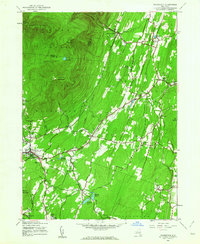 1945 Woodstock1963 Print · USGSUlster County's mountainous borderlands come into focus at the end of the Second World War as the region's rural character remains largely intact. Genealogists and hikers can trace old property lines and landmarks from West Saugerties to Overlook Mountain, including several legacy schoolhouses like School No 15.4 unique versions available
 - 1946 Map of Bearsville
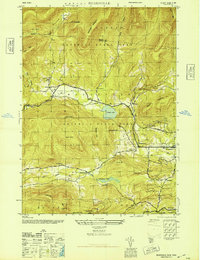 1946 Bearsville1946 Print · USGSThe Woodstock area and the eastern Catskills are captured in the mid-1940s as an established mountain retreat. Genealogists and hikers can trace the old turnpikes and district schoolhouses like School No 4 near Bearsville or the roads leading to Byrdcliffe.
 - 1946 Map of Plattekill
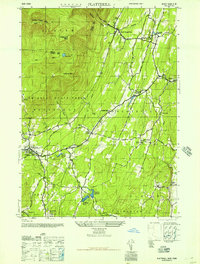 1946 Plattekill1946 Print · USGSMid-century Ulster County unfolds from the high peaks of the Catskills down to the reservoir systems of the lower valleys. Genealogists and researchers can trace local school districts like School No 14 and long-standing cemeteries such as Chestnut Hill Rural Cem.
 - 1948 Map of Binghamton, 1980 Print
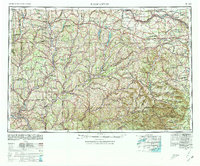 1948 Binghamton1980 Print · USGSCentral New York and the Southern Tier thrive in the late 1940s as a hub of rail traffic and mountain industry. Researchers can trace historic transit lines like the Erie Railroad through Binghamton or find old valley settlements near Oneonta and Delhi.
 - 1950 Map of Binghamton
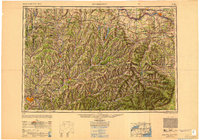 1950 Binghamton1950 Print · USGSBinghamton and the surrounding Southern Tier are shown in the mid-century era, highlighting the intricate rail and river networks that drove local industry. Researchers can trace the path of the Erie Railroad and locate landmarks from Otsego Lake to Sidney Mountain.2 unique versions available
 - 1950 Map of Scranton, 1952 Print
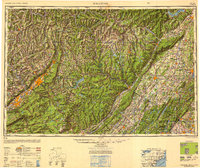 1950 Scranton1952 Print · USGSMid-century Northeast Pennsylvania and the Hudson Valley come alive in this survey of the tri-state region. Genealogists and historians can trace the dense rail networks of the Erie RR and DL&W RR between industrial hubs like Scranton and Wilkes-Barre.
 - 1953 Map of Scranton
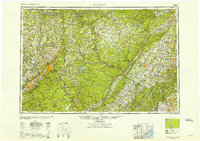 1953 Scranton1953 Print · USGSNortheastern Pennsylvania and the Catskills are shown in great detail during the early fifties, a time when rail lines and river valleys dictated the region's growth. Genealogists and historians can trace the industrial hearts of Scranton and Wilkes-Barre or locate remote landmarks like High Point and Lake Wallenpaupack.
 - 1958 Map of Binghamton
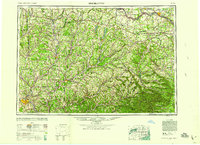 1958 Binghamton1958 Print · USGSCentral New York in the late fifties was a network of manufacturing cities and river valleys connected by vital rail lines. Genealogists and historians can trace family roots in Oneonta, Norwich, and Cooperstown or locate long-standing farms along Schoharie Creek.
 - 1959 Map of Scranton
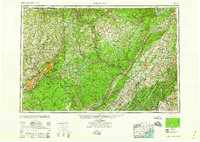 1959 Scranton1959 Print · USGSThe northern coalfields and the Hudson Valley meet in this mid-century survey of the Pennsylvania and New York borderlands. Genealogists and historians can trace the intricate rail networks of the Erie Railroad and the vast waters of Lake Wallenpaupack.2 unique versions available
 - 1962 Map of Scranton, 1977 Print
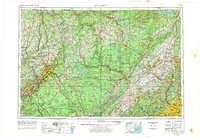 1962 Scranton1977 Print · USGSThe industrial heart of eastern Pennsylvania and the New York Catskills are captured here in the early sixties. Genealogists and historians can trace the dense valley settlements from Scranton to Wilkes-Barre and the rail lines of the Erie Lackawanna Railroad.2 unique versions available
 - 1963 Map of Binghamton
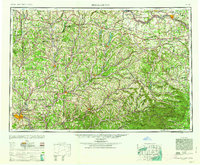 1963 Binghamton1963 Print · USGSThe Southern Tier and Catskill peaks are shown in the early sixties as new reservoirs reshaped the valleys. Trace historic rail corridors like the Erie Lackawanna RR and explore lakeside settlements such as Cooperstown and Oneonta.
 - 1964 Map of Ashokan, 1966 Print
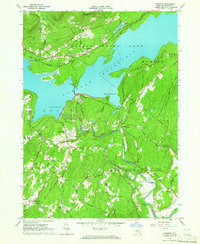 1964 Ashokan1966 Print · USGSThe Ashokan Reservoir region in the mid-1960s reveals a landscape defined by massive water works and quiet mountain hamlets. Researchers can trace the Catskill Aqueduct, locate the Covered Bridge on Esopus Creek, and find family names near Tongore Cem.3 unique versions available
 - 1964 Map of Kingston West, 1966 Print
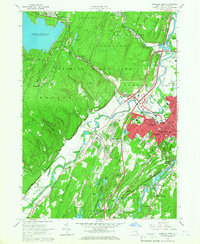 1964 Kingston West1966 Print · USGSMid-century Ulster County shows a landscape defined by the Esopus valley and the growing city of KINGSTON. Genealogists and historians can trace family plots in Old Dutch Cem or locate former schoolhouse sites like West Hurley District Sch No 8.4 unique versions available
Showing maps 1-25 of 51
Top cities near Hurley
- Poughkeepsie historical maps
- Kingston historical maps
- Hyde Park historical maps
- Saugerties historical maps
- New Paltz historical maps
- Wawarsing historical maps
See more
Top neighborhoods of Hurley
Frequently asked questions
- What are the different types of historical maps available for Hurley?
- What is the oldest map of Hurley?
- Where can I purchase historical maps of Hurley for my home or office?
- Where can I download high-res historical maps of Hurley?
- Are there historical topographic maps available for Hurley?
- Is there historical aerial imagery available for Hurley?
- Where are historical maps of Hurley sourced from?