1940s Maps of Easton, New York
Explore 10 historic maps of Easton from the 1940s. These maps offer a rare glimpse into what life looked like during the 1940s — showing old roads, neighborhoods, homes, and landmarks that have changed or disappeared over time.
Whether you're researching your family's past, planning a metal detecting trip, or studying how Easton's landscape evolved across the 1940s, these high-resolution maps are a powerful tool for exploring the history of this region.
- Focus on a specific era: All maps on this page are from the 1940s, giving you a focused view of this time period.
- See what’s changed: Compare century-old streets, trails, and buildings to today's modern landscape using overlays and satellite layers.
- Research with precision: Use these maps for genealogy, historical research, land use analysis, or educational projects.
- View, download, or print: Maps are fully viewable online in high resolution, and can be downloaded or printed for your own records.
Start exploring Easton's history through authentic maps from the 1940s. This is your window into the past.
Easton, NY maps
(10)- 1940 Map of Schuylerville
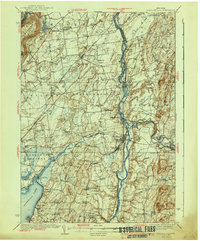 1940 Schuylerville1940 Print · USGSSaratoga and Washington Counties are shown here just before the mid-century, defined by the industrial river towns and the grounds of the Saratoga Battlefield. Genealogists can trace family names at Clarks Corners or Quaker Springs and locate early 20th-century landmarks like the Saratoga Battle Monument.3 unique versions available
 - 1944 Map of Cambridge, 1955 Print
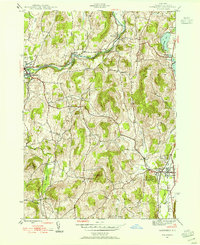 1944 Cambridge1955 Print · USGSMid-century Washington County reveals a landscape shaped by the Batten Kill and early rail corridors before the modern highway era. Researchers can trace historic property locations near Woodland Cem, rural schoolhouses like School No 1, and the rail lines of the Delaware and Hudson.3 unique versions available
 - 1944 Map of Eagle Bridge, 1958 Print
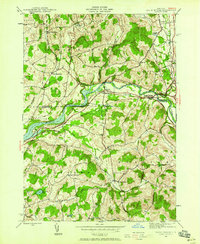 1944 Eagle Bridge1958 Print · USGSThe Hoosic River valley during the mid-1940s reveals a landscape defined by riverside rail corridors and upland farming hamlets. Genealogists can trace family roots through Woodside Cem, rural schoolhouses, and small settlements like Buskirk and West Hoosick.3 unique versions available
 - 1946 Map of Eagle Bridge
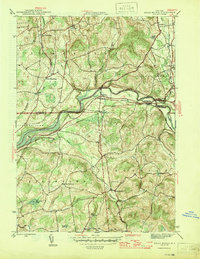 1946 Eagle Bridge1946 Print · USGSThe Hoosic River valley in the years following the war was a hub of small-town rail commerce and rural life. Genealogists and local historians can trace family roots through the clusters at Eagle Bridge, West Hoosick, and Center White Creek, or locate old landmarks like Woodside Cem and School No 2.2 unique versions available
 - 1946 Map of Cambridge
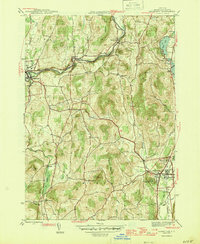 1946 Cambridge1946 Print · USGSWashington County during the mid-forties reveals a landscape of river-valley rail towns and upland dairy farms. Genealogists and local historians can trace the foundations of Cambridge and Greenwich, locating specific landmarks like Woodland Cem and the Cary Sch.2 unique versions available
 - 1947 Map of Schuylerville, 1958 Print
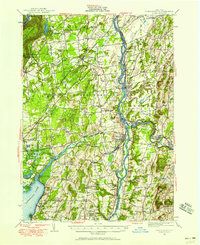 1947 Schuylerville1958 Print · USGSUpper Hudson Valley life and Revolutionary War heritage meet in the late 1940s. Trace the path of the Champlain Canal and find local landmarks like the Saratoga Battle Monument and the Fernwood Trout Hatchery.3 unique versions available
 - 1947 Map of Cohoes, 1968 Print
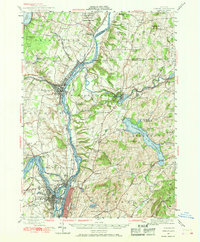 1947 Cohoes1968 Print · USGSThe Hudson and Mohawk river valleys converge here in the mid-1940s, revealing a dense network of canals and early industrial railroads. Researchers can trace the Champlain Canal (Abandoned), find old rural schoolhouses, and locate landmarks like the Fire Lookout Tower and Cohoes Falls.
 - 1948 Map of Albany, 1951 Print
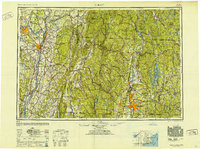 1948 Albany1951 Print · USGSThe Hudson and Connecticut River valleys are captured here in the late 1940s, showing the vital rail and water corridors of the Northeast. You can trace the Boston and Maine tracks past Mt Greylock or locate early settlements like Great Barrington and Bennington.
 - 1949 Map of Schuylerville
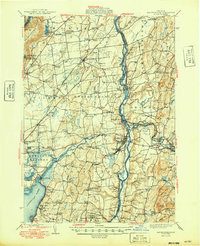 1949 Schuylerville1949 Print · USGSUpper Hudson Valley life in the late nineteen-forties centers on the river and its canal, shortly after the national park was established. Genealogists and historians can trace family locations near Victory Mills, old rural burial grounds like Griswold Cem, and the Fernwood Trout Hatchery.
 - 1949 Map of Cohoes
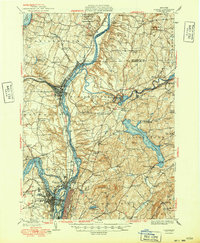 1949 Cohoes1949 Print · USGSThe Hudson and Mohawk river valleys meet in the late 1940s at the industrial nexus of Cohoes and Troy. Local historians can trace early transport routes along the Champlain Canal, find family names near Bemis Heights, or locate old landmarks like the Fire Lookout Tower.2 unique versions available
End of results
Showing maps 1-10 of 10
Top cities near Easton
- Colonie historical maps
- Clifton Park historical maps
- Queensbury historical maps
- Saratoga Springs historical maps
- Halfmoon historical maps
- Wilton historical maps
See more
Top neighborhoods of Easton
- North Easton historical maps
- Crandall Corners historical maps
- Archdale historical maps
- South Easton historical maps
- Barkers Grove historical maps
Frequently asked questions
- What are the different types of historical maps available for Easton?
- What is the oldest map of Easton?
- Where can I purchase historical maps of Easton for my home or office?
- Where can I download high-res historical maps of Easton?
- Are there historical topographic maps available for Easton?
- Is there historical aerial imagery available for Easton?
- Where are historical maps of Easton sourced from?