Old Maps of Alleghany County, North Carolina for Genealogy
Trace your family roots with 95 historic maps of Alleghany County. These high-res maps reveal old neighborhoods, homesites, landmarks, and streets — helping you uncover where your ancestors lived and how the area evolved over time.
- Explore historic neighborhoods: Identify where your relatives may have lived in the 1800s or 1900s.
- Compare maps over time: Trace the changes in streets, buildings, and landmarks for multi-generational research.
- Perfect for genealogy & ancestry research: Used by family historians and researchers to map out lineage and migration.
These maps are an incredible resource for exploring your personal connection to Alleghany County's past.
Alleghany County, NC maps
(95)- 1889 Map of Hillsville
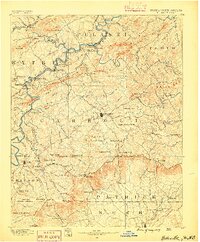 1889 Hillsville1889 Print · USGSThe Blue Ridge Highlands and the upper New River valley are captured in the late 1880s, showcasing a landscape of iron furnaces and mountain gaps. Trace early industrial sites like Boom Furnace and Lead Mines, or locate ancestral homesteads near Hillsville and Old Town.
 - 1889 Map of Wytheville
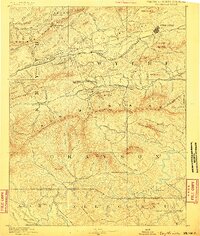 1889 Wytheville1889 Print · USGSSouthwestern Virginia and northwestern North Carolina are mapped here during the late nineteenth-century rise of the mountain iron industry. Genealogists and historians can locate early post offices and industrial sites such as Bridle Creek P.O., Eagle Furnace, and Rural Retreat.2 unique versions available
 - 1889 Map of Wilkesboro, 1960 Print
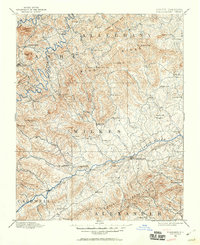 1889 Wilkesboro1960 Print · USGSWilkes and Ashe counties are shown here in the late 1880s as the region's mountain economy relied on river fords and valley mills. Researchers can trace ancestral locations from Jefferson to Wilkesboro, including landmarks like Lomax Store and Dunkirk Ch.
 - 1891 Map of Wilkesboro, 1940 Print
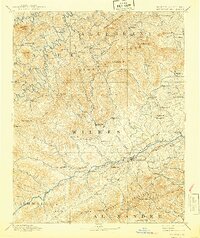 1891 Wilkesboro1940 Print · USGSThe foothills and high ridges of Northwest North Carolina are seen here in the late nineteenth century before modern highway development. Local historians can locate early post offices at Brown P.O., the mining area of Ore Knob, and ancestral landmarks like Dunkirk Ch. and Hall Mills.
 - 1891 Map of Yadkinville, 1964 Print
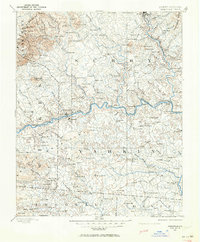 1891 Yadkinville1964 Print · USGSSurry and Yadkin counties are shown here in the late nineteenth century as the river-and-rail economy began to reshape the Piedmont. Genealogists can trace family landmarks and early crossings like Kapps Mill, Poindexter Ferry, and Cross Roads Church.
 - 1892 Map of Hillsville
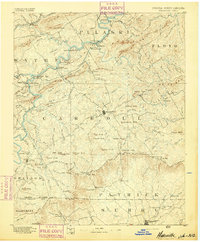 1892 Hillsville1892 Print · USGSSouthwest Virginia in the late nineteenth century is captured here as a landscape of iron furnaces and river crossings. Genealogists and historians can trace old family mills and ferries like Pedegos Mill, Howards Ferry, and the early settlement at Old Town.
 - 1892 Map of Wytheville, 1897 Print
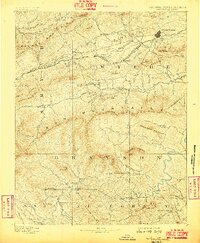 1892 Wytheville1897 Print · USGSThe high ridges and river valleys of Southwest Virginia and Northwest North Carolina are captured here in the late nineteenth century. Genealogists can trace family footprints across the Iron Mountains to old industrial sites like White Rock Furnace and remote post offices such as Hampton P.O.6 unique versions available
 - 1893 Map of Yadkinville, 1944 Print
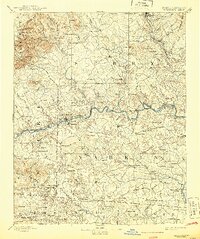 1893 Yadkinville1944 Print · USGSNorthwest North Carolina at the close of the nineteenth century was a landscape of river-dependent commerce and mountain ridges. Researchers can trace the early industrial footprint of Kapps Mill, locate remote river crossings like Douglass Ford, and follow the progress of the Cape Fear and Yadkin Valley Railroad.
 - 1896 Map of Hillsville
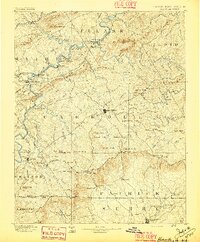 1896 Hillsville1896 Print · USGSThe Blue Ridge Highlands and New River corridor appear here in the 1890s, when iron furnaces and river ferries dictated the pace of local life. Researchers can trace ancestral locations near Hillsville, the Lead Mines, and historic river crossings like Jackson Ferry.7 unique versions available
 - 1930 Map of Independence
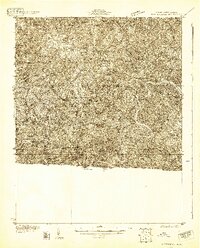 1930 Independence1930 Print · USGSGrayson County and the North Carolina borderlands are captured here during the 1930s, showing a landscape of high ridges and deep river bends. Genealogists can trace family names through landmarks like Moyers Store, Bennington Mill, and numerous river crossings like Moore Ferry.
 - 1931 Map of Galax
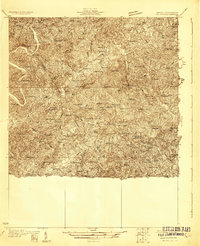 1931 Galax1931 Print · USGSThe Blue Ridge foothills of Virginia and North Carolina come into focus during the early 1930s as the rail-and-river economy develops. Genealogists and researchers can trace family landmarks like Bishop Cem, McKnights Mill, and the early river crossings at Blair Ferry.
 - 1933 Map of Independence
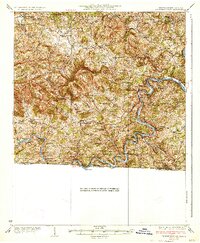 1933 Independence1933 Print · USGSGrayson County in the early thirties is captured here as a landscape of river crossings and mountain settlements. Genealogists and local historians can trace family roots through numerous landmarks like Boyer Ferry, Grayson Mill, and Cox Chapel.3 unique versions available
 - 1933 Map of Galax
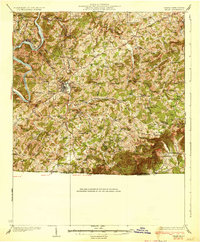 1933 Galax1933 Print · USGSCarroll County and the surrounding Blue Ridge highlands are captured in the early 1930s, showing a landscape defined by river ferries and rail spurs. Genealogists can trace early homesteads and community hubs like Pipers Gap PO, Lambsburg, and the Dixon Ferry crossing on the New River.3 unique versions available
 - 1935 Map of Mouth of Wilson
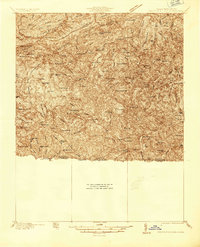 1935 Mouth of Wilson1935 Print · USGSGrayson County was a landscape of high ridges and river crossings in the mid-1930s. Researchers can trace family sites at Youngs Chapel, find early crossings like Halsey Ferry, and locate old mountain schoolhouses like Oak Hill Sch and Fairwood Sch.
 - 1940 Map of Mouth of Wilson
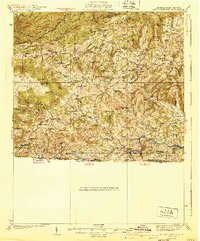 1940 Mouth of Wilson1940 Print · USGSGrayson County's high ridges and river valleys were home to a dense network of mountain communities in the 1930s. Genealogists and historians can trace long-gone rural institutions like the COUNTY HOME, Cornell Store, and schools such as Razor Ridge Sch or Bethel Sch.3 unique versions available
 - 1953 Map of Winston-Salem, 1974 Print
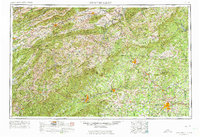 1953 Winston-Salem1974 Print · USGSThe North Carolina Piedmont and Virginia highlands meet in the mid-1950s, a landscape defined by the tobacco and textile hubs of the Blue Ridge foothills. Researchers can trace the rail-and-river geography connecting Winston-Salem to mountain towns like Mount Airy and Galax.2 unique versions available
 - 1955 Map of Winston-Salem
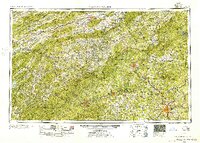 1955 Winston-Salem1955 Print · USGSThe Central Blue Ridge and Piedmont transition are captured here in the mid-fifties, from the industrial hub of Winston-Salem to the high peaks of Southwest Virginia. Genealogists can trace family landmarks like Richmond Hill Ch, Siloam Ch, and the old rail stops along the Southern Railway.
 - 1962 Map of Winston-Salem
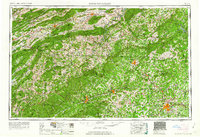 1962 Winston-Salem1962 Print · USGSThe North Carolina Piedmont meets the Virginia highlands in the early sixties, showing the rail corridors and mountain gaps of the southern Appalachians. Researchers can trace the Blue Ridge Parkway or locate family sites near Winston-Salem, Mount Airy, and Hanging Rock Mountain.
 - 1965 Map of Cumberland Knob, 1968 Print
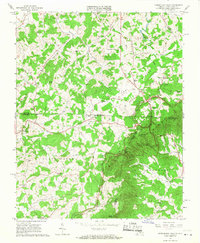 1965 Cumberland Knob1968 Print · USGSThe Virginia and North Carolina borderlands come alive in the mid-sixties, centered on the Cumberland Knob Recreation Area. Researchers can trace old family sites and mountain settlements like Edmonds, Delhart, and Ennice alongside McKnights Mill and Savannah Cem.2 unique versions available
 - 1966 Map of Sparta West, 1968 Print
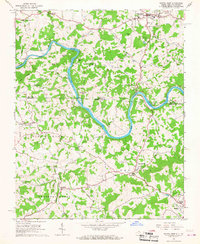 1966 Sparta West1968 Print · USGSThe North Carolina and Virginia borderlands appear in the mid-1960s as the New River winds through high ridge country. Genealogists and local historians can trace rural congregations like Mt Carmel Ch and family-named landmarks from Buzzard Hill to Bridle Creek.2 unique versions available
 - 1966 Map of Mouth of Wilson, 1968 Print
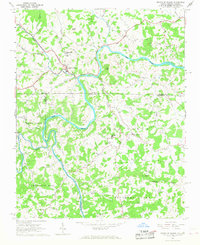 1966 Mouth of Wilson1968 Print · USGSThe borderlands of Virginia and North Carolina appear in the mid-1960s as a landscape of river bends and high knobs. Genealogists can trace family footprints across Chestnut Hill and Piney Creek, locating landmarks like Weavers Ford and Youngs Chapel.3 unique versions available
 - 1966 Map of Sparta East, 1968 Print
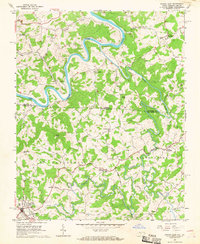 1966 Sparta East1968 Print · USGSThe North Carolina-Virginia state line divides this 1960s mountain landscape where the New River and Little River converge. Genealogists can trace family names and local landmarks through sites like Blevins Crossroads, McKenney Hill, and Chestnut Grove Ch.3 unique versions available
 - 1968 Map of Glade Valley, 1970 Print
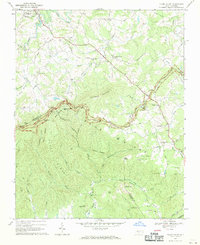 1968 Glade Valley1970 Print · USGSAlleghany and Wilkes counties are captured in the late sixties as the high-elevation landscape balanced traditional rural life with growing mountain recreation. Genealogists and hikers can trace old family sites near Cherry Lane Ch, Little Glade Millpond, and the slopes of Stone Mountain.3 unique versions available
 - 1968 Map of Laurel Springs, 1971 Print
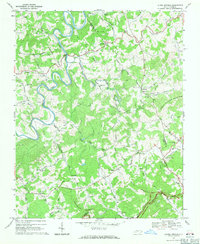 1968 Laurel Springs1971 Print · USGSAshe and Alleghany Counties in the late sixties remain deeply rooted in the high country, where the South Fork New River winds through the hills. Genealogists and local historians can trace family locations near landmarks like Liberty Hill Ch, Laurel Springs Sch, and Peach Bottom Mountain.2 unique versions available
 - 1968 Map of Traphill, 1971 Print
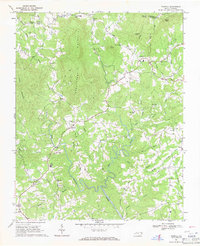 1968 Traphill1971 Print · USGSThe Blue Ridge foothills of Wilkes County come into focus during the late sixties, showing a landscape defined by ridgeline roads and mountain gaps. Genealogists can trace family names and community centers like Traphill, Abshers, and Welcome Home Ch.3 unique versions available
Showing maps 1-25 of 95
Top cities of Alleghany County
Frequently asked questions
- What are the different types of historical maps available for Alleghany County?
- What is the oldest map of Alleghany County?
- Where can I purchase historical maps of Alleghany County for my home or office?
- Where can I download high-res historical maps of Alleghany County?
- Are there historical topographic maps available for Alleghany County?
- Is there historical aerial imagery available for Alleghany County?
- Where are historical maps of Alleghany County sourced from?