Old Maps of Mount Zion, Greensboro for Academic Research
Study the evolution of Mount Zion with 12 high-resolution historic maps. Whether you're teaching, researching, or modeling changes in land use, these maps provide essential visual documentation of urban, environmental, and geographic change.
- Analyze long-term change: Track patterns in development, transportation, and natural features.
- Ideal for environmental or urban studies: Support academic projects with primary historical map data.
- Use in the classroom or lab: Educators and researchers rely on these maps to bring historical context to life.
These maps are a powerful tool for teaching, research, and visualizing how Mount Zion has changed over the decades.
Mount Zion, Greensboro maps
(12)- 1952 Map of Mc Leansville, 1953 Print
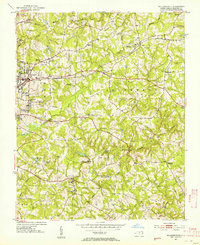 1952 Mc Leansville1953 Print · USGSGuilford County entered a period of steady growth in the early fifties as the outskirts of Greensboro expanded east. Genealogists and local historians can trace family roots through sites like Troxlers Mill, Alamance Sch, and North Buffalo Chapel.3 unique versions available
 - 1953 Map of Greensboro, 1981 Print
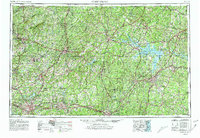 1953 Greensboro1981 Print · USGSThe Piedmont borderlands of North Carolina and Virginia show a landscape defined by new reservoirs and old rail lines. Trace family roots and the changing river geography through Elon College, the John H Kerr Reservoir, and South Boston.
 - 1954 Map of Greensboro
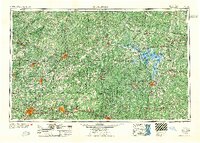 1954 Greensboro1954 Print · USGSThe Piedmont borderlands of North Carolina and Virginia come alive in this mid-fifties study of a region defined by its rivers and rails. Researchers can trace the growing Buggs Island Lake or follow the paths of the Southern Ry and Seaboard Air Line RR through towns like Oxford and Reidsville.
 - 1962 Map of Greensboro
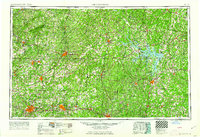 1962 Greensboro1962 Print · USGSThe Piedmont region along the Virginia and North Carolina border comes alive in the early 1960s, showing a landscape defined by industry and new reservoirs. Trace the path of the Virginian RR or explore the early development of Greensboro and Durham.
 - 1966 Map of Greensboro
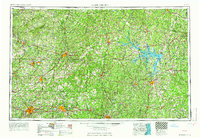 1966 Greensboro1966 Print · USGSThe North Carolina and Virginia Piedmont thrives during the mid-sixties, showcasing a landscape of textile hubs and expanding river reservoirs. Researchers can trace the rail corridors of the Southern Railway, find local landmarks like Elon College, or locate the extensive Camp Butner Military Reservation.
 - 1977 Map of Mc Leansville, 1979 Print
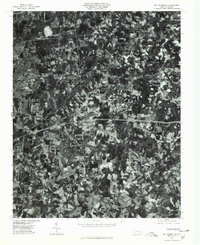 1977 Mc Leansville1979 Print · USGSGuilford County appears at a moment of suburban transition in the late seventies, captured through detailed aerial photography. Trace property lines and land use patterns around Mc Leansville, Sedalia, and Greesons Crossroads.
 - 1984 Map of Greensboro
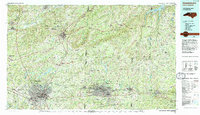 1984 Greensboro1984 Print · USGSThe North Carolina Piedmont in the mid-eighties shows a region of growing urban centers and vital water resources. Local historians can trace the development of Greensboro, locate the Elon College campus, or explore the grounds of Guilford Courthouse National Military Park.
 - 2010 Map of McLeansville, 2010 Print
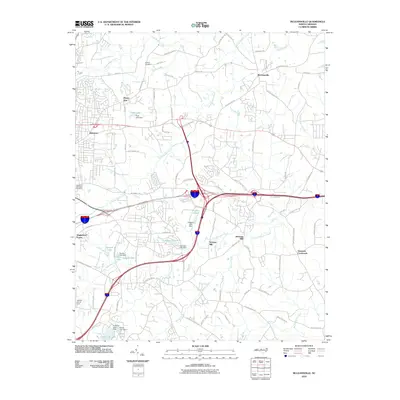 2010 McLeansville2010 Print · USGSGuilford County at the start of the 2010s shows a landscape of historic mill sites transitioning into modern residential communities. Researchers can trace the heritage of McLeansville and find local landmarks like Troxlers Mill, Greesons Crossroads, and Midway Cemetery.
 - 2013 Map of McLeansville, 2013 Print
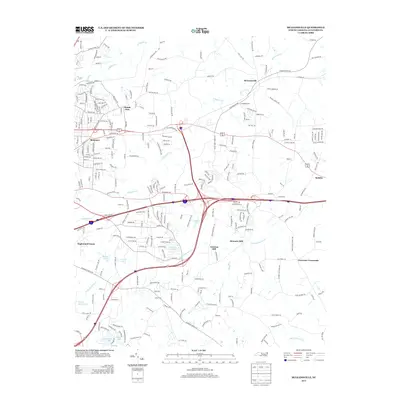 2013 McLeansville2013 Print · USGSGuilford County at the start of the 2010s shows a landscape of growing residential communities layered over an older agricultural and milling history. Researchers can trace local heritage through landmarks like Stewarts Mill, Greesons Crossroads, and the waters of Little Alamance Cr.
 - 2016 Map of McLeansville, 2016 Print
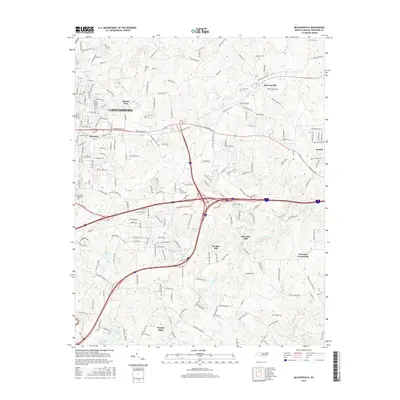 2016 McLeansville2016 Print · USGSEastern Guilford County at the turn of the 21st century shows a mix of suburban Greensboro expansion and traditional North Carolina crossroads. Genealogists and local researchers can trace established communities like McLeansville and Greesons Crossroads alongside historic markers such as Stewarts Mill.
 - 2019 Map of McLeansville, 2019 Print
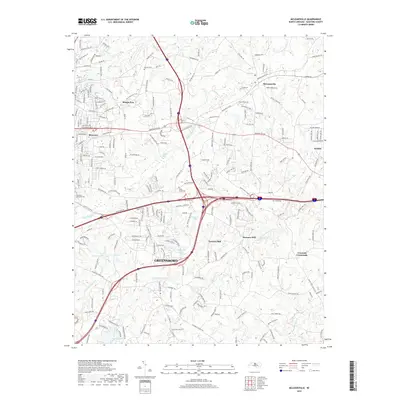 2019 McLeansville2019 Print · USGSEastern Guilford County is documented here as a major transit corridor during a period of significant urban expansion. Genealogists and local historians can trace the development around McLeansville and find the specific locations of Troxlers Mill and Midway Cem.
 - 2022 Map of McLeansville, 2022 Print
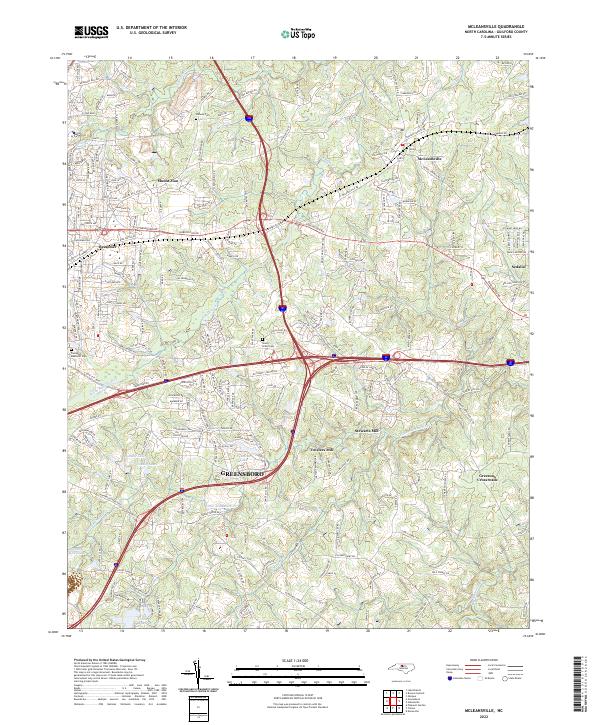 2022 McLeansville2022 Print · USGSGreensboro and its eastern reaches are captured in this recent survey during a period of sustained suburban growth. Genealogists and researchers can trace local family landmarks at Midway Cem, Stewarts Mill, and the settlement at Greesons Crossroads.
End of results
Showing maps 1-12 of 12
Top cities near Mount Zion
- Greensboro historical maps
- High Point historical maps
- Burlington historical maps
- Reidsville historical maps
- Archdale historical maps
- Gibsonville historical maps
See more
Frequently asked questions
- What are the different types of historical maps available for Mount Zion?
- What is the oldest map of Mount Zion?
- Where can I purchase historical maps of Mount Zion for my home or office?
- Where can I download high-res historical maps of Mount Zion?
- Are there historical topographic maps available for Mount Zion?
- Is there historical aerial imagery available for Mount Zion?
- Where are historical maps of Mount Zion sourced from?