1980s Maps of Kinston, North Carolina
Explore 6 historic maps of Kinston from the 1980s. These maps offer a rare glimpse into what life looked like during the 1980s — showing old roads, neighborhoods, homes, and landmarks that have changed or disappeared over time.
Whether you're researching your family's past, planning a metal detecting trip, or studying how Kinston's landscape evolved across the 1980s, these high-resolution maps are a powerful tool for exploring the history of this region.
- Focus on a specific era: All maps on this page are from the 1980s, giving you a focused view of this time period.
- See what’s changed: Compare century-old streets, trails, and buildings to today's modern landscape using overlays and satellite layers.
- Research with precision: Use these maps for genealogy, historical research, land use analysis, or educational projects.
- View, download, or print: Maps are fully viewable online in high resolution, and can be downloaded or printed for your own records.
Start exploring Kinston's history through authentic maps from the 1980s. This is your window into the past.
Kinston, NC maps
(6)- 1980 Map of Deep Run, 1981 Print
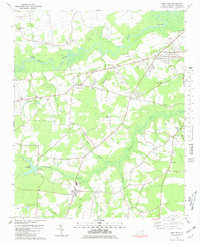 1980 Deep Run1981 Print · USGSCoastal plain farming and river life define Lenoir County in the early eighties. Genealogists and local historians can trace family-named sites like Albrittons and Bucklesberry, or locate historic gathering places like Tulls Mill and Webbs Chapel.
 - 1980 Map of Rivermont, 1981 Print
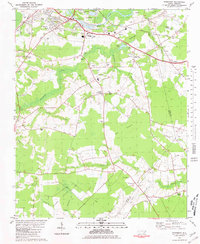 1980 Rivermont1981 Print · USGSSoutheast of Kinston in the late 1970s, the rural reaches of Lenoir County remain defined by the winding Neuse River and the deep wetlands of the Pocosin. Researchers can trace family-named sites like Parrott Fork and Loftins Crossroads or locate Patterson Chapel and Southview Cem.
 - 1983 Map of Kinston
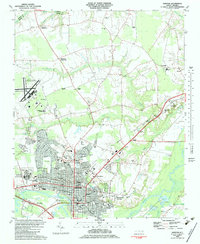 1983 Kinston1983 Print · USGSIn the early eighties, the city of Kinston stands as a vibrant regional center at the meeting of the Neuse River and major rail lines. Genealogists and historians can trace community roots through landmarks like Maplewood Cem, Grainger Stadium, and the Caswell Center.
 - 1983 Map of Grifton
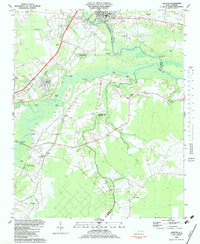 1983 Grifton1983 Print · USGSThe river-driven landscape of eastern North Carolina is captured here in the early 1980s as it spans three county lines. Genealogists can trace family roots through numerous rural landmarks like Alum Springs Ch, British Chapel, and the settlement of Tick Bite.
 - 1983 Map of Falling Creek
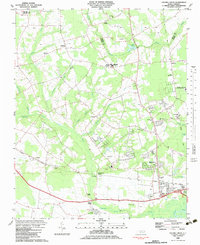 1983 Falling Creek1983 Print · USGSThe Lenoir County countryside comes into focus in the early eighties as a network of rail-side settlements and swamp-fed lowlands. Genealogists and local historians can trace family roots through Pinelawn Cem and Temple Israel Cem or locate the Kennedy Mem Home and Falling Creek Station.
 - 1985 Map of Kinston
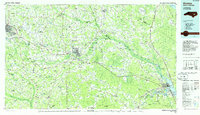 1985 Kinston1985 Print · USGSCoastal plain life and Cold War infrastructure meet in the mid-eighties as the Neuse River winds through agricultural heartlands. Researchers can locate family landmarks like Falling Creek Cem, old milling sites such as Tulls Mill, and the massive Voice of America Radio Towers.2 unique versions available
End of results
Showing maps 1-6 of 6
Top cities near Kinston
- Ayden historical maps
- Winterville historical maps
- La Grange historical maps
- Snow Hill historical maps
- Pink Hill historical maps
- Hookerton historical maps
See more
Top neighborhoods of Kinston
- Club Pines historical maps
- Clubview historical maps
- Colonial Hights historical maps
- Lenoir Pines historical maps
- Edgefield Forest historical maps
- Northview historical maps
See more
Frequently asked questions
- What are the different types of historical maps available for Kinston?
- What is the oldest map of Kinston?
- Where can I purchase historical maps of Kinston for my home or office?
- Where can I download high-res historical maps of Kinston?
- Are there historical topographic maps available for Kinston?
- Is there historical aerial imagery available for Kinston?
- Where are historical maps of Kinston sourced from?