Old Maps of Union, North Carolina for Academic Research
Study the evolution of Union with 16 high-resolution historic maps. Whether you're teaching, researching, or modeling changes in land use, these maps provide essential visual documentation of urban, environmental, and geographic change.
- Analyze long-term change: Track patterns in development, transportation, and natural features.
- Ideal for environmental or urban studies: Support academic projects with primary historical map data.
- Use in the classroom or lab: Educators and researchers rely on these maps to bring historical context to life.
These maps are a powerful tool for teaching, research, and visualizing how Union has changed over the decades.
Union, NC maps
(16)- 1891 Map of Cowee
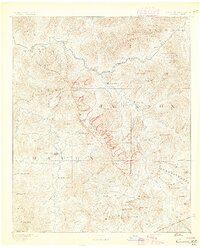 1891 Cowee1891 Print · USGSWestern North Carolina's high mountain reaches are captured here in the late nineteenth century as the railroad began to transform the region. Trace early transport routes like the Western North Carolina Railroad and Cowee Tunnel alongside old settlements at Franklin and Quallatown.
 - 1897 Map of Cowee
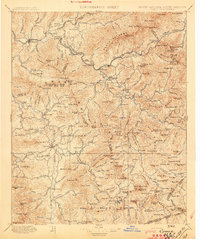 1897 Cowee1897 Print · USGSThe Great Smoky Mountains and Blue Ridge foothills appear here in the 1890s, when the railroad first began to penetrate the high gaps. Trace family roots and mountain industry through old settlements like Quallatown, Sylva, and the Cowee Tunnel engineering site.4 unique versions available
 - 1907 Map of Cowee
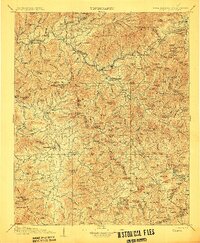 1907 Cowee1907 Print · USGSWestern North Carolina at the turn of the century shows a landscape of rail-connected river towns and high mountain gaps. Genealogists can trace early homesteads and industry through landmarks like West Mill, Roanes Mill, and the many settlements along the Southern Railway.5 unique versions available
 - 1935 Map of Prentiss
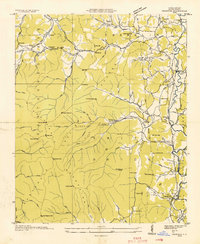 1935 Prentiss1935 Print · USGSMacon County in the mid-1930s shows a landscape of high ridges and narrow valleys where the forestry economy was taking root. Genealogists and researchers can locate numerous rural landmarks like Mulberry Sch, Coweeta Ch, and the Tallulah Falls Railroad.
 - 1946 Map of Prentiss, 1957 Print
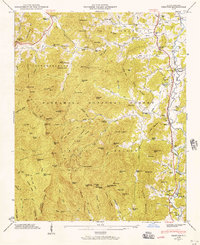 1946 Prentiss1957 Print · USGSMacon County's high ridges and river valleys are captured here just after the war, showing the intersection of mountain wilderness and rural industry. Genealogists and hikers can trace the Appalachian Trail across Albert Mtn or locate family sites like Newman Chapel and the Tallulah Falls Railroad.5 unique versions available
 - 1947 Map of Prentiss
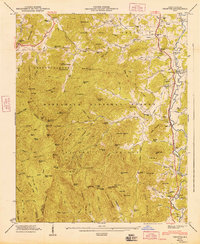 1947 Prentiss1947 Print · USGSMacon County in the late 1940s reveals a mountain landscape defined by small valley settlements and high-altitude timberlands. Genealogists can trace family roots through rural landmarks like Addington Mill, Maidens Chapel, and the Allison-Watts Sch.
 - 1955 Map of Knoxville
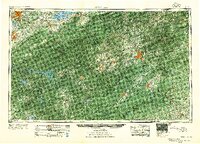 1955 Knoxville1955 Print · USGSThe Southern Appalachians and the Smoky Mountains are shown here at a peak of mid-century development and conservation. Genealogists and historians can trace the early road networks connecting Gatlinburg, Waynesville, and the Cherokee Indian Reservation across the high ridges.
 - 1957 Map of Knoxville, 1966 Print
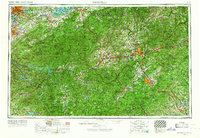 1957 Knoxville1966 Print · USGSThe Southern Appalachians of Tennessee and North Carolina are mapped here during the mid-twentieth century as new highways reached the high country. Genealogists and historians can trace the topography between Knoxville and Asheville, locating family landmarks near Fontana Lake or along the Blue Ridge Parkway.4 unique versions available
 - 1960 Map of Knoxville
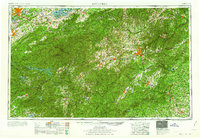 1960 Knoxville1960 Print · USGSThe Southern Appalachians come alive in the 1950s, showing the intersection of new national park tourism and deep-rooted mountain industry. Trace old rail lines like the Clinchfield RR and find high-altitude landmarks from Mt Le Conte to the Cherokee Indian Reservation.2 unique versions available
 - 1964 Map of Knoxville
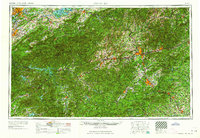 1964 Knoxville1964 Print · USGSThe Southern Appalachians and Great Smokies are captured here during the mid-sixties, showing the rugged borderlands of Tennessee and North Carolina. Researchers can trace historic mountain routes like U S 441, the expanse of Pisgah National Forest, and the growing footprints of Asheville and Knoxville.
 - 1983 Map of Fontana Lake
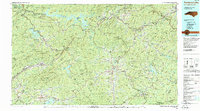 1983 Fontana Lake1983 Print · USGSWestern North Carolina's high peaks and reservoir-carved valleys are documented here during the early eighties. Genealogists and local historians can trace the mountain communities of Bryson City and Franklin or explore the boundaries of the Qualla Boundary.2 unique versions available
 - 2011 Map of Prentiss, 2011 Print
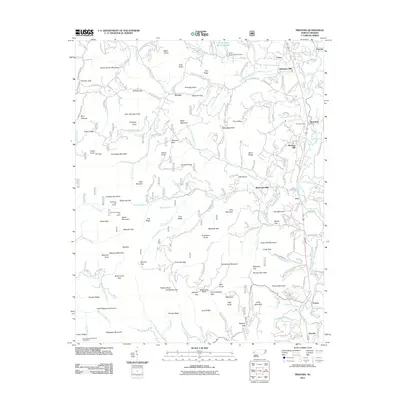 2011 Prentiss2011 Print · USGSSouthern Macon County at the start of the 2010s reveals a mountain landscape defined by river-bottom industry and high-peak landmarks. Researchers can trace historic family burial sites at Rush Cemetery and local milling heritage at McClure Mill and Addington Mill.
 - 2013 Map of Prentiss, 2013 Print
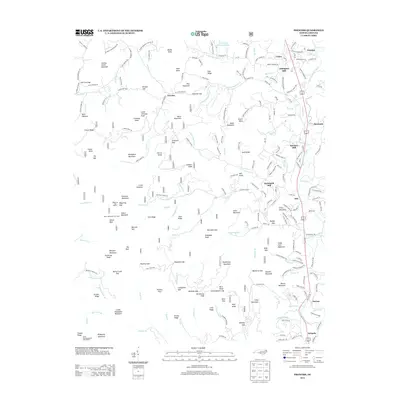 2013 Prentiss2013 Print · USGSThe southern Appalachian highlands are captured in detail here during the early twenty-first century, showing the intersection of mountain wilderness and rural valley life. Researchers can trace historic industry and recreation through the Albert Mountain Fire Tower and local landmarks like Addington Mill or Calvary Church.
 - 2016 Map of Prentiss, 2016 Print
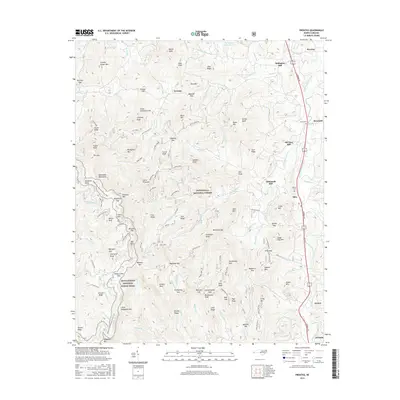 2016 Prentiss2016 Print · USGSThe Little Tennessee River valley in the mid-2010s remains a landscape of high peaks and river-bottom settlements. Researchers can trace family sites near Asbury Cem or locate historic water-powered industry at Addington Mill and McClure Mill.
 - 2019 Map of Prentiss, 2019 Print
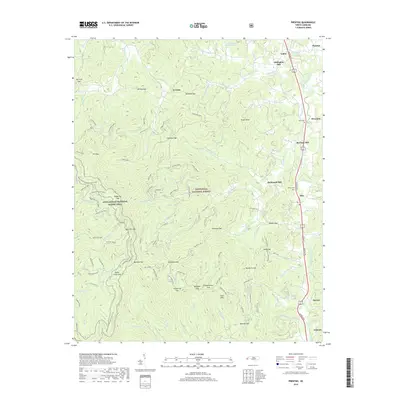 2019 Prentiss2019 Print · USGSThe Little Tennessee River valley near the Georgia border comes alive in this survey, showing a landscape defined by riverside mills and high mountain gaps. Genealogists and hikers can trace the Appalachian National Scenic Trail or locate family sites like Asbury Cem and Addington Mill.
 - 2022 Map of Prentiss, 2022 Print
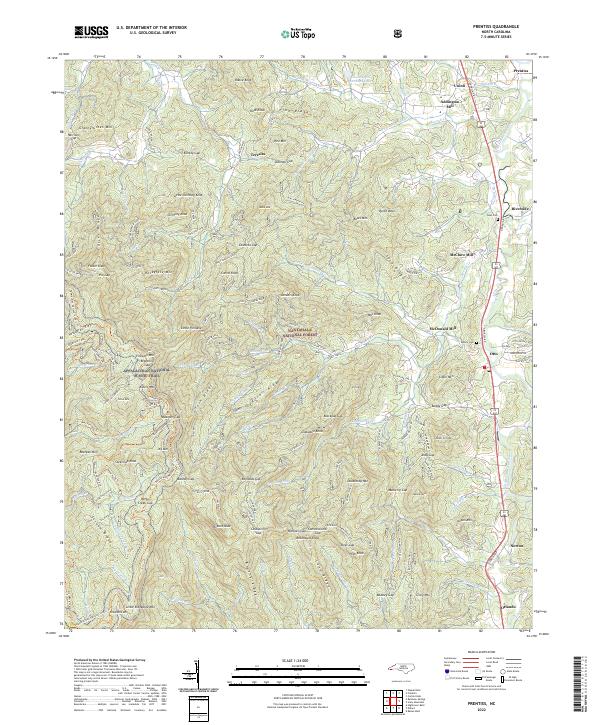 2022 Prentiss2022 Print · USGSMacon County at the edge of the Blue Ridge is shown here in the 2020s, centered on the Little Tennessee River valley. Trace local history through the sites of Addington Mill, Rush Cem, and the high-elevation path of the Appalachian National Scenic Trail.
End of results
Showing maps 1-16 of 16
Top cities near Union
- Cullowhee historical maps
- Franklin historical maps
- Mountain City historical maps
- Webster historical maps
- Forest Hills historical maps
- Dillard historical maps
See more
Frequently asked questions
- What are the different types of historical maps available for Union?
- What is the oldest map of Union?
- Where can I purchase historical maps of Union for my home or office?
- Where can I download high-res historical maps of Union?
- Are there historical topographic maps available for Union?
- Is there historical aerial imagery available for Union?
- Where are historical maps of Union sourced from?