Old Maps of Mecklenburg County, North Carolina for Metal Detecting
Plan your next treasure hunt with 159 historic maps of Mecklenburg County. Find old homesites, ghost towns, trails, and gathering spots that may be lost to time — perfect for identifying promising metal detecting locations.
- Locate forgotten sites: Uncover places like long-lost settlements, abandoned rail lines, or gathering spots.
- Plan better hunts: Use map overlays combined with LiDAR or satellite views to narrow in on historically rich areas.
- Made for detectorists: Thousands of hobbyists use these maps to discover relics, coins, and hidden history.
Use these historic maps to boost your research and find new opportunities beneath the surface of Mecklenburg County.
Mecklenburg County, NC maps
(159)- 1893 Map of Statesville, 1934 Print
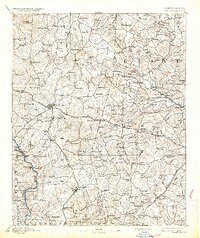 1893 Statesville1934 Print · USGSThe North Carolina Piedmont in the late nineteenth century was a landscape of river-powered industry and rail-connected crossroads. Researchers can trace ancestral locations through dozens of named mills like Ketchies Mill and historic crossings like Cornelius Ferry or Beattie Ford.2 unique versions available
 - 1905 Map of Charlotte
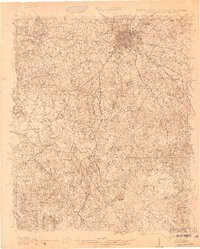 1905 Charlotte1905 Print · USGSMecklenburg County at the start of the twentieth century shows a region connected by the early Southern Railway and a burgeoning city center. Genealogists can trace family roots through numerous rural landmarks like McClintock Church, Pineville, and Shopton.2 unique versions available
 - 1907 Map of Charlotte
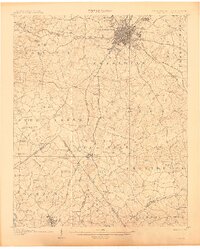 1907 Charlotte1907 Print · USGSGreater Charlotte was a bustling rail and textile corridor at the dawn of the twentieth century, bridging the two Carolinas. Genealogists can locate old family landmarks like Sutton School and Steel Creek Church or trace the early growth of Dilworth.4 unique versions available
 - 1914 Map of Gastonia
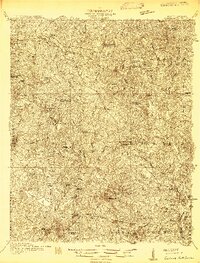 1914 Gastonia1914 Print · USGSGaston and Lincoln counties are captured here just before the First World War, when the textile industry and rail lines shaped every community. Researchers can locate long-standing landmarks like Loray Mills, Belmont Abby, and the old County House near Dallas.2 unique versions available
 - 1916 Map of Gastonia
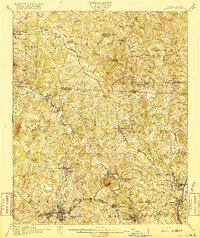 1916 Gastonia1916 Print · USGSGaston and Lincoln counties are captured here just as the textile industry was transforming the Piedmont landscape. Trace the rail-and-river economy through landmarks like the Loray Mill, the Rehoboth Furnace, and the early village of McAdenville.2 unique versions available
 - 1941 Map of Charlotte
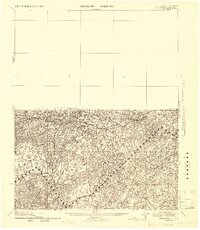 1941 Charlotte1941 Print · USGSMecklenburg and its surrounding counties are captured here at a pivotal moment in the early 1940s. Genealogists and local historians can trace the rail-driven growth of Charlotte or locate smaller rural landmarks like Alexanders Store, Wesley Chapel, and the community at Stallings.
 - 1942 Map of Charlotte
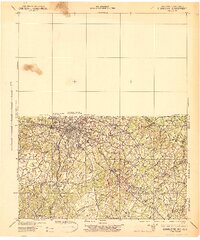 1942 Charlotte1942 Print · USGSCharlotte and its surrounding Piedmont communities are captured here during the early years of the Second World War. Researchers can trace the rail corridors of the Southern and Seaboard Air Line or locate family-named sites like Alexanders Store, Hoods Cross Road, and Wesley Chapel.2 unique versions available
 - 1947 Map of Clover, 1956 Print
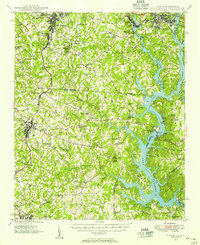 1947 Clover1956 Print · USGSThe Carolina Piedmont at the dawn of the postwar era shows a landscape of textile mills and rural farmsteads along the rising waters of the Catawba. Local historians can trace the foundations of the region through landmarks like the State Textile Sch, Boogertown, and the Buster Boyd Bridge.2 unique versions available
 - 1948 Map of Paw Creek, 1952 Print
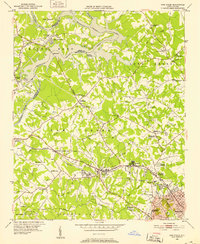 1948 Paw Creek1952 Print · USGSThe rural outskirts of Charlotte and the Catawba River shoreline are captured here just after the war. Local historians can trace the foundations of communities like Shuffletown and Toddville, or locate landmarks such as Hopewell Ch and the Paw Creek High Sch.
 - 1948 Map of Derita, 1952 Print
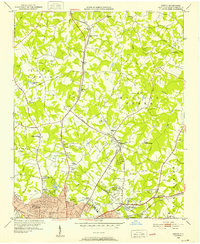 1948 Derita1952 Print · USGSNorth of Charlotte in the late 1940s, this area shows a rural landscape transitioning toward suburban growth along the Southern railroad. Genealogists and researchers can locate several community anchors including Derita Mineral Springs, Rockwell Sch, and Sugar Creek Ch.3 unique versions available
 - 1948 Map of Charlotte East, 1965 Print
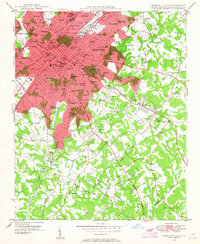 1948 Charlotte East1965 Print · USGSCharlotte is captured during its mid-century transition from a rail-hub textile center to a major regional city. Researchers can trace the layout of early suburbs and vanished institutional landmarks like Bethune Sta, Good Samaritan Hospital, and the original Thompson Orphanage.
 - 1948 Map of Charlotte West, 1965 Print
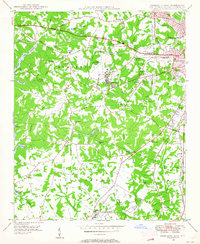 1948 Charlotte West1965 Print · USGSWest of Charlotte in the late 1940s, this area balances a growing aviation hub with established rural communities. Genealogists and historians can trace family roots at Steel Creek Ch and York Memorial Cem or locate the sprawling U S Naval Depot.
 - 1949 Map of Kannapolis
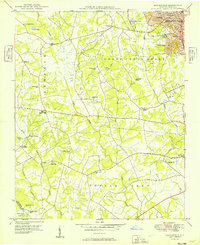 1949 Kannapolis1949 Print · USGSCabarrus and Mecklenburg counties appear here in the late 1940s as the railroad-linked industrial core of Kannapolis expands. Genealogists and historians can trace long-standing rural landmarks like Poplar Tent Ch, Odell High Sch, and Cox Mill.
 - 1949 Map of Clover
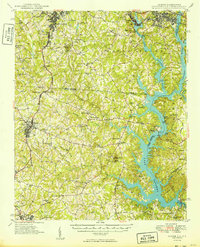 1949 Clover1949 Print · USGSThe Carolinas' borderlands come alive in the late 1940s as the textile and rail economy centers around Lake Wylie. Researchers can trace old family roots at China Grove Ch, locate the vanished Shiny Eye Sch, or follow the Southern Ry through Belmont and Clover.
 - 1949 Map of Charlotte West
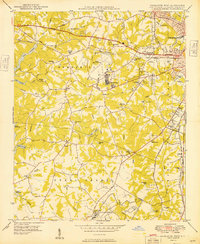 1949 Charlotte West1949 Print · USGSMecklenburg County westward from the city center is shown here just after the war, balancing its rural roots with new aviation and military hubs. Researchers can locate family landmarks like Berryhill Sch, York Memorial Cem, and the U S Naval Depot.
 - 1949 Map of Charlotte East
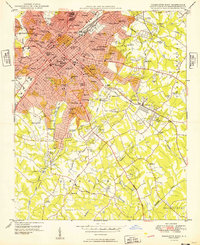 1949 Charlotte East1949 Print · USGSCharlotte is captured in the late 1940s as its streetcar suburbs and rail corridors define the urban core. Genealogists can trace family footprints through historic Elmwood Cemetery or locate old neighborhood landmarks like the Thompson Orphanage and Plaza Road Sch YMCA.
 - 1949 Map of Harrisburg
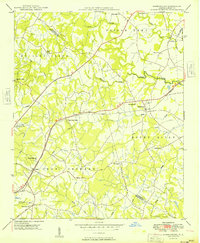 1949 Harrisburg1949 Print · USGSThe rural borderlands between Cabarrus and Mecklenburg counties are captured here just after the war, centered on the Southern rail line. Researchers can trace ancestral locations at Back Creek Chapel, Roberta Mill, or the Newell High Sch.
 - 1949 Map of Wilgrove
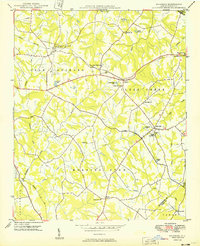 1949 Wilgrove1949 Print · USGSMecklenburg County’s rural townships are documented here during a period of steady mid-century growth. Researchers can trace ancestral locations near Mint Hill, the Delta Air Base, or early educational sites like Clear Creek Sch and Bain High Sch.2 unique versions available
 - 1949 Map of Midland
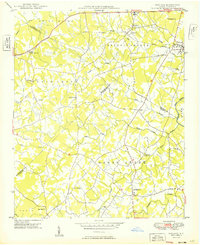 1949 Midland1949 Print · USGSMidland and the surrounding Piedmont farm country are captured here in the late 1940s, just as rural electrification and improved roads were transforming the area. Local historians can trace old community hubs like the Midland Speedway, Emmanuel Cem, and the Rock Hill Sch.
 - 1949 Map of Hicks Crossroads
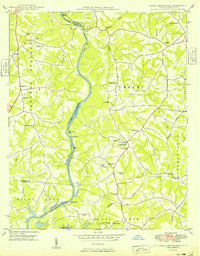 1949 Hicks Crossroads1949 Print · USGSIn the late 1940s, the Catawba River valley still flowed through its original channel, long before the creation of Lake Norman. Local historians can trace the foundations of the Piedmont through rural landmarks like Cowans Ford, Rural Hill Cem, and the cluster of churches at Hicks Crossroads.
 - 1953 Map of Charlotte, 1968 Print
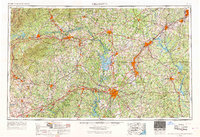 1953 Charlotte1968 Print · USGSThe North Carolina Piedmont and South Carolina borderlands are shown in detail during a period of significant growth and reservoir development. Trace the rail corridors of the Southern Railway or find family roots in towns like China Grove, Misenheimer, and Lincolnton.3 unique versions available
 - 1954 Map of Charlotte
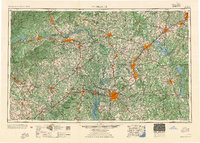 1954 Charlotte1954 Print · USGSThe North Carolina Piedmont in the mid-1950s shows a region of rapid growth and industrial expansion centered around Charlotte. Trace the era's infrastructure through the Southern railroad lines and locate significant landmarks like the Charlotte Naval Ammunition Depot and Lake Norman.2 unique versions available
 - 1960 Map of Charlotte
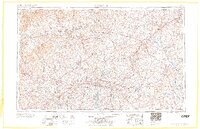 1960 Charlotte1960 Print · USGSMid-century North Carolina and South Carolina meet in this 1960 survey of the Piedmont's industrial and textile heartland. Trace the growth of Charlotte alongside historic landmarks like Kings Mountain National Military Park and the Charlotte Naval Ammunition Depot.2 unique versions available
 - 1962 Map of Charlotte
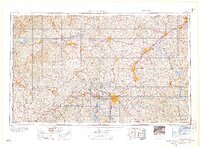 1962 Charlotte1962 Print · USGSThe North Carolina Piedmont in the early sixties showcases a landscape transformed by massive reservoirs and industrial growth. Researchers can trace the development of Lake Norman, locate the Charlotte Naval Ammunition Depot, or find family landmarks like Wesley Chapel and Brown & Norcott Mills.
 - 1967 Map of Charlotte East, 1969 Print
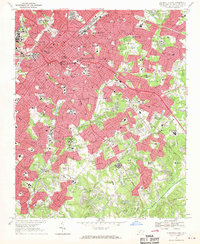 1967 Charlotte East1969 Print · USGSCharlotte is shown in a decade of rapid transformation, as its metropolitan core expands along the Southern Railway corridors. Researchers can trace the footprints of established institutions like Johnson Smith University and Evergreen Cemetery, or locate the smaller community of Rama.3 unique versions available
Showing maps 1-25 of 159
Top cities of Mecklenburg County
- Charlotte historical maps
- Huntersville historical maps
- Matthews historical maps
- Cornelius historical maps
- Mint Hill historical maps
- Davidson historical maps
See more
Frequently asked questions
- What are the different types of historical maps available for Mecklenburg County?
- What is the oldest map of Mecklenburg County?
- Where can I purchase historical maps of Mecklenburg County for my home or office?
- Where can I download high-res historical maps of Mecklenburg County?
- Are there historical topographic maps available for Mecklenburg County?
- Is there historical aerial imagery available for Mecklenburg County?
- Where are historical maps of Mecklenburg County sourced from?