1900s (20th Century) Maps of Angola, North Carolina
Explore 7 historic maps of Angola from the 1900s (20th Century). These maps offer a rare glimpse into what life looked like during the 1900s — showing old roads, neighborhoods, homes, and landmarks that have changed or disappeared over time.
Whether you're researching your family's past, planning a metal detecting trip, or studying how Angola's landscape evolved across the 1900s, these high-resolution maps are a powerful tool for exploring the history of this region.
- Focus on a specific era: All maps on this page are from the 1900s, giving you a focused view of this time period.
- See what’s changed: Compare century-old streets, trails, and buildings to today's modern landscape using overlays and satellite layers.
- Research with precision: Use these maps for genealogy, historical research, land use analysis, or educational projects.
- View, download, or print: Maps are fully viewable online in high resolution, and can be downloaded or printed for your own records.
Start exploring Angola's history through authentic maps from the 1900s. This is your window into the past.
Angola, NC maps
(7)- 1948 Map of Maple Hill
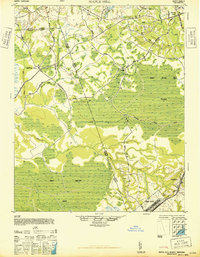 1948 Maple Hill1948 Print · USGSSoutheastern North Carolina is mapped here just after the war, showing the deep swamp landscapes of the coastal plain. Genealogists and researchers can trace the roads connecting Maple Hill to Camp Davis and locate rural landmarks like Waltons Store.2 unique versions available
 - 1953 Map of Beaufort, 1965 Print
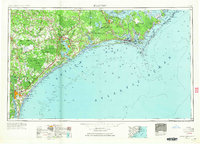 1953 Beaufort1965 Print · USGSThe North Carolina coastline in the mid-fifties reveals an era of massive military expansion alongside traditional maritime life. Genealogists can trace family names and small settlements from Sealevel to Sneads Ferry or locate landmarks like Fort Macon.3 unique versions available
 - 1954 Map of Beaufort
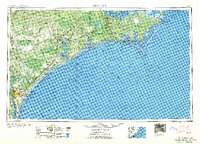 1954 Beaufort1954 Print · USGSCoastal North Carolina in the mid-fifties reveals a landscape of strategic military installations, sprawling wetlands, and thriving rail towns. Genealogists and historians can trace the foundations of Wilmington, the rural reaches of Duplin County, and shoreline landmarks like Cape Lookout and Carolina Beach.
 - 1972 Map of Beaufort, 1975 Print
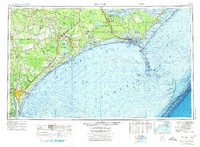 1972 Beaufort1975 Print · USGSThe North Carolina coast in the early seventies shows a landscape defined by massive military bases and coastal sounds. Trace rural family roots at Sarecta and Catherine Lake or explore the barrier islands of the Cape Lookout National Seashore.
 - 1981 Map of Maple Hill
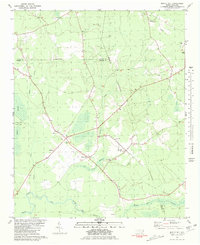 1981 Maple Hill1981 Print · USGSIn the early 1980s, the crossroads at Maple Hill remained the heart of this three-county borderland. Local historians can trace the foundations of the community through its schools and churches like Pilgrims Rest Ch and the remote Angola Ch.
 - 1986 Map of New River
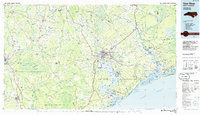 1986 New River1986 Print · USGSCoastal Onslow County in the mid-eighties shows a landscape shaped by military expansion and the preserved wetlands of the Carolina coast. Genealogists and historians can trace the foundations of Jacksonville and small outlying communities like Richlands and Swansboro.
 - 1991 Map of New River
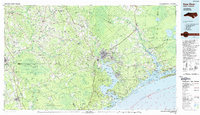 1991 New River1991 Print · USGSCoastal Onslow and Pender counties appear here in the early 1990s as the military and maritime economies matured. Researchers can trace the expansive Camp Lejeune grounds and find rural landings like Fulcher Landing and Sanders Landing.
End of results
Showing maps 1-7 of 7
Top cities near Angola
- Jacksonville historical maps
- Half Moon historical maps
- Richlands historical maps
- Holly Ridge historical maps
- Beulaville historical maps
- North Topsail Beach historical maps
Frequently asked questions
- What are the different types of historical maps available for Angola?
- What is the oldest map of Angola?
- Where can I purchase historical maps of Angola for my home or office?
- Where can I download high-res historical maps of Angola?
- Are there historical topographic maps available for Angola?
- Is there historical aerial imagery available for Angola?
- Where are historical maps of Angola sourced from?