Old Maps of Orange County, North Carolina for Hiking & Exploration
Hike through history with 110 historic maps of Orange County. Explore old trails, ghost towns, and forgotten backroads — perfect for outdoor adventurers and local explorers.
- Rediscover forgotten places: Map out old mining camps, roads, and footpaths that no longer exist on modern maps.
- Layer with modern tools: Combine with LiDAR or satellite views to plan hikes through historical terrain.
- Made for exploration: Popular among hikers, overlanders, and local history lovers.
Use these maps to find adventure and explore the hidden past of Orange County.
Orange County, NC maps
(110)- 1943 Map of Durham South
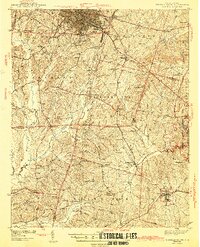 1943 Durham South1943 Print · USGSDurham and its southern reaches are captured here in the early 1940s, showing a tobacco-and-rail landscape at its peak. Genealogists and local historians can trace legacy sites like Beechwood Cem, Lowes Grove, and Roger Grove Ch.2 unique versions available
 - 1946 Map of Chapel Hill, 1958 Print
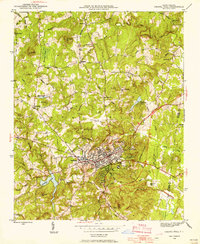 1946 Chapel Hill1958 Print · USGSMid-century Chapel Hill and Carrboro emerge from the post-war era as significant academic and transit hubs. Researchers can trace the layout of early neighborhoods, local family burials at Cheek Cem, and rural sites like Mason Farm or Horace Williams Airport.2 unique versions available
 - 1947 Map of Chapel Hill
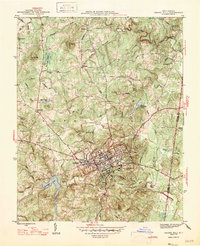 1947 Chapel Hill1947 Print · USGSPost-war North Carolina comes into focus through this survey of Chapel Hill and Carrboro. Genealogists and historians can trace family roots through landmarks like Morris Grove Sch, Partin Cem, and the rural settlement at Blackwood.2 unique versions available
 - 1951 Map of Farrington, 1952 Print
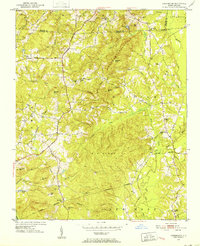 1951 Farrington1952 Print · USGSChatham County’s Piedmont landscape is captured here in the early fifties, showing the rural crossroads and river bottomlands before major modernization. Local researchers can trace family landmarks like Manns Chapel Cem, Farrington, and the remote Bells Sch along the New Hope River.3 unique versions available
 - 1951 Map of Durham South, 1953 Print
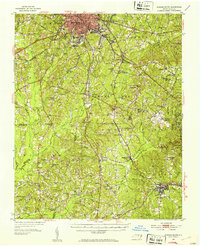 1951 Durham South1953 Print · USGSThe mid-century landscape south of Durham shows a region on the cusp of modernization as the airport and highway networks began to expand. Genealogists and historians can locate rural landmarks such as Pearsontown, Lowes Grove, and Holland Chapel among the busy rail corridors of the Norfolk Southern.3 unique versions available
 - 1951 Map of Durham North, 1953 Print
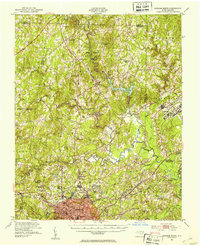 1951 Durham North1953 Print · USGSThe northern reaches of Durham and Orange Counties are captured here in the early fifties, just as post-war development began to meet the region's agricultural roots. Genealogists can trace family landmarks like the Duke Homestead and rural hubs such as Bahama, Rougemont, and the Orange Factory.3 unique versions available
 - 1953 Map of Raleigh, 1965 Print
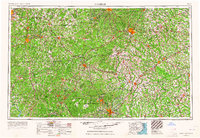 1953 Raleigh1965 Print · USGSCentral North Carolina in the early sixties shows a landscape of growing towns and military hubs before the full expansion of the interstate system. Genealogists can trace family footprints across the Piedmont through Wake Forest, Siler City, and the large Fort Bragg Military Reservation.4 unique versions available
 - 1953 Map of Greensboro, 1981 Print
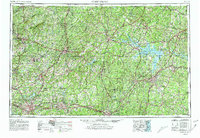 1953 Greensboro1981 Print · USGSThe Piedmont borderlands of North Carolina and Virginia show a landscape defined by new reservoirs and old rail lines. Trace family roots and the changing river geography through Elon College, the John H Kerr Reservoir, and South Boston.
 - 1954 Map of Greensboro
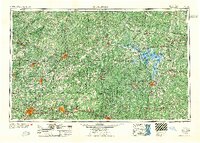 1954 Greensboro1954 Print · USGSThe Piedmont borderlands of North Carolina and Virginia come alive in this mid-fifties study of a region defined by its rivers and rails. Researchers can trace the growing Buggs Island Lake or follow the paths of the Southern Ry and Seaboard Air Line RR through towns like Oxford and Reidsville.
 - 1954 Map of Raleigh
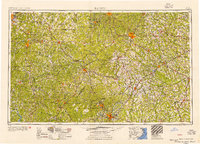 1954 Raleigh1954 Print · USGSThe North Carolina Piedmont and Sandhills are captured in the mid-fifties during a period of steady regional growth. Genealogists and historians can trace the development of towns like Siler City or locate landmarks such as Falls of Neuse and Camp Mackall.
 - 1962 Map of Greensboro
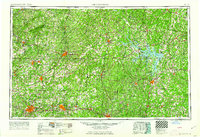 1962 Greensboro1962 Print · USGSThe Piedmont region along the Virginia and North Carolina border comes alive in the early 1960s, showing a landscape defined by industry and new reservoirs. Trace the path of the Virginian RR or explore the early development of Greensboro and Durham.
 - 1966 Map of Greensboro
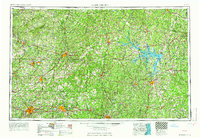 1966 Greensboro1966 Print · USGSThe North Carolina and Virginia Piedmont thrives during the mid-sixties, showcasing a landscape of textile hubs and expanding river reservoirs. Researchers can trace the rail corridors of the Southern Railway, find local landmarks like Elon College, or locate the extensive Camp Butner Military Reservation.
 - 1967 Map of Cedar Grove, 1969 Print
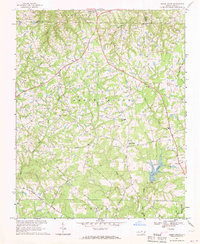 1967 Cedar Grove1969 Print · USGSNorthern Orange County's rolling hills and headwaters are captured in the late sixties as rural communities and new reservoirs shaped the land. Genealogists can trace family roots through landmarks like Harmony Cem, Mt Zion Ch, and the school at Cedar Grove.
 - 1968 Map of White Cross, 1969 Print
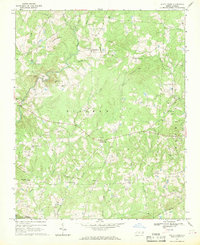 1968 White Cross1969 Print · USGSOrange County's rural crossroads and family settlements are captured here in the late sixties as the region maintained its agrarian character. Researchers can trace historic church sites like Alston Grove Ch and locate family landmarks from Thompson Mtn to Orange Grove.2 unique versions available
 - 1968 Map of Efland, 1970 Print
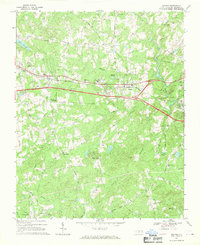 1968 Efland1970 Print · USGSOrange County's rural communities are captured here in the late sixties as the new interstate highway began to reshape the landscape. Local historians can trace the foundations of Efland and Cheeks Crossroads, alongside landmarks like Efland Millpond and the Efland-Cheeks Sch.2 unique versions available
 - 1968 Map of Hillsborough, 1970 Print
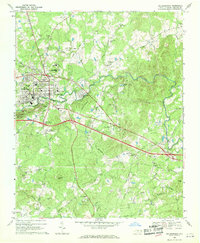 1968 Hillsborough1970 Print · USGSHillsborough and the Eno River valley are captured in the late sixties during a period of steady local growth. Researchers can locate the Governor Burke Grave, several country churches like Flat Rock Ch, and industrial sites including a Mine and Southern Railway tracks.5 unique versions available
 - 1968 Map of Caldwell, 1970 Print
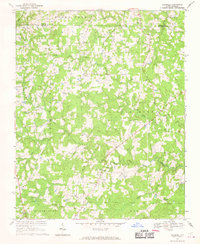 1968 Caldwell1970 Print · USGSOrange County and the surrounding Piedmont country are captured here in the late sixties as a network of crossroads communities and small farms. Genealogists can trace family footprints across Caldwell, Schley, and numerous rural churches like Berrys Grove Ch and Olive Chapel.
 - 1968 Map of Bynum, 1970 Print
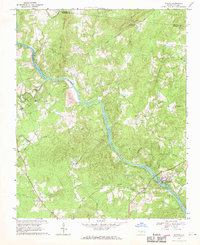 1968 Bynum1970 Print · USGSChatham County’s rural riverfront comes to life in this late sixties survey of the Haw River valley and its surrounding hill country. Genealogists and historians can trace family roots through a dense concentration of local landmarks like Cedar Grove Ch, Gum Springs, and Hunter.
 - 1969 Map of Mebane, 1972 Print
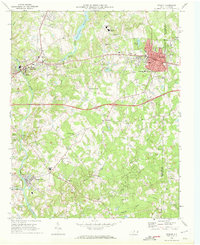 1969 Mebane1972 Print · USGSMebane and the Haw River corridor are captured here during a period of steady growth in the late sixties. Genealogists and historians can locate family landmarks like Oakwood Cem, Phillips Chapel, and the rural community of Florence Town.2 unique versions available
 - 1969 Map of Burlington NE, 1972 Print
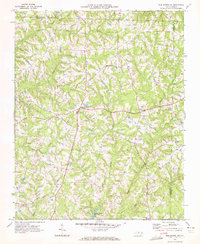 1969 Burlington NE1972 Print · USGSNorth Carolina's Piedmont region in the late sixties shows a landscape of rural schoolhouses and family churches at the crossroads of three counties. Researchers can trace the communities of Pleasant Grove and Just Crossroads or locate Martins Chapel and Snow Hill Ch.2 unique versions available
 - 1973 Map of Northwest Durham, 1975 Print
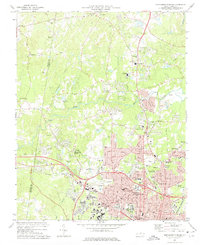 1973 Northwest Durham1975 Print · USGSThe northern edge of Durham and its rural periphery come into focus as the city’s post-war suburbs push toward the Eno River. Researchers can trace the layout of Duke University or locate family markers at McMannen Cem Ch and Cains Chapel Cem.3 unique versions available
 - 1973 Map of Southwest Durham, 1977 Print
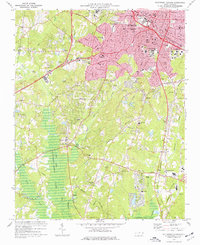 1973 Southwest Durham1977 Print · USGSDurham and its southern suburbs are captured in the early seventies, showcasing a transition from a rail-centered city to an interstate-connected hub. Genealogists and historians can trace institutional roots at Duke University or locate family plots at Maplewood Cemetery and Beechwood Cem.4 unique versions available
 - 1974 Map of Rougemont, 1976 Print
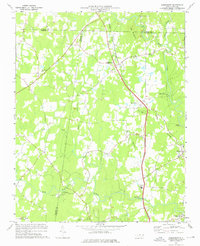 1974 Rougemont1976 Print · USGSIn the mid-seventies, this pocket of the North Carolina Piedmont remained a landscape of railway hamlets and riverside industry. Researchers can trace historic family landmarks from the Orange Factory to rural congregations like Red Mountain Ch and Union Grove Ch.3 unique versions available
 - 1977 Map of Saxapahaw
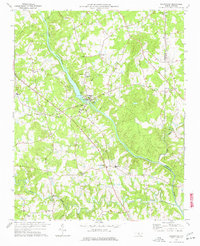 1977 Saxapahaw1977 Print · USGSThe Piedmont landscape along the Haw River is captured here in the mid-seventies, showing the rural communities of Alamance and Orange counties. Researchers can trace family roots through numerous local landmarks like Maxwell Chapel, Eli Whitney, and Burnetts Chapel.2 unique versions available
 - 1978 Map of Farrington
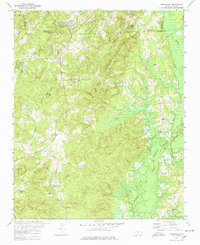 1978 Farrington1978 Print · USGSChatham County’s rural landscape underwent a major change in the late 1970s as the B. Everett Jordan Lake reservoir began to reshape the river valleys. Local historians can trace old community ties at Farrington, find the Triangle Sch, and locate ancestral sites like Manns Chapel Cem.2 unique versions available
Showing maps 1-25 of 110
Top cities of Orange County
Frequently asked questions
- What are the different types of historical maps available for Orange County?
- What is the oldest map of Orange County?
- Where can I purchase historical maps of Orange County for my home or office?
- Where can I download high-res historical maps of Orange County?
- Are there historical topographic maps available for Orange County?
- Is there historical aerial imagery available for Orange County?
- Where are historical maps of Orange County sourced from?