1900s (20th Century) Maps of Quaker Gap, North Carolina
Explore 6 historic maps of Quaker Gap from the 1900s (20th Century). These maps offer a rare glimpse into what life looked like during the 1900s — showing old roads, neighborhoods, homes, and landmarks that have changed or disappeared over time.
Whether you're researching your family's past, planning a metal detecting trip, or studying how Quaker Gap's landscape evolved across the 1900s, these high-resolution maps are a powerful tool for exploring the history of this region.
- Focus on a specific era: All maps on this page are from the 1900s, giving you a focused view of this time period.
- See what’s changed: Compare century-old streets, trails, and buildings to today's modern landscape using overlays and satellite layers.
- Research with precision: Use these maps for genealogy, historical research, land use analysis, or educational projects.
- View, download, or print: Maps are fully viewable online in high resolution, and can be downloaded or printed for your own records.
Start exploring Quaker Gap's history through authentic maps from the 1900s. This is your window into the past.
Quaker Gap, NC maps
(6)- 1953 Map of Winston-Salem, 1974 Print
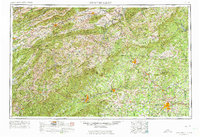 1953 Winston-Salem1974 Print · USGSThe North Carolina Piedmont and Virginia highlands meet in the mid-1950s, a landscape defined by the tobacco and textile hubs of the Blue Ridge foothills. Researchers can trace the rail-and-river geography connecting Winston-Salem to mountain towns like Mount Airy and Galax.2 unique versions available
 - 1955 Map of Winston-Salem
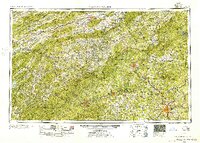 1955 Winston-Salem1955 Print · USGSThe Central Blue Ridge and Piedmont transition are captured here in the mid-fifties, from the industrial hub of Winston-Salem to the high peaks of Southwest Virginia. Genealogists can trace family landmarks like Richmond Hill Ch, Siloam Ch, and the old rail stops along the Southern Railway.
 - 1962 Map of Winston-Salem
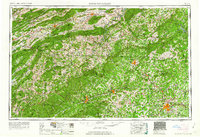 1962 Winston-Salem1962 Print · USGSThe North Carolina Piedmont meets the Virginia highlands in the early sixties, showing the rail corridors and mountain gaps of the southern Appalachians. Researchers can trace the Blue Ridge Parkway or locate family sites near Winston-Salem, Mount Airy, and Hanging Rock Mountain.
 - 1964 Map of King, 1965 Print
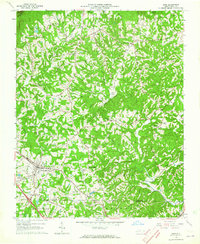 1964 King1965 Print · USGSStokes County and the Piedmont plateau are captured here in the mid-sixties as small rural communities like Quaker Gap and Mountain View thrive. Genealogists can trace family landmarks and rural life through Jefferson Church, the King Airport, and numerous small cemeteries.3 unique versions available
 - 1984 Map of Winston-Salem, 1985 Print
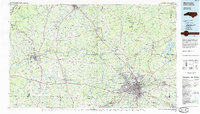 1984 Winston-Salem1985 Print · USGSThe North Carolina Piedmont in the mid-1980s shows the growth of Winston-Salem and the busy rail corridors of the Southern Railway. Genealogists and local historians can trace family-named lands and rural communities from Yadkinville to Mount Airy.2 unique versions available
 - 1996 Map of King, 2001 Print
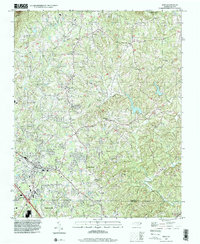 1996 King2001 Print · USGSThe borderlands of Forsyth and Stokes County come alive in the late nineties, from the growing streets of King to the peaks of Sauratown Mtn. Genealogists and historians can trace family burial sites like Sizemore Cem and Old Mt Olive Cem near old crossroads like Capella.
End of results
Showing maps 1-6 of 6
Top cities near Quaker Gap
- Winston-Salem historical maps
- Kernersville historical maps
- Lewisville historical maps
- Walkertown historical maps
- Rural Hall historical maps
- Walnut Cove historical maps
See more
Frequently asked questions
- What are the different types of historical maps available for Quaker Gap?
- What is the oldest map of Quaker Gap?
- Where can I purchase historical maps of Quaker Gap for my home or office?
- Where can I download high-res historical maps of Quaker Gap?
- Are there historical topographic maps available for Quaker Gap?
- Is there historical aerial imagery available for Quaker Gap?
- Where are historical maps of Quaker Gap sourced from?