1900s (20th Century) Maps of Anderson Township, North Dakota
Explore 11 historic maps of Anderson Township from the 1900s (20th Century). These maps offer a rare glimpse into what life looked like during the 1900s — showing old roads, neighborhoods, homes, and landmarks that have changed or disappeared over time.
Whether you're researching your family's past, planning a metal detecting trip, or studying how Anderson Township's landscape evolved across the 1900s, these high-resolution maps are a powerful tool for exploring the history of this region.
- Focus on a specific era: All maps on this page are from the 1900s, giving you a focused view of this time period.
- See what’s changed: Compare century-old streets, trails, and buildings to today's modern landscape using overlays and satellite layers.
- Research with precision: Use these maps for genealogy, historical research, land use analysis, or educational projects.
- View, download, or print: Maps are fully viewable online in high resolution, and can be downloaded or printed for your own records.
Start exploring Anderson Township's history through authentic maps from the 1900s. This is your window into the past.
Anderson Township, ND maps
(11)- 1952 Map of New Rockford, 1968 Print
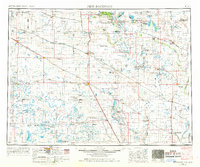 1952 New Rockford1968 Print · USGSThe North Dakota prairie during the mid-1950s was a landscape of rail-dependent farm towns and vast wildlife refuges. Genealogists and historians can trace the foundations of local communities at Fort Totten Indian Agenc, Concordia Lutheran Church, and the Bowdon Country Church and Cemetery.3 unique versions available
 - 1953 Map of Jamestown
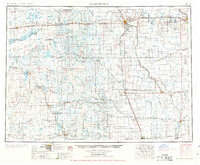 1953 Jamestown1953 Print · USGSSoutheastern North Dakota was a thriving rail and agricultural corridor in the early fifties, anchored by the James River. Researchers can trace the footprints of institutional landmarks like the North Dakota State Hospital and historic sites such as Whitestone Hill Battlefield Park.3 unique versions available
 - 1956 Map of New Rockford
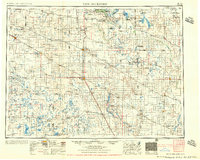 1956 New Rockford1956 Print · USGSMid-century central North Dakota is captured here as a landscape of prairie rail towns and vast wildlife refuges. Trace family roots at the Bowdon Country Church and Cemetery or locate the old St Michael Mission School and Fort Totten.
 - 1956 Map of Jamestown
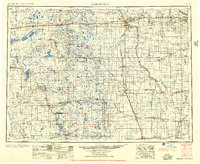 1956 Jamestown1956 Print · USGSThe James River valley and the vast alkali lake country of south-central North Dakota are captured here in the mid-fifties. Genealogists can trace family farms across several counties, locating small rail stops like Medberry and monuments like Whitestone Hill Battlefield Park.
 - 1961 Map of Leal, 1963 Print
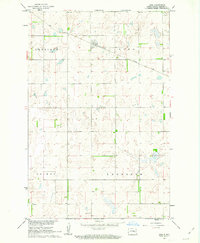 1961 Leal1963 Print · USGSNorth Dakota's prairie landscape comes into focus in the early sixties as the Soo Line cuts through Barnes County. Genealogists can locate the rural Townhall, the community Cem, and the small rail-side settlement of Leal.
 - 1961 Map of Rogers, 1963 Print
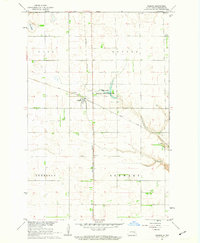 1961 Rogers1963 Print · USGSThe Barnes County prairie comes into focus in the early sixties at the intersection of two major rail lines. Genealogists and local historians can locate the Coleman Sch, the township of Stewart, and the Tomahawk National Wildlife Refuge.
 - 1970 Map of Eckelson, 1973 Print
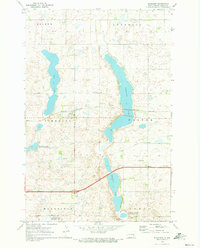 1970 Eckelson1973 Print · USGSNorth Dakota's prairie pothole region is captured here in the early seventies, centered on the railroad town of Eckelson. Researchers can trace the legacy of the land through water features like Eckelson Lake and the industrial footprint of the Burlington Northern line.
 - 1970 Map of Sanborn, 1973 Print
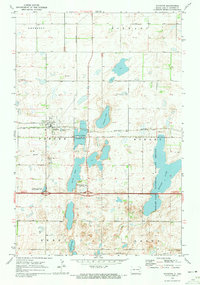 1970 Sanborn1973 Print · USGSThe town of Sanborn and its surrounding prairie townships are captured here in the early 1970s, as agricultural patterns and conservation areas shaped the Barnes County landscape. Researchers can trace the Burlington Northern rail line and locate several local burial grounds including St Peter Cem and Nebo Cem.
 - 1971 Map of New Rockford, 1974 Print
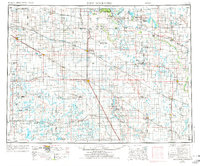 1971 New Rockford1974 Print · USGSCentral North Dakota was a landscape of wildlife refuges and rail-linked agricultural towns in the early seventies. Genealogists and local historians can trace the development of the Fort Totten Indian Reservation and locate old railway points like Maddock, Hamal, and Kloten.
 - 1985 Map of Cooperstown
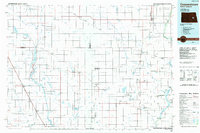 1985 Cooperstown1985 Print · USGSGriggs and Barnes Counties are seen here in the mid-eighties, a period where the prairie economy centered on rail lines and river reservoirs. Genealogists and local historians can trace family locations near Wimbledon, Hannaford, and Spiritwood Lake or locate the Fish Hatchery and Gaging Station along the Sheyenne River.2 unique versions available
 - 1986 Map of Jamestown
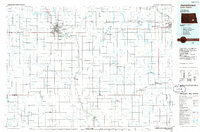 1986 Jamestown1986 Print · USGSThe eastern North Dakota prairie comes into focus in the mid-eighties, centered on the rail and river hubs of Jamestown and Valley City. You can trace the Burlington Northern line through historic stops like Eckelson, Sanborn, and Spiritwood while exploring vast wildlife refuges and local landmarks.2 unique versions available
End of results
Showing maps 1-11 of 11
Top cities near Anderson Township
- Wimbledon historical maps
- Sanborn historical maps
- Eckelson historical maps
- Dazey historical maps
- Rogers historical maps
- Leal historical maps
See more
Frequently asked questions
- What are the different types of historical maps available for Anderson Township?
- What is the oldest map of Anderson Township?
- Where can I purchase historical maps of Anderson Township for my home or office?
- Where can I download high-res historical maps of Anderson Township?
- Are there historical topographic maps available for Anderson Township?
- Is there historical aerial imagery available for Anderson Township?
- Where are historical maps of Anderson Township sourced from?