Old Maps of Defiance County, Ohio for Metal Detecting
Plan your next treasure hunt with 100 historic maps of Defiance County. Find old homesites, ghost towns, trails, and gathering spots that may be lost to time — perfect for identifying promising metal detecting locations.
- Locate forgotten sites: Uncover places like long-lost settlements, abandoned rail lines, or gathering spots.
- Plan better hunts: Use map overlays combined with LiDAR or satellite views to narrow in on historically rich areas.
- Made for detectorists: Thousands of hobbyists use these maps to discover relics, coins, and hidden history.
Use these historic maps to boost your research and find new opportunities beneath the surface of Defiance County.
Defiance County, OH maps
(100)- 1907 Map of Defiance, 1960 Print
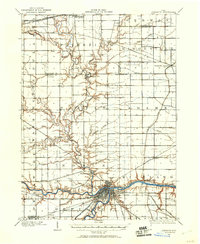 1907 Defiance1960 Print · USGSNorthwest Ohio’s river-and-rail economy is on full display at the turn of the century, centered on the strategic confluence at Defiance. Genealogists can trace family footprints in outlying settlements like Evansport, Jewell, and Ridgeville Corners.
 - 1908 Map of Ottawa, 1936 Print
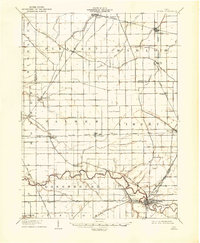 1908 Ottawa1936 Print · USGSNorthwest Ohio's agricultural landscape is seen here in the early twentieth century as a complex network of drainage ditches and competing rail lines. Genealogists can trace family roots in settlements like Glandorf, Miller City, and the rural hub of Ottawa.2 unique versions available
 - 1908 Map of Napoleon, 1942 Print
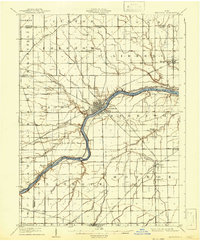 1908 Napoleon1942 Print · USGSNorthwest Ohio was a hub of steam and water transit at the turn of the century, with the Maumee River anchoring the region. Genealogists and rail historians can trace the paths of five different railroads and the historic Miami and Erie Canal through towns like Napoleon and Malinta.2 unique versions available
 - 1909 Map of Defiance, 1940 Print
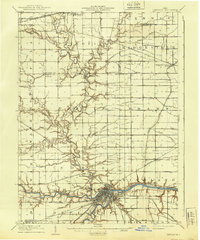 1909 Defiance1940 Print · USGSNorthwest Ohio thrives at the junction of the Maumee and Auglaize rivers in the early twentieth century. Genealogists can trace family footprints in Defiance or explore rural outposts like Evansport and the path of the Miami and Erie Canal.
 - 1909 Map of Continental, 1943 Print
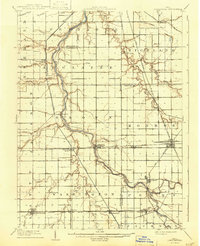 1909 Continental1943 Print · USGSNorthwest Ohio at the start of the twentieth century shows a landscape transitioning from the canal era to a rail-heavy industrial economy. Genealogists can trace family roots in Continental, Oakwood, and Cloverdale, or locate the path of the Miami and Erie Canal alongside the Auglaize River.
 - 1914 Map of Bryan, 1942 Print
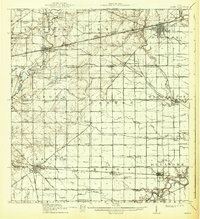 1914 Bryan1942 Print · USGSNorthwest Ohio at the height of the steam era reveals a landscape of thriving rail towns and dense country school districts. Researchers can trace the original routes of the Wabash RR and Electric R R through Bryan and Hicksville, while locating vanished rural sites like Crazy School and Ziegler.
 - 1943 Map of Bryan
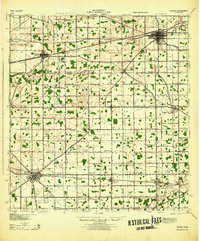 1943 Bryan1943 Print · USGSNorthwest Ohio during the mid-century is captured here as a landscape of grid-roads, small hamlets, and heavy rail traffic. Genealogists and local historians can trace family roots through numerous rural landmarks like Bethel Ch, Bratton Sch, and the hamlet of Farmer.
 - 1953 Map of Fort Wayne, 1963 Print
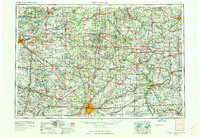 1953 Fort Wayne1963 Print · USGSNortheast Indiana and its neighboring borderlands in Michigan and Ohio appear here during a peak era of rail and road expansion. Researchers can trace the massive rail networks of the Nickel Plate Road and Wabash or locate lakeside landmarks like Lake Wawasee and Clear Lake.4 unique versions available
 - 1956 Map of Fort Wayne
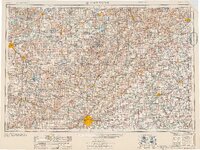 1956 Fort Wayne1956 Print · USGSThe tri-state borderlands of Indiana, Michigan, and Ohio are captured here in the mid-fifties, centered on the growing industrial hub of Fort Wayne. Researchers can trace the heavy rail lines of the New York Central and Pennsylvania alongside prominent water features like Lake Wawasee and the Maumee River.2 unique versions available
 - 1958 Map of Hicksville, 1959 Print
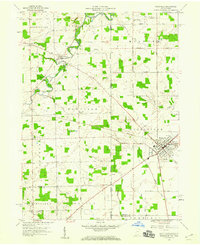 1958 Hicksville1959 Print · USGSThe Indiana-Ohio borderlands at the end of the 1950s showcase a landscape of river-bend settlements and cross-state rail traffic. Genealogists can trace family footprints at Wartenbe Cem and Evergreen Cem, or locate mid-century landmarks like the County Fairgrounds and Coburn Corners Ch.4 unique versions available
 - 1958 Map of Butler East, 1960 Print
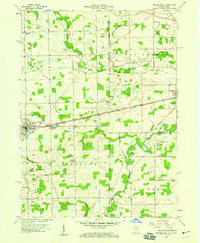 1958 Butler East1960 Print · USGSDeKalb County and the Ohio borderlands are shown here in the late fifties, where the Principal Meridian separates two states. Researchers can locate community anchors like Stafford Center, Big Run Ch, and the old Jerusalem Sch.4 unique versions available
 - 1959 Map of Defiance East, 1961 Print
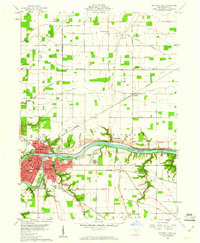 1959 Defiance East1961 Print · USGSDefiance at the close of the fifties stands at the strategic meeting of the Maumee and Auglaize rivers. Researchers can trace the path of the Miami and Erie Canal and locate local landmarks like Defiance College, St Michaels Ch, and the Drive-in Theater.3 unique versions available
 - 1959 Map of Ridgeville Corners, 1961 Print
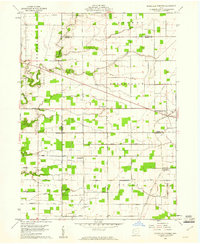 1959 Ridgeville Corners1961 Print · USGSNorthwest Ohio at the end of the fifties reveals a landscape shaped by township grids and converging county lines. Researchers can trace family history through local landmarks like Ridgeville Corners, Bethlehem Ch, and the Domersville Cemetery.3 unique versions available
 - 1959 Map of Florida, 1961 Print
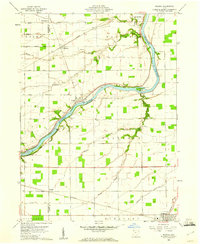 1959 Florida1961 Print · USGSHenry County farmland meets the river in the late 1950s as the regional rail network and old canal paths still define the landscape. Genealogists can locate family landmarks such as Bethlehem Ch, Okolona, and the Miami and Erie Canal.3 unique versions available
 - 1959 Map of Napoleon West, 1961 Print
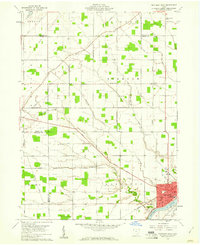 1959 Napoleon West1961 Print · USGSHenry County is captured in a moment of post-war growth when rural townships and the riverside city of NAPOLEON were connected by rail and river. Genealogists can locate family-named landmarks like Bremer Cem and trace old routes such as the Ironton and Toledo Detroit.2 unique versions available
 - 1960 Map of Sherwood, 1961 Print
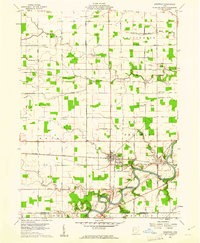 1960 Sherwood1961 Print · USGSDefiance and Paulding counties appear here at a mid-century peak of rail and river utility, anchored by the junction at Sherwood. Genealogists and local historians can trace family road names and locate rural landmarks like Glore Cem, The Bend, and St Johns Ch.2 unique versions available
 - 1960 Map of New Bavaria, 1961 Print
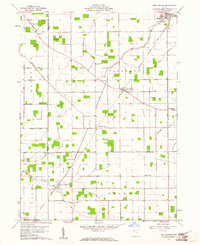 1960 New Bavaria1961 Print · USGSNorthwest Ohio at the start of the sixties reveals a landscape of tight-knit farming communities and family-named roads. Genealogists can trace property proximity through landmarks like St Stephens Cem, Pleasant Bend, and the Sacred Heart Sch.3 unique versions available
 - 1960 Map of Defiance West, 1961 Print
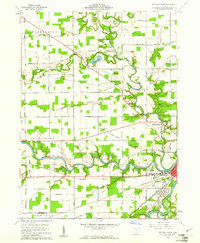 1960 Defiance West1961 Print · USGSThe river-and-rail hub of Defiance is captured in the early 1960s at the vital meeting point of three major rivers and an old canal. Researchers can trace the path of the Miami and Erie Canal, locate the Banner School, or find family plots at Hill Cemetery.3 unique versions available
 - 1960 Map of Ayersville, 1961 Print
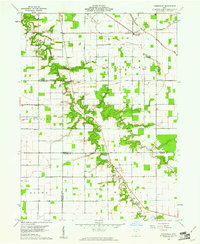 1960 Ayersville1961 Print · USGSNorthwest Ohio at the dawn of the sixties shows a landscape of steady agricultural life across three bordering counties. Genealogists can trace family roots at Taylor Cem and Mansfield Cem, or locate landmarks like Arthur and Bauer Landing Field.4 unique versions available
 - 1960 Map of Evansport, 1961 Print
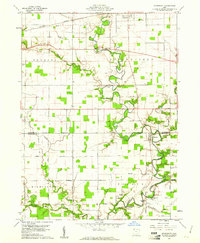 1960 Evansport1961 Print · USGSNorthwest Ohio at the dawn of the sixties shows a landscape shaped by the winding Tiffin River and the New York Central rail line. Genealogists can trace family landmarks like Evansport Cem, Oak Grove Ch, and the Township High Sch near Evansport.2 unique versions available
 - 1960 Map of Bryan, 1961 Print
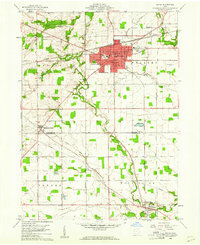 1960 Bryan1961 Print · USGSThe Northwest Ohio landscape of the early sixties comes alive around Bryan and the winding Lick Creek. Genealogists and local historians can trace rural roots through Brown Cem, Washington Sch, and the small settlement of Ney.4 unique versions available
 - 1960 Map of Junction, 1961 Print
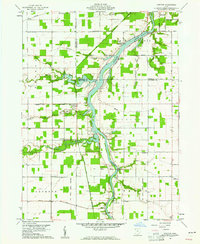 1960 Junction1961 Print · USGSInland Ohio’s canal-era legacy remains visible in the 1960s as these historic waterways converge near the village of Junction. Researchers can trace the Old Indian Treaty Boundary and locate family landmarks like Dotterer Cem and St Johns Ch.2 unique versions available
 - 1961 Map of Mark Center, 1962 Print
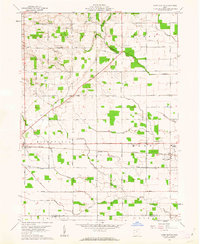 1961 Mark Center1962 Print · USGSNorthwestern Ohio's rural landscape is documented here in the early sixties as it straddled the Defiance and Paulding county line. Researchers can trace the path of the Baltimore and Ohio railroad past landmarks like the Township High Sch, Six Corners, and several family cemeteries.2 unique versions available
 - 1961 Map of Edgerton, 1962 Print
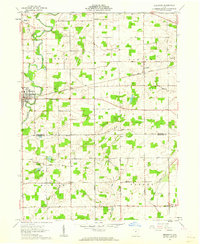 1961 Edgerton1962 Print · USGSIn the early sixties, the Williams and Defiance County line was a landscape of quiet crossroads and bustling rail stops. Trace family history and rural industry through Edgerton, the trackside hamlet of Mina, and local landmarks like Tamarack Cem.3 unique versions available
 - 1986 Map of Defiance, 1992 Print
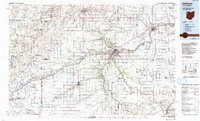 1986 Defiance1992 Print · USGSNorthwest Ohio and Eastern Indiana appear in the late eighties as a landscape shaped by significant river confluences and rail corridors. Researchers can trace the layout of local towns and landmarks like Defiance College, Forest Hill Cem, and the path of the Norfolk and Western RR.
Showing maps 1-25 of 100
Top cities of Defiance County
Frequently asked questions
- What are the different types of historical maps available for Defiance County?
- What is the oldest map of Defiance County?
- Where can I purchase historical maps of Defiance County for my home or office?
- Where can I download high-res historical maps of Defiance County?
- Are there historical topographic maps available for Defiance County?
- Is there historical aerial imagery available for Defiance County?
- Where are historical maps of Defiance County sourced from?