Old Maps of Huntington Township, Ohio for Metal Detecting
Plan your next treasure hunt with 36 historic maps of Huntington Township. Find old homesites, ghost towns, trails, and gathering spots that may be lost to time — perfect for identifying promising metal detecting locations.
- Locate forgotten sites: Uncover places like long-lost settlements, abandoned rail lines, or gathering spots.
- Plan better hunts: Use map overlays combined with LiDAR or satellite views to narrow in on historically rich areas.
- Made for detectorists: Thousands of hobbyists use these maps to discover relics, coins, and hidden history.
Use these historic maps to boost your research and find new opportunities beneath the surface of Huntington Township.
Huntington Township, OH maps
(36)- 1905 Map of Wilkesville, 1958 Print
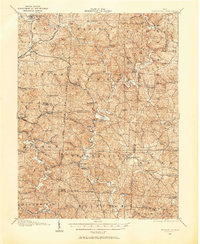 1905 Wilkesville1958 Print · USGSVinton County and its neighbors at the height of the early industrial era show a landscape shaped by charcoal furnaces and narrow-gauge rail interests. Genealogists can trace family footprints across dozens of local school districts like Auburn School or within established centers like Wilkesville and Minerton.
 - 1906 Map of Bidwell, 1954 Print
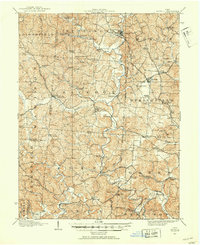 1906 Bidwell1954 Print · USGSGallia County at the turn of the century is a network of small townships and valley settlements connected by the Gallipolis and Chillicothe RR. Researchers can trace rural life through a wealth of local landmarks like Centerville Thurman PO, Ghee Bridge, and the Tomato Valley School.
 - 1908 Map of Bidwell
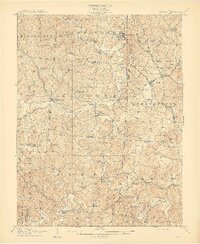 1908 Bidwell1908 Print · USGSGallia County at the turn of the century is a landscape of creek-side hamlets and hill-country schools. Genealogists can trace family roots through numerous local landmarks like Tomato Valley School, Tabor Church, and the Centerville Thurman P O post office.2 unique versions available
 - 1908 Map of Wilkesville, 1943 Print
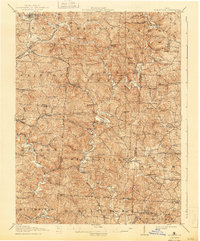 1908 Wilkesville1943 Print · USGSThe Vinton County hills are seen here during a peak era of iron furnaces and rail expansion before the Great War. Genealogists and researchers can trace dozens of family-named landmarks and institutions, from the Vinton Furnace site to Boring Church and the Haggerty School.
 - 1947 Map of Columbus, 1948 Print
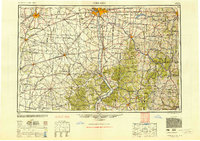 1947 Columbus1948 Print · USGSCentral Ohio in the late 1940s is captured in this survey, showing the post-war transition of its rail hubs and military airfield expansions. Genealogists and historians can trace the paths of the Ohio Canal, the Pennsylvania RR lines, and the Camp Sherman Military Reservation.
 - 1957 Map of Huntington, 1966 Print
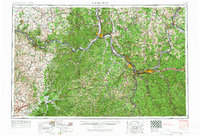 1957 Huntington1966 Print · USGSThe industrial heart of the Ohio River valley is captured here in the mid-sixties, showing the growth of Huntington and Ashland. Researchers can trace the extensive rail networks of the Chesapeake and Ohio RR and locate sites like the Chief Cornstalk Hunting Ground.3 unique versions available
 - 1960 Map of Huntington
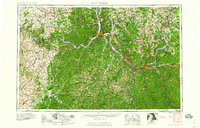 1960 Huntington1960 Print · USGSThe tri-state river valley thrived in the late fifties as a hub of heavy industry and Appalachian rail transit. Genealogists and historians can trace the connection between river towns like Ashland and Portsmouth or locate family homesteads near Coleman Ridge.
 - 1961 Map of Columbus
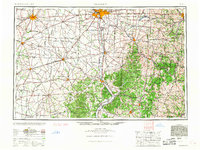 1961 Columbus1961 Print · USGSCentral and Southern Ohio are captured here in the early sixties, as the region's industrial rail hubs and military bases reached their peak. Genealogists and historians can trace the transition from urban Columbus to rural townships along the Scioto River, locating Lockbourne USAF and old junctions like Washington Court House.
 - 1961 Map of Wilkesville, 1963 Print
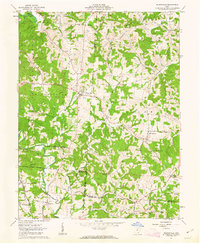 1961 Wilkesville1963 Print · USGSThe hill country at the intersection of Vinton, Meigs, and Gallia counties is captured here in the early sixties. Genealogists and local historians can trace family locations through numerous sites like Old Salem Cem, Rowlesville, and Windy Ridge.4 unique versions available
 - 1961 Map of Rio Grande, 1963 Print
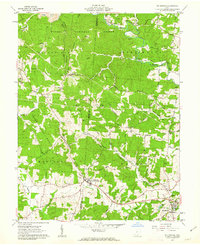 1961 Rio Grande1963 Print · USGSGallia and Jackson counties in the early sixties reveal a landscape of college life, rural industry, and deep-rooted family history. Genealogists can locate family names across Bethesda Cem, trace the grounds of Rio Grande College, or find old stream crossings like Ghee Bridge.3 unique versions available
 - 1961 Map of Mulga, 1963 Print
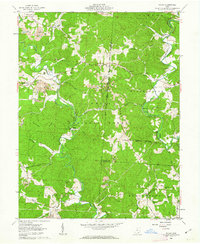 1961 Mulga1963 Print · USGSJackson County and Vinton County are captured in the early sixties as industrial mining and forest preservation converged. Genealogists can trace family names at Fisher Cem or locate the historic Buckeye State Furnace Memorial and Morris Chapel.5 unique versions available
 - 1961 Map of Vinton, 1963 Print
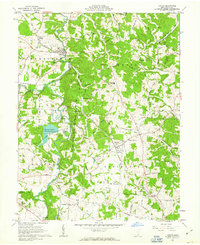 1961 Vinton1963 Print · USGSSettled along the winding Raccoon Creek in the early sixties, this Gallia County landscape is marked by coal mining and small rural villages. Trace family roots at Vinton Memorial Cemetery or explore landmarks like Woods Mill and Bidwell.2 unique versions available
 - 1962 Map of Columbus
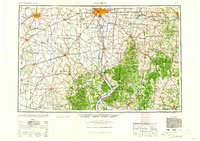 1962 Columbus1962 Print · USGSCentral Ohio during the early sixties reveals a transition from the industrial corridors of Columbus to the forested ridges of the south. Genealogists and historians can trace the rail networks of the Baltimore & Ohio RR and find local landmarks like Washington Court House and Camp Sherman Military Reservation.
 - 1967 Map of Columbus, 1969 Print
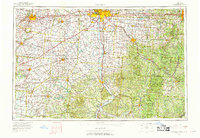 1967 Columbus1969 Print · USGSCentral Ohio during the late sixties serves as a vital corridor of rail and aviation, from the industrial streets of Springfield to the hangar lines of Lockbourne Air Force Base. Genealogists and researchers can trace the growth of towns like Circleville and London or locate rural landmarks such as St Paul church and the London Correctional Institution.2 unique versions available
 - 1980 Map of Wellston, 1982 Print
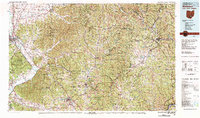 1980 Wellston1982 Print · USGSThe hill country of south-central Ohio in the early eighties shows a landscape of expansive state forests and deep-rooted river towns. Genealogists and historians can trace rural heritage through sites like Buckeye Furnace State Memorial and Mount Zion Cemetery.
 - 1981 Map of Ironton, 1982 Print
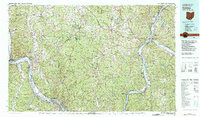 1981 Ironton1982 Print · USGSThe tri-state river valley at the start of the eighties shows a landscape shaped by heavy industry, atomic energy, and sprawling national forests. Researchers can trace the legacy of iron production at Harrison Furnace or follow the historic rail lines of the C & O RR and N & W RR.
 - 2010 Map of Wilkesville, 2010 Print
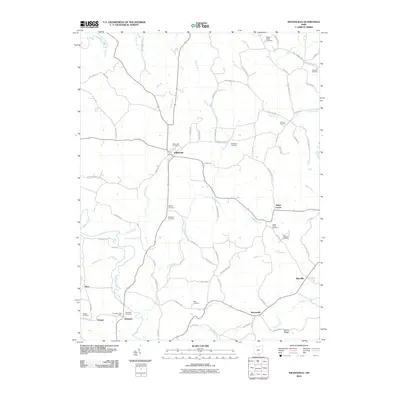 2010 Wilkesville2010 Print · USGSThe rural landscapes of Vinton and Gallia Counties are captured here at the start of the 2010s, showcasing a network of small settlements and family cemeteries. Genealogists can trace local history through sites like the Ewington Post Office, Nelson Cemetery, and the village of Wilkesville.
 - 2010 Map of Mulga, 2010 Print
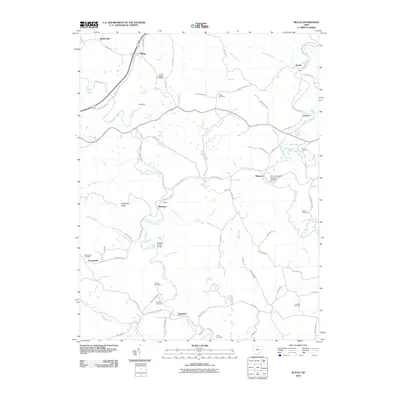 2010 Mulga2010 Print · USGSSouthern Ohio at the start of the twenty-first century reveals a landscape defined by iron heritage and creek-side hamlets. Researchers can trace historic landmarks like the Ponn Humpback Covered Bridge and old community centers such as Buckeye, Clarion, and Keystone.
 - 2010 Map of Vinton, 2010 Print
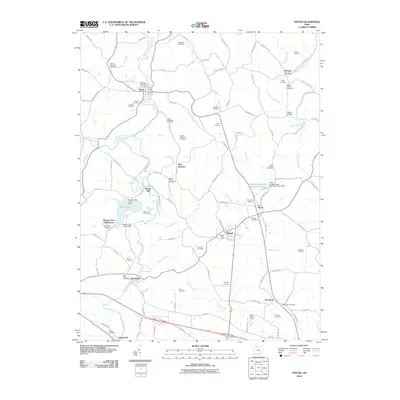 2010 Vinton2010 Print · USGSGallia County's rural townships are documented here during the early twenty-first century, showing a landscape shaped by the winding Raccoon Creek. Genealogists can trace family locations through numerous sites like Morgan Center Cemetery, Woods Mill, and the Bidwell Post Office.
 - 2010 Map of Rio Grande, 2010 Print
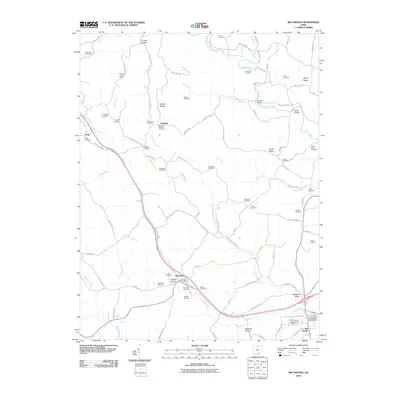 2010 Rio Grande2010 Print · USGSGallia County's rural landscape is captured here in the early twenty-first century, centered on the village of Rio Grande. Researchers can locate dozens of ancestral burial grounds like Bethlehem Cemetery and trace the paths of Little Raccoon Creek and Indian Creek.
 - 2013 Map of Mulga, 2013 Print
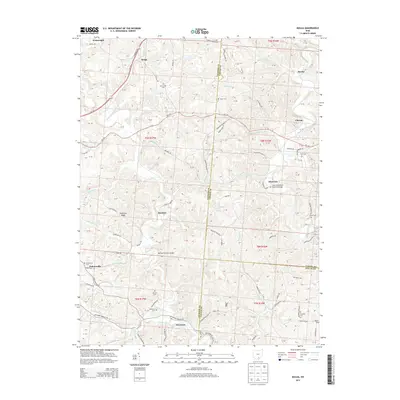 2013 Mulga2013 Print · USGSSoutheastern Ohio at the meeting of Jackson, Vinton, and Gallia counties is mapped here in recent years. Researchers can trace rural lineages through the Franklin Cemetery or locate historic crossings like the Ponn Humpback Covered Bridge.
 - 2013 Map of Wilkesville, 2013 Print
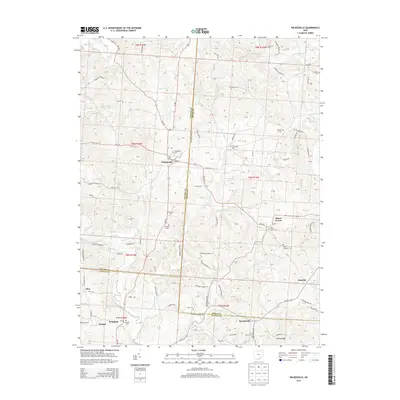 2013 Wilkesville2013 Print · USGSWilkesville and the rolling country of the tri-county border are captured here in the early twenty-first century. Genealogists and historians can trace numerous family burial sites, including Wilkesville Cem, Piper Cem, and Old Salem Cem.
 - 2013 Map of Vinton, 2013 Print
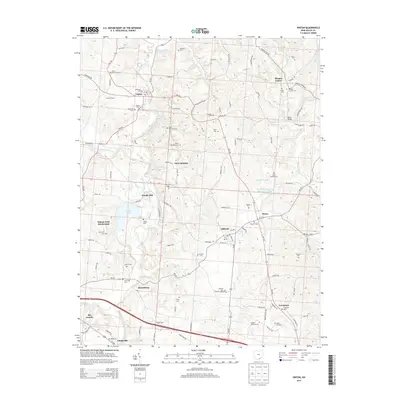 2013 Vinton2013 Print · USGSGallia County settlements and rural cemeteries are documented in this 2013 survey of the southeastern Ohio landscape. Researchers can trace family sites like Lower McCarley Cem and Vinton Memorial Cem or locate old community hubs at Woods Mill and Bidwell.
 - 2013 Map of Rio Grande, 2013 Print
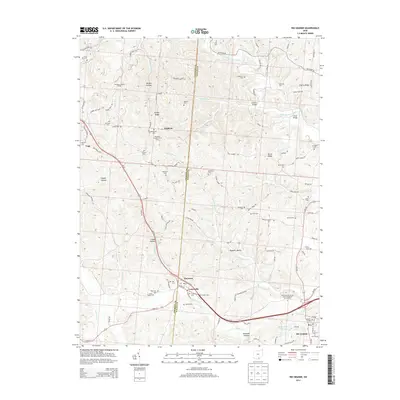 2013 Rio Grande2013 Print · USGSThe rural landscapes of Gallia and Jackson Counties are documented here in the early twenty-first century, centered on the village of Rio Grande. Genealogists and historians can trace numerous family-named landmarks and cemeteries, from Lackey Cem to the Richards Brothers Fruit Farm.
 - 2016 Map of Rio Grande, 2016 Print
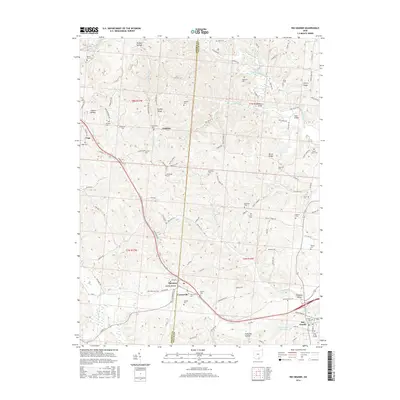 2016 Rio Grande2016 Print · USGSThe Gallia County hill country is shown here in the mid-2010s, centered on the historic village of Rio Grande. Researchers can locate dozens of ancestral burial sites like New Zion Cem and trace the campus layout of the Univ of Rio Grande.
Showing maps 1-25 of 36
Top cities near Huntington Township
- Jackson historical maps
- Wellston historical maps
- Gallipolis historical maps
- Richland historical maps
- Oak Hill historical maps
- Hamden historical maps
See more
Top neighborhoods of Huntington Township
Frequently asked questions
- What are the different types of historical maps available for Huntington Township?
- What is the oldest map of Huntington Township?
- Where can I purchase historical maps of Huntington Township for my home or office?
- Where can I download high-res historical maps of Huntington Township?
- Are there historical topographic maps available for Huntington Township?
- Is there historical aerial imagery available for Huntington Township?
- Where are historical maps of Huntington Township sourced from?