Old Maps of Medina County, Ohio for Metal Detecting
Plan your next treasure hunt with 160 historic maps of Medina County. Find old homesites, ghost towns, trails, and gathering spots that may be lost to time — perfect for identifying promising metal detecting locations.
- Locate forgotten sites: Uncover places like long-lost settlements, abandoned rail lines, or gathering spots.
- Plan better hunts: Use map overlays combined with LiDAR or satellite views to narrow in on historically rich areas.
- Made for detectorists: Thousands of hobbyists use these maps to discover relics, coins, and hidden history.
Use these historic maps to boost your research and find new opportunities beneath the surface of Medina County.
Medina County, OH maps
(160)- 1901 Map of Massillon, 1955 Print
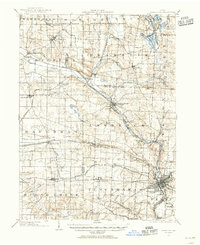 1901 Massillon1955 Print · USGSMassillon and the Tuscarawas valley thrive at the turn of the century as centers of canal transit and heavy rail industry. Local historians can trace the paths of the Ohio and Erie Canal, the massive Insane Asylum, and coal operations like the Turkeyfoot Mine.2 unique versions available
 - 1901 Map of Wooster, 1961 Print
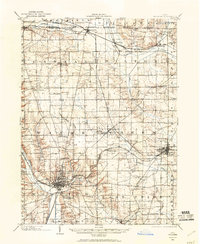 1901 Wooster1961 Print · USGSWayne County was a bustling corridor of rail and agriculture at the turn of the century, dominated by the growth of Wooster and Orrville. Researchers can trace historic institutions like Wooster University or locate the Mennonite Home and State Experiment Station.
 - 1902 Map of Berea, 1958 Print
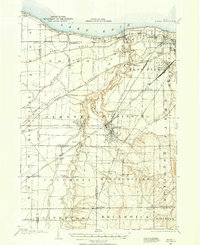 1902 Berea1958 Print · USGSCuyahoga and Lorain counties appear here at the turn of the century, when electric railways and steam lines were transforming small villages into bustling suburbs. Genealogists and local historians can trace family-named landmarks and early rail junctions in Berea, Olmsted Falls, and the lakeside community of Clifton Park.2 unique versions available
 - 1903 Map of Massillon, 1934 Print
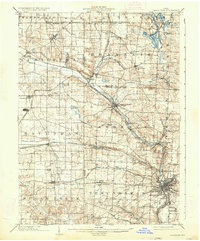 1903 Massillon1934 Print · USGSNortheastern Ohio at the start of the century is a landscape of industrial growth and intricate canal-side settlements. Genealogists and historians can trace the early rail-and-water economy through features like the Ohio Canal, Turkeyfoot Mine, and the Insane Asylum.2 unique versions available
 - 1903 Map of Wooster, 1938 Print
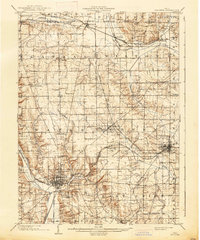 1903 Wooster1938 Print · USGSWayne County is shown at the height of its early rail-and-river economy, with every township and rural hamlet meticulously plotted. Researchers can trace historic landmarks like Wooster University, the Mennonite Home, and the State Experiment Station as they appeared just after the turn of the century.2 unique versions available
 - 1903 Map of Cleveland, 1939 Print
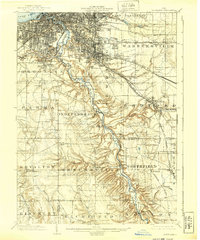 1903 Cleveland1939 Print · USGSThe Cleveland lakefront and Cuyahoga valley are captured here at the start of the twentieth century as rail lines and industry expanded southward. Genealogists and local historians can locate early landmarks like Riverside Cemetery, Walling Corners, and Brandywine.2 unique versions available
 - 1903 Map of Akron, 1961 Print
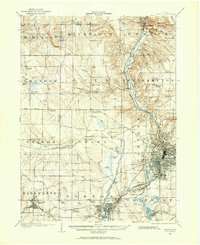 1903 Akron1961 Print · USGSAkron and the surrounding Summit County townships were at a peak of rail and canal activity in the early 1900s. Trace the Ohio and Erie Canal locks, family-named crossroads like Osborn Corners, and local landmarks from Glendale Cemetery to the Boston Ledges.
 - 1904 Map of Berea
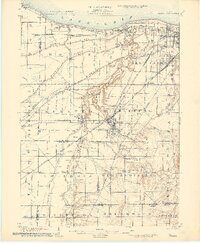 1904 Berea1904 Print · USGSWestern Cuyahoga and northern Lorain counties are seen here at the start of the century as electric railways began connecting rural towns to the city. Trace the early streets of Olmsted Falls, the winding Rocky River, and vanished stops like Hardscrabble and Copopa.7 unique versions available
 - 1904 Map of Medina, 1954 Print
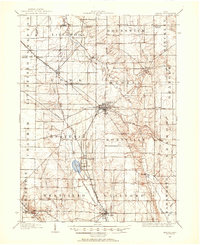 1904 Medina1954 Print · USGSMedina and its surrounding townships are captured in the early 1900s, showing a landscape defined by the intersection of early pikes and competing steam and electric railroads. Genealogists can trace family connections in vanished stops and crossroads like River Styx, Abbeyville, and Sherman Corners.2 unique versions available
 - 1904 Map of Wellington, 1958 Print
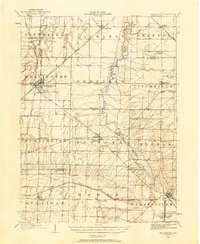 1904 Wellington1958 Print · USGSNorth-central Ohio at the turn of the century is a network of growing rail towns and agricultural townships. Genealogists can trace family roots through settlements like Wellington, Homerville, and Lodi, while following the paths of the Wheeling and Lake Erie RR and Salt Creek.
 - 1905 Map of Akron
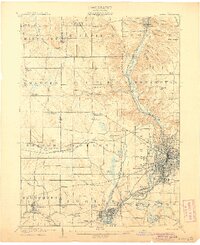 1905 Akron1905 Print · USGSIn the first years of the twentieth century, the industrial corridor between Akron and Barberton was a hive of canal and rail activity. Trace the path of the Ohio Canal through Peninsula and locate early settlements like Ghent and Coddingville.7 unique versions available
 - 1906 Map of Medina, 1941 Print
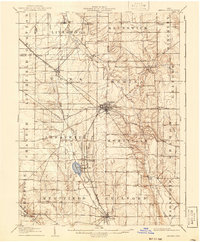 1906 Medina1941 Print · USGSIn Medina County at the dawn of the twentieth century, the rural landscape is a bustling network of electric rail lines and crossroads hamlets. Trace the early paths of the Cleveland Southwestern and Columbus Electric RR and find vanished rail stops like Lester or the community of River Styx.
 - 1906 Map of Wellington, 1942 Print
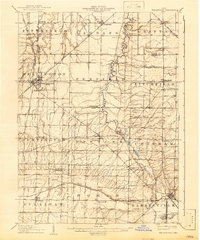 1906 Wellington1942 Print · USGSNorth-central Ohio at the opening of the twentieth century was a landscape of thriving rail-junction towns and fertile creek bottoms. Genealogists and historians can trace the early footprints of Wellington, Sullivan, and Lodi as they were connected by the Baltimore and Ohio and several electric rail lines.
 - 1906 Map of West Salem, 1961 Print
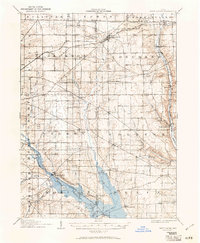 1906 West Salem1961 Print · USGSIn the early 1900s, this area of Northern Ohio was a web of small rail-side settlements and rural townships. Genealogists and historians can trace old homesteads and local landmarks like the Eight Square Ch, the village of Jeromesville, and the Mohicanville Reservoir.
 - 1908 Map of West Salem, 1946 Print
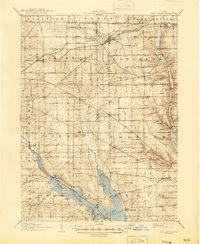 1908 West Salem1946 Print · USGSNorth Central Ohio's rural landscape is captured here in the early twentieth century, showing the transition from early surveying reserves to a rail-connected farm economy. Researchers can locate early township centers and rail stops like Polk, Congress, and Eight Square Ch.
 - 1950 Map of Cleveland
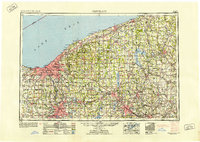 1950 Cleveland1950 Print · USGSCovers Medina County, including Cleveland, Akron, and other nearby areas
 - 1950 Map of Marion
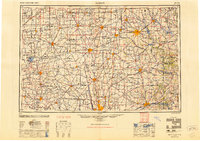 1950 Marion1950 Print · USGSCentral Ohio was a powerhouse of rail and river industry at the mid-century point, serving as a vital corridor between the Great Lakes and the Ohio River valley. Genealogists and rail historians can trace the paths of the Erie RR and Nickel Plate Road through towns like Bucyrus, Galion, and Upper Sandusky.
 - 1951 Map of Canton
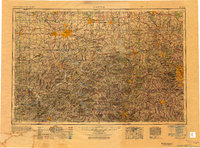 1951 Canton1951 Print · USGSThe industrial heartland of Ohio and Pennsylvania reached its mid-century peak during this era of heavy rail and river transit. Genealogists and historians can trace the development of steel towns like Aliquippa and Weirton alongside the Ohio River and major lines of the Pennsylvania RR.
 - 1953 Map of Canton
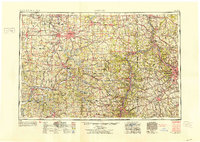 1953 Canton1953 Print · USGSThe industrial heartland of Ohio and Pennsylvania is captured at its mid-century peak in this detailed regional survey. Genealogists and historians can trace the vast rail networks of the Pennsylvania RR and find local landmarks like Nimisila Reservoir and Tappan Reservoir.
 - 1953 Map of West View, 1955 Print
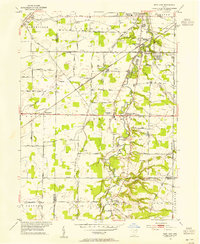 1953 West View1955 Print · USGSLorain and Cuyahoga counties are shown here in the mid-1950s, a landscape defined by small farming hamlets and active railroads. Researchers can trace historic family lands near Hardscrabble, locate old burials at St Marys Cem, and follow the path of the New York Central through West View.
 - 1953 Map of Broadview Heights, 1955 Print
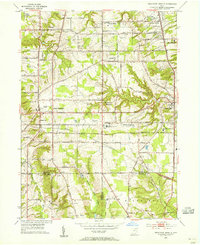 1953 Broadview Heights1955 Print · USGSBroadview Heights and the southern Cleveland suburbs appear in the early fifties during a period of major infrastructure expansion. Genealogists and local historians can locate early broadcast sites like Television Station (WXEL), local schools including Marycrest Sch, and the emerging path of the Ohio Turnpike.2 unique versions available
 - 1953 Map of Berea, 1955 Print
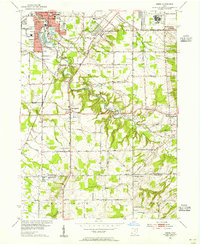 1953 Berea1955 Print · USGSSouthwestern Cleveland suburbs were expanding rapidly in the early fifties as the rural lines of Medina County met the industrial growth of Cuyahoga County. Genealogists and historians can trace the grounds of Crile General Hospital, find the Old Soldiers Cemetery, and locate early schoolhouses like Fairwood Sch.
 - 1953 Map of Medina, 1955 Print
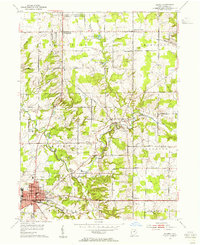 1953 Medina1955 Print · USGSMedina and its surrounding townships are captured here in the early fifties, showing the transition from a traditional county seat to a growing mid-century community. Genealogists can trace family plots at Spring Grove Cemetery and Windfall Cemetery or locate landmarks like the Mt Pleasant Church.
 - 1953 Map of West Richfield, 1955 Print
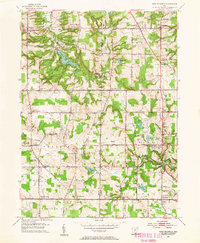 1953 West Richfield1955 Print · USGSMedina and Summit counties show a landscape of transition in the early fifties as historic rural townships began to grow. Genealogists and local historians can trace family locations near Morris Chapel, Hinckley Lake, and old burial grounds like Beach Cem.
 - 1956 Map of Cleveland, 1967 Print
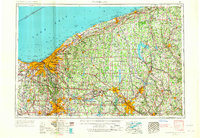 1956 Cleveland1967 Print · USGSNortheast Ohio and Western Pennsylvania are shown at their industrial height during the mid-fifties, from the steel mills to the lakeshore. Researchers can trace the massive Ravenna Arsenal, the Ohio Turnpike, and vanished rail sidings of the B & O RR.3 unique versions available
Showing maps 1-25 of 160
Top cities of Medina County
- Brunswick historical maps
- Medina historical maps
- Wadsworth historical maps
- Lodi historical maps
- Seville historical maps
- Westfield Center historical maps
See more
Frequently asked questions
- What are the different types of historical maps available for Medina County?
- What is the oldest map of Medina County?
- Where can I purchase historical maps of Medina County for my home or office?
- Where can I download high-res historical maps of Medina County?
- Are there historical topographic maps available for Medina County?
- Is there historical aerial imagery available for Medina County?
- Where are historical maps of Medina County sourced from?