1960s Maps of Meigs County, Ohio
Explore 21 historic maps of Meigs County from the 1960s. These maps offer a rare glimpse into what life looked like during the 1960s — showing old roads, neighborhoods, homes, and landmarks that have changed or disappeared over time.
Whether you're researching your family's past, planning a metal detecting trip, or studying how Meigs County's landscape evolved across the 1960s, these high-resolution maps are a powerful tool for exploring the history of this region.
- Focus on a specific era: All maps on this page are from the 1960s, giving you a focused view of this time period.
- See what’s changed: Compare century-old streets, trails, and buildings to today's modern landscape using overlays and satellite layers.
- Research with precision: Use these maps for genealogy, historical research, land use analysis, or educational projects.
- View, download, or print: Maps are fully viewable online in high resolution, and can be downloaded or printed for your own records.
Start exploring Meigs County's history through authentic maps from the 1960s. This is your window into the past.
Meigs County, OH maps
(21)- 1960 Map of Huntington
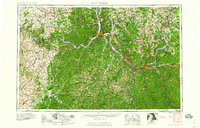 1960 Huntington1960 Print · USGSThe tri-state river valley thrived in the late fifties as a hub of heavy industry and Appalachian rail transit. Genealogists and historians can trace the connection between river towns like Ashland and Portsmouth or locate family homesteads near Coleman Ridge.
 - 1960 Map of Albany, 1961 Print
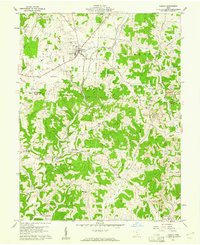 1960 Albany1961 Print · USGSSoutheastern Ohio at the start of the sixties reveals a landscape of ridge-top farms and growing extractive industry. Genealogists and historians can trace the paths between Albany and Harrisonville, locating family landmarks like Martin Cem, Pearl Chapel, and the New York Central rail line.4 unique versions available
 - 1960 Map of Alfred, 1961 Print
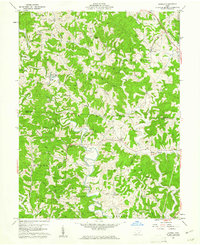 1960 Alfred1961 Print · USGSSoutheast Ohio's ridge country at the start of the sixties reveals a landscape of winding river branches and emerging oil and gas fields. Genealogists can trace family roots through numerous sites like Bishop Cem, the community at Lottridge, and the rural Zion Ch.3 unique versions available
 - 1960 Map of Rutland, 1961 Print
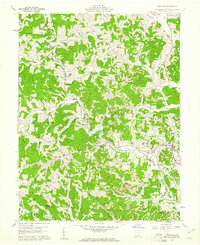 1960 Rutland1961 Print · USGSMeigs County's coal and rail landscape is captured here in the early sixties as industrial strip mining expanded across the hills. Researchers can trace family burial grounds like McCaskey Cem and follow the New York Central line through Langsville and Rutland.4 unique versions available
 - 1960 Map of Pomeroy, 1961 Print
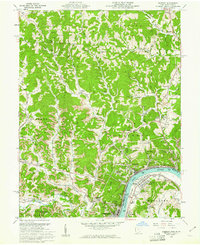 1960 Pomeroy1961 Print · USGSThe riverfront towns of Pomeroy and Middleport are shown at the height of their industrial era when three major railroads still serviced the Ohio River banks. Genealogists can trace family landmarks like Sacred Heart Ch, St Josephs Cem, and the County Fairgrounds.4 unique versions available
 - 1960 Map of Coolville, 1961 Print
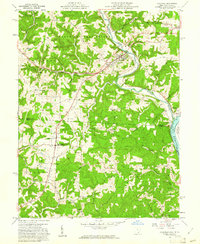 1960 Coolville1961 Print · USGSThe Hocking River valley and Wayne National Forest are captured here in the early sixties, showing a landscape of ridge-top farms and timber. Genealogists can locate family landmarks such as Stewart Cem, Bethel Ch, and the Olive-Orange Township Sch.4 unique versions available
 - 1960 Map of Chester, 1962 Print
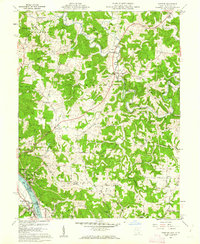 1960 Chester1962 Print · USGSMeigs County and the Ohio River riverfront thrived in the early sixties, balancing heavy industry with rural ridge-top life. Researchers can trace ancestral lands through family sites like Nease Settlement, the Welsh Town Cem, and the Chester Hill Country Club.4 unique versions available
 - 1960 Map of Shade, 1962 Print
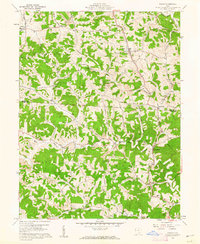 1960 Shade1962 Print · USGSMeigs and Athens Counties at the start of the sixties were defined by the extractive industries and rural crossroads of the Appalachian Plateau. Genealogists and historians can trace family locations through numerous sites like Jeffers Cem, the Burlingham Ch, and the old Bedford Sch.3 unique versions available
 - 1960 Map of Ravenswood, 1963 Print
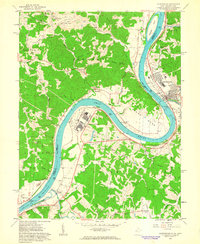 1960 Ravenswood1963 Print · USGSThe Ohio River sweeps through Jackson County at the dawn of the 1960s, showcasing a landscape of riverside industry and upland ridges. Researchers can locate family cemeteries like Wooley Cem, rural churches such as Bethlehem Ch, and the sprawling Ravenswood Works.5 unique versions available
 - 1960 Map of Portland, 1963 Print
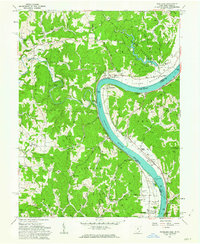 1960 Portland1963 Print · USGSThe Ohio River valley at the start of the 1960s reveals a landscape of river-dependent commerce and deep local history. Genealogists and historians can trace the Buffington Island State Memorial Mon, find family names at Brick Church Cem, or locate the Riverview Sch.5 unique versions available
 - 1960 Map of Pond Creek, 1964 Print
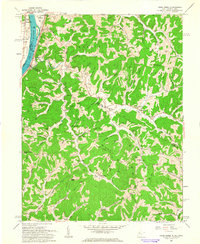 1960 Pond Creek1964 Print · USGSThe Ohio River valley and the interior ridges of Jackson and Wood counties appear here just as the new decade began. Researchers can trace family history through dozens of rural landmarks, including Liberty School, Temperance Chapel, and the Reedsville Cemetery.3 unique versions available
 - 1961 Map of Columbus
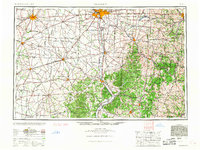 1961 Columbus1961 Print · USGSCentral and Southern Ohio are captured here in the early sixties, as the region's industrial rail hubs and military bases reached their peak. Genealogists and historians can trace the transition from urban Columbus to rural townships along the Scioto River, locating Lockbourne USAF and old junctions like Washington Court House.
 - 1961 Map of Clarksburg
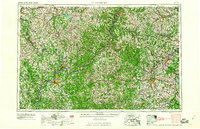 1961 Clarksburg1961 Print · USGSThe mid-century industrial and river landscapes of West Virginia and Ohio are detailed here, centered on the Ohio River. Researchers can trace the Baltimore and Ohio rail lines connecting towns like Parkersburg, Clarksburg, and Monongah.
 - 1961 Map of Charleston
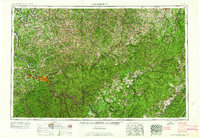 1961 Charleston1961 Print · USGSWest Virginia's capital region and the highlands to the east are shown in detail during the early sixties. Genealogists and historians can trace rail networks like the Baltimore and Ohio RR and find early state parks such as Watoga State Park.
 - 1961 Map of Lubeck, 1963 Print
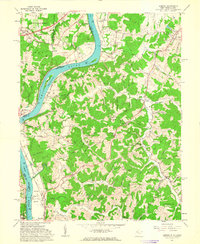 1961 Lubeck1963 Print · USGSThe West Virginia-Ohio border along the Ohio River is captured here in the early sixties, showing the vital river-and-rail infrastructure of the era. Researchers can trace family history through dozens of rural burial sites like Hickenbottom Cem or explore riverside landmarks such as Mustapha Island.4 unique versions available
 - 1961 Map of Wilkesville, 1963 Print
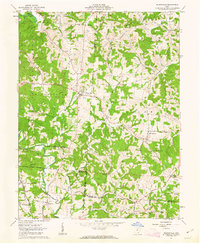 1961 Wilkesville1963 Print · USGSThe hill country at the intersection of Vinton, Meigs, and Gallia counties is captured here in the early sixties. Genealogists and local historians can trace family locations through numerous sites like Old Salem Cem, Rowlesville, and Windy Ridge.4 unique versions available
 - 1961 Map of Vales Mills, 1963 Print
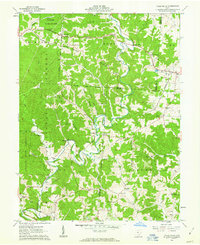 1961 Vales Mills1963 Print · USGSVinton County’s wooded ridges and creek valleys are captured here in the early 1960s, showing a landscape defined by state forests and small rural crossroads. Researchers can trace the locations of family cemeteries like Arbaugh Cem, the Wilton Sch, and mills at Vales Mills and Bolins Mills.3 unique versions available
 - 1962 Map of Columbus
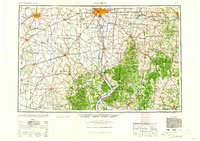 1962 Columbus1962 Print · USGSCentral Ohio during the early sixties reveals a transition from the industrial corridors of Columbus to the forested ridges of the south. Genealogists and historians can trace the rail networks of the Baltimore & Ohio RR and find local landmarks like Washington Court House and Camp Sherman Military Reservation.
 - 1967 Map of Columbus, 1969 Print
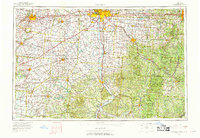 1967 Columbus1969 Print · USGSCentral Ohio during the late sixties serves as a vital corridor of rail and aviation, from the industrial streets of Springfield to the hangar lines of Lockbourne Air Force Base. Genealogists and researchers can trace the growth of towns like Circleville and London or locate rural landmarks such as St Paul church and the London Correctional Institution.2 unique versions available
 - 1968 Map of New Haven, 1969 Print
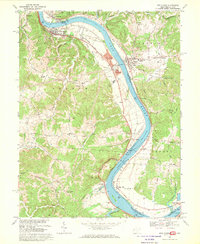 1968 New Haven1969 Print · USGSThe Ohio River corridor comes alive in the late sixties as industrial hubs like New Haven and Graham Station sit alongside ancient landmarks. Genealogists and historians can trace family burial sites at Evergreen Cem or locate the Indian Mound and the Racine Locks and Dam.3 unique versions available
 - 1968 Map of Cheshire, 1970 Print
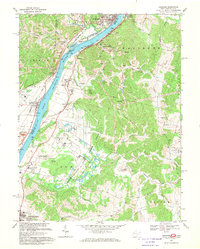 1968 Cheshire1970 Print · USGSThe Ohio River valley thrives in the late 1960s as a hub of tri-railroad transport and state-run institutions. Researchers can trace the extensive Penn Central lines or locate historic sites like Lakin State Hospital and Feniel Ch.4 unique versions available
End of results
Showing maps 1-21 of 21
Top cities of Meigs County
- Middleport historical maps
- Chester historical maps
- Pomeroy historical maps
- Syracuse historical maps
- Racine historical maps
- Rutland historical maps
Frequently asked questions
- What are the different types of historical maps available for Meigs County?
- What is the oldest map of Meigs County?
- Where can I purchase historical maps of Meigs County for my home or office?
- Where can I download high-res historical maps of Meigs County?
- Are there historical topographic maps available for Meigs County?
- Is there historical aerial imagery available for Meigs County?
- Where are historical maps of Meigs County sourced from?