Old Maps of Troy, Ohio for Genealogy
Trace your family roots with 19 historic maps of Troy. These high-res maps reveal old neighborhoods, homesites, landmarks, and streets — helping you uncover where your ancestors lived and how the area evolved over time.
- Explore historic neighborhoods: Identify where your relatives may have lived in the 1800s or 1900s.
- Compare maps over time: Trace the changes in streets, buildings, and landmarks for multi-generational research.
- Perfect for genealogy & ancestry research: Used by family historians and researchers to map out lineage and migration.
These maps are an incredible resource for exploring your personal connection to Troy's past.
Troy, OH maps
(19)- 1911 Map of Covington, 1946 Print
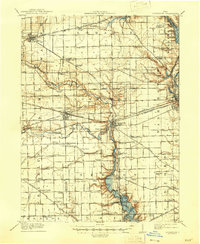 1911 Covington1946 Print · USGSWestern Ohio’s agricultural heartland is mapped here as a web of turnpikes and railroads connects thriving towns. Trace old family sites near Bradford, Gettysburg, and uniquely named rural landmarks like Lickskillet School or Cassels Corners.
 - 1914 Map of Troy, 1931 Print
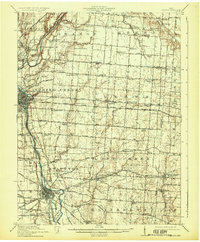 1914 Troy1931 Print · USGSMiami County at the height of the interurban era shows a landscape defined by the Miami River and competing rail lines. Genealogists can locate family landmarks like the County Infirmary or schools such as Sheepskin School and Frogpond School.2 unique versions available
 - 1944 Map of Covington
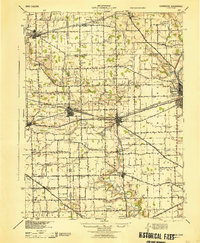 1944 Covington1944 Print · USGSWestern Ohio at the end of the Second World War remains a landscape of thriving rural rail towns and country schoolhouses. Researchers can trace the Stillwater River to find Greenville Falls, the Forest Hill Cem, and local landmarks like Tadpole Sch and Ludlow Falls.
 - 1944 Map of Troy
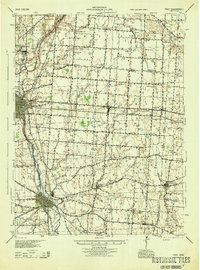 1944 Troy1944 Print · USGSMiami County during the mid-forties reveals a landscape of industrial river towns and an incredibly dense network of rural schools. Researchers can trace the path of the Miami and Erie Canal and locate family-named landmarks like Rhodhammel Sch and Staunton.
 - 1953 Map of Muncie, 1966 Print
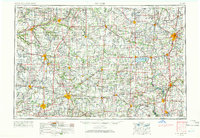 1953 Muncie1966 Print · USGSIndiana and Ohio borderlands thrive in the early fifties, showing a landscape defined by manufacturing cities and an intensive railroad network. Genealogists can trace family roots across the Indiana-Ohio line through Muncie, Celina, and Portland via the Pennsylvania railroad.5 unique versions available
 - 1956 Map of Muncie
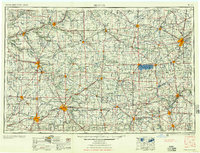 1956 Muncie1956 Print · USGSEastern Indiana and western Ohio are shown at a peak of rail-driven industry in the mid-fifties. Genealogists and rail historians can trace the paths of the Pennsylvania RR through Muncie or locate landmarks like Lake Saint Marys (Grand Lake Reservoir) and Frances Slocum State Forest.
 - 1961 Map of Troy, 1962 Print
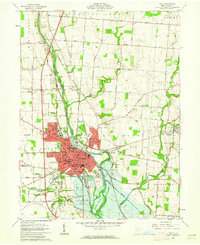 1961 Troy1962 Print · USGSThe Miami River valley shows significant post-war growth around Troy in the early sixties. Genealogists can trace family landmarks at Riverside Cemetery and Knoop Cem or the rural Staunton Sch.5 unique versions available
 - 1961 Map of Pleasant Hill, 1962 Print
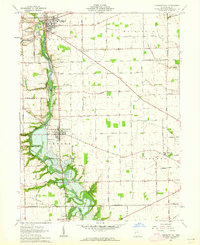 1961 Pleasant Hill1962 Print · USGSMiami County at the start of the sixties reveals a landscape of thriving river towns and established family farms. Researchers can trace the ancestral connections between Pleasant Hill and Covington or locate specific sites like the Concord Township Sch and Old Union Cem.2 unique versions available
 - 1986 Map of Piqua
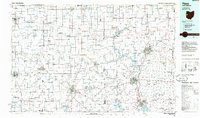 1986 Piqua1986 Print · USGSThe western Ohio and eastern Indiana borderlands appear here in the mid-1980s, showcasing a landscape of river-valley industry and fertile plains. Researchers can trace historic rail lines like Conrail and Norfolk and Western through towns like Greenville and Winchester.3 unique versions available
 - 2010 Map of Pleasant Hill, 2010 Print
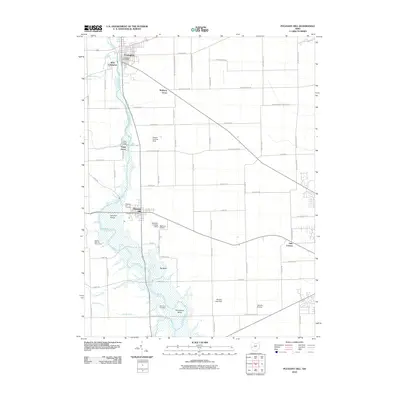 2010 Pleasant Hill2010 Print · USGSMiami County at the start of the millennium is defined by the winding Stillwater River and its riverside communities. Researchers can trace family sites at Pleasant Hill Cemetery or locate regional aviation marks like Bashore Airport and Adams Landing Strip.
 - 2010 Map of Troy, 2010 Print
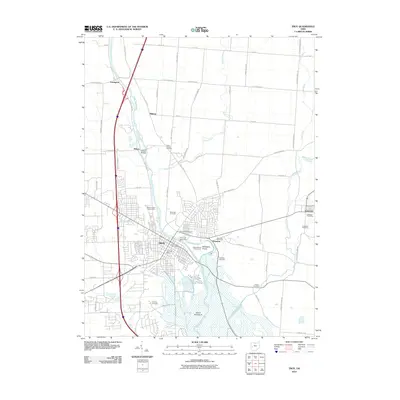 2010 Troy2010 Print · USGSTroy and the river valley are captured here in the early twenty-first century, showing the mix of suburban growth and agricultural heritage. Genealogists can trace family names through numerous rural burial sites like Rose Hill Cemetery and the Thomas Cemetery, or locate landmarks such as Eldean Bridge.
 - 2013 Map of Troy, 2013 Print
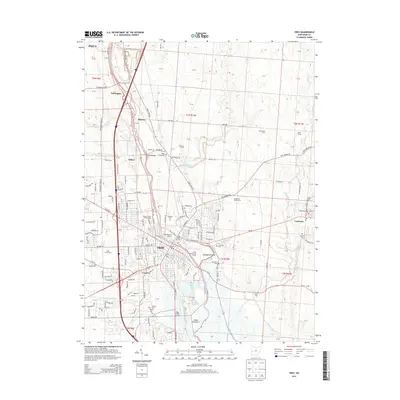 2013 Troy2013 Print · USGSMiami County at the start of the 2010s shows the city of Troy and the village of Casstown amidst a landscape of river-valley agriculture. Researchers can trace historic cemeteries such as Raper Chapel Cem or locate local landmarks like the Eldean Bridge and Waco Field Airport.
 - 2013 Map of Pleasant Hill, 2013 Print
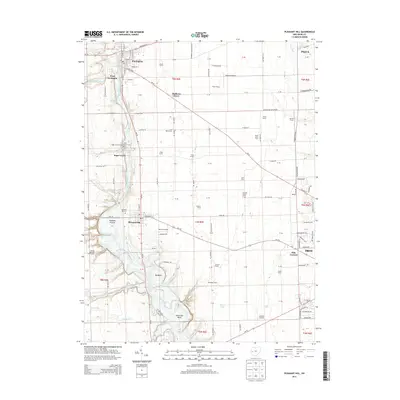 2013 Pleasant Hill2013 Print · USGSMiami County farmland and river bends are captured here in the early twenty-first century, showing the enduring layout of rural townships. Genealogists can locate family landmarks such as Lavy Dairy Farm or trace ancestors at Old Union Cem and Pleasant Hill Cem.
 - 2016 Map of Troy, 2016 Print
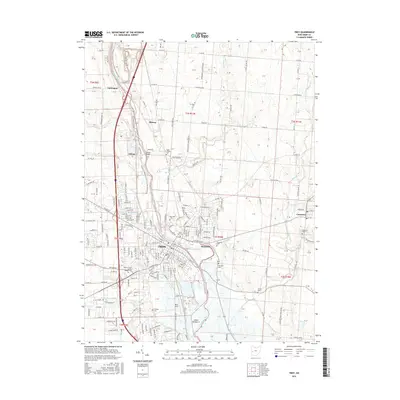 2016 Troy2016 Print · USGSMiami County during the mid-2010s shows a landscape where the Great Miami River corridor meets expanding urban centers. Genealogists and historians can trace numerous burial sites like Staunton Cem and Knoop Cem alongside the Buckeye Trail.
 - 2016 Map of Pleasant Hill, 2016 Print
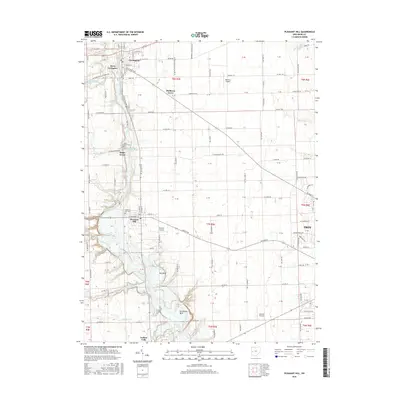 2016 Pleasant Hill2016 Print · USGSMiami County's river-cut landscape is captured here in the mid-2010s, showing the enduring agricultural and village layout between Covington and Pleasant Hill. Genealogists can locate family sites near Old Union Cem and Sugar Grove Cem or trace the winding paths of the Stillwater River.
 - 2019 Map of Pleasant Hill, 2019 Print
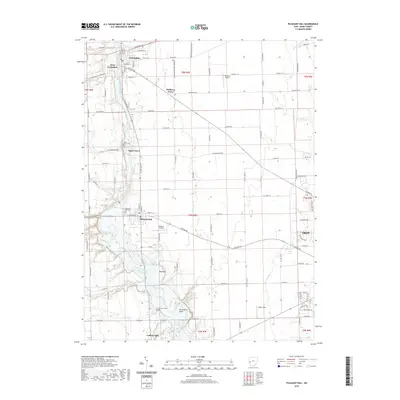 2019 Pleasant Hill2019 Print · USGSMiami County at the close of the decade shows a landscape shaped by the Stillwater River and its rural settlements. Genealogists can trace family locations through Old Union Cem, Pleasant Hill Cem, and the historic streets of Covington.
 - 2019 Map of Troy, 2019 Print
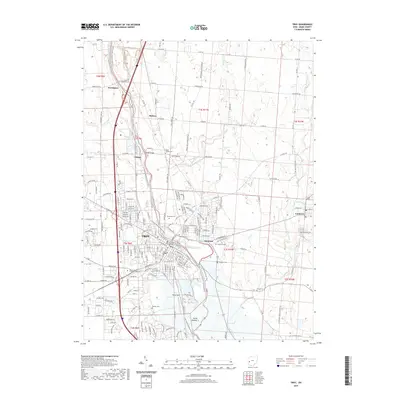 2019 Troy2019 Print · USGSTroy and the surrounding Miami County villages are shown in high detail during this contemporary era. Researchers can trace family history through numerous burial sites like Rose Hill Cem and Casstown Cem, or locate landmarks such as Waco Field.
 - 2023 Map of Pleasant Hill, 2023 Print
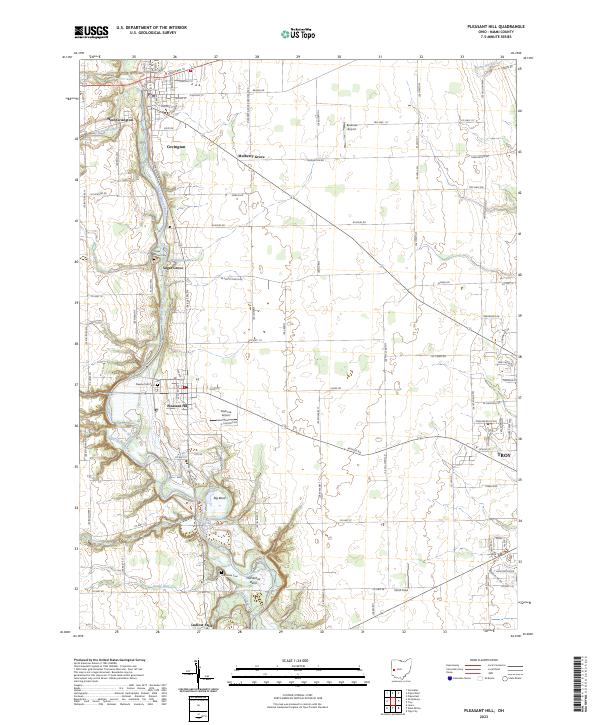 2023 Pleasant Hill2023 Print · USGSMiami County's river-carved landscape is documented here in the early twenty-first century, showing the enduring agricultural and village patterns of the Stillwater Valley. Researchers can locate family sites and landmarks like Pleasant Hill Cem, Sugar Grove, and the distinctive Horseshoe Bend.
 - 2023 Map of Troy, 2023 Print
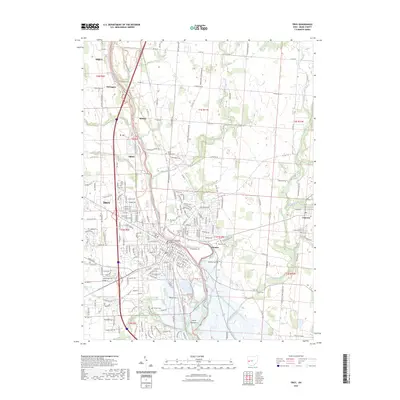 2023 Troy2023 Print · USGSThe Great Miami River valley in the early twenty-first century reveals a landscape shaped by historical settlements and contemporary growth. Genealogists can trace family history through several local sites including Raper Chapel Cem, Old Blue Cem, and Staunton Cem.
End of results
Showing maps 1-19 of 19
Top cities near Troy
- Dayton historical maps
- Huber Heights historical maps
- Fairborn historical maps
- Trotwood historical maps
- Riverside historical maps
- Piqua historical maps
See more
Top neighborhoods of Troy
Frequently asked questions
- What are the different types of historical maps available for Troy?
- What is the oldest map of Troy?
- Where can I purchase historical maps of Troy for my home or office?
- Where can I download high-res historical maps of Troy?
- Are there historical topographic maps available for Troy?
- Is there historical aerial imagery available for Troy?
- Where are historical maps of Troy sourced from?