Old Maps of Pike County, Ohio for Hiking & Exploration
Hike through history with 115 historic maps of Pike County. Explore old trails, ghost towns, and forgotten backroads — perfect for outdoor adventurers and local explorers.
- Rediscover forgotten places: Map out old mining camps, roads, and footpaths that no longer exist on modern maps.
- Layer with modern tools: Combine with LiDAR or satellite views to plan hikes through historical terrain.
- Made for exploration: Popular among hikers, overlanders, and local history lovers.
Use these maps to find adventure and explore the hidden past of Pike County.
Pike County, OH maps
(115)- 1906 Map of Waverly
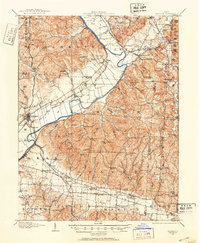 1906 Waverly1906 Print · USGSSouthern Ohio at the turn of the century shows a bustling corridor of river valleys and rail junctions centered on Waverly. Genealogists and historians can trace defunct post offices like Stony Creek Sta Pride PO and rural landmarks like Lilly Chapel or Cars Run School.
 - 1908 Map of Waverly, 1944 Print
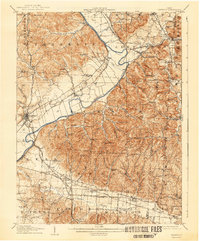 1908 Waverly1944 Print · USGSThe Scioto River valley at the start of the twentieth century was a vital crossroads of five competing railroads. Local historians can trace early mail stops like Robbins Dove PO and rural landmarks such as Lily Chapel or Meadow Run Church.
 - 1911 Map of Sciotoville, 1952 Print
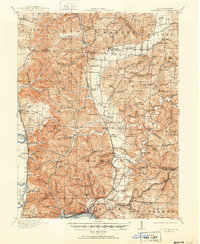 1911 Sciotoville1952 Print · USGSThe industrial riverfronts and rural hollows of southern Ohio are shown here in the early twentieth century before modern development. Genealogists and historians can trace numerous rural landmarks like Davis Sta George PO, Harrison Furnace School, and the brickyards near New Boston.2 unique versions available
 - 1913 Map of Sciotoville, 1924 Print
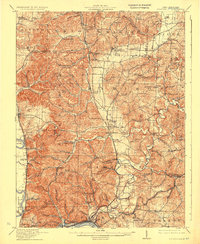 1913 Sciotoville1924 Print · USGSScioto County during the early twentieth century shows a landscape of river-front industry and deep-hollow settlements. Genealogists can trace family footprints across dozens of local school sites like Noel School and early industrial markers such as Scioto Furnace and Star Brickyard.2 unique versions available
 - 1915 Map of Bainbridge
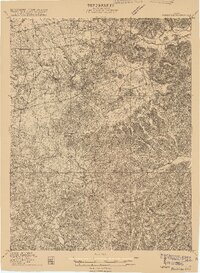 1915 Bainbridge1915 Print · USGSBefore the modernization of rural Ohio, this 1915 survey captures Highland and Ross counties when one-room schoolhouses and country churches anchored every ridge. Trace family roots at Bainbridge, find the Indian Mound on Paint Creek, or locate Fall Creek Church and Redkey School.2 unique versions available
 - 1915 Map of Otway, 1958 Print
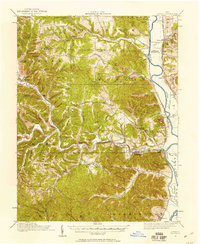 1915 Otway1958 Print · USGSScioto and Pike Counties come alive in the decade before the First World War, showing a rural landscape anchored by the river and the rail. Researchers can trace dozens of country schoolhouses like Wetmore School and old rail stops at Otway or McDermott.2 unique versions available
 - 1915 Map of Piketon, 1959 Print
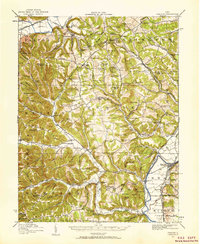 1915 Piketon1959 Print · USGSPike and Ross Counties are shown in the mid-1910s during a height of rural settlement and local industry. Genealogists can locate dozens of country schoolhouses like Yankee Hill School and vanished post offices such as Bethel Pike PO.
 - 1917 Map of Bainbridge
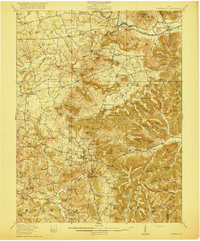 1917 Bainbridge1917 Print · USGSIn the decade before modern highways, this Ohio highland region was a land of ridge-top schools and creek-side mills. Genealogists and historians can locate numerous rural schoolhouses like Walnut Shade School and ancient landmarks including the famous Serpent Mound.4 unique versions available
 - 1917 Map of Piketon, 1934 Print
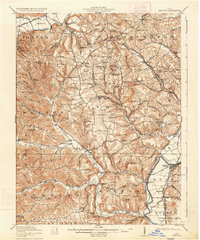 1917 Piketon1934 Print · USGSThe Scioto River valley and its surrounding hill country are captured here during the first World War era, showing a landscape of small farmsteads and ancient earthworks. Genealogists can trace family roots through dozens of named rural landmarks like Seip Mound, Bethel Pike PO, and Mound Cemetery.2 unique versions available
 - 1917 Map of Otway, 1941 Print
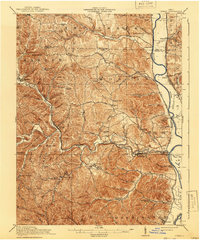 1917 Otway1941 Print · USGSScioto and Pike Counties are shown in great detail during the era of steam railroading and rural schoolhouses. You can trace the Norfolk and Western RR through Otway or locate family roots at sites like Hackworth Hill School and McDermott.
 - 1944 Map of Piketon
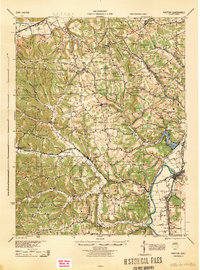 1944 Piketon1944 Print · USGSSouthern Ohio's hill country meets the Scioto River valley in the mid-1940s, a landscape defined by ancient earthworks and rugged ridge-top schoolhouses. Researchers can locate family landmarks like the County Home, trace the Norfolk and Western RR, or find vanished community hubs like Bethel Pike PO and Morgantown.
 - 1947 Map of Columbus, 1948 Print
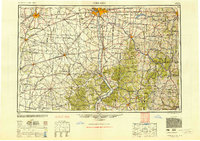 1947 Columbus1948 Print · USGSCentral Ohio in the late 1940s is captured in this survey, showing the post-war transition of its rail hubs and military airfield expansions. Genealogists and historians can trace the paths of the Ohio Canal, the Pennsylvania RR lines, and the Camp Sherman Military Reservation.
 - 1957 Map of Huntington, 1966 Print
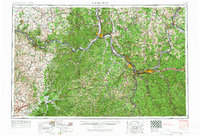 1957 Huntington1966 Print · USGSThe industrial heart of the Ohio River valley is captured here in the mid-sixties, showing the growth of Huntington and Ashland. Researchers can trace the extensive rail networks of the Chesapeake and Ohio RR and locate sites like the Chief Cornstalk Hunting Ground.3 unique versions available
 - 1960 Map of Huntington
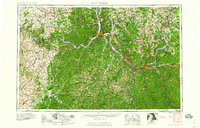 1960 Huntington1960 Print · USGSThe tri-state river valley thrived in the late fifties as a hub of heavy industry and Appalachian rail transit. Genealogists and historians can trace the connection between river towns like Ashland and Portsmouth or locate family homesteads near Coleman Ridge.
 - 1961 Map of Columbus
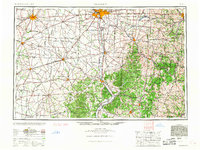 1961 Columbus1961 Print · USGSCentral and Southern Ohio are captured here in the early sixties, as the region's industrial rail hubs and military bases reached their peak. Genealogists and historians can trace the transition from urban Columbus to rural townships along the Scioto River, locating Lockbourne USAF and old junctions like Washington Court House.
 - 1961 Map of Stockdale, 1962 Print
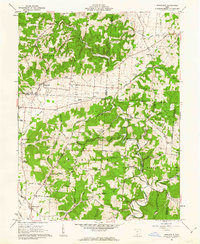 1961 Stockdale1962 Print · USGSSouthern Ohio at the start of the 1960s reveals a patchwork of small-scale agriculture and timberlands within the Wayne National Forest. Genealogists and local historians can trace legacy landmarks like German Cemetery, the C & O Railroad corridor, and rural schools like Madison School.2 unique versions available
 - 1961 Map of Summithill, 1962 Print
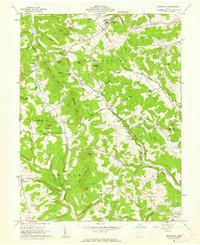 1961 Summithill1962 Print · USGSSoutheastern Ohio at the start of the sixties reveals a landscape of high ridges and deep creek valleys along the Ross and Pike county line. Genealogists and historians can locate remote burial grounds like Yankee Hill Cem and old landmarks including Mary Chapel and the Township Sch.3 unique versions available
 - 1961 Map of Sinking Spring, 1962 Print
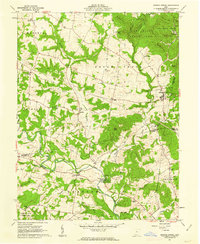 1961 Sinking Spring1962 Print · USGSSouthern Ohio at the start of the 1960s reveals a landscape of deep history and wooded ridges where Highland, Adams, and Pike counties converge. Researchers can locate ancient earthworks at Serpent Mound State Park and Indian Mounds, alongside old burial sites like Old Dutch Cem.3 unique versions available
 - 1961 Map of Bainbridge, 1962 Print
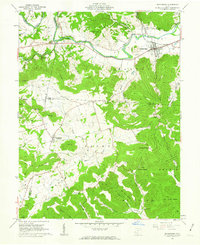 1961 Bainbridge1962 Print · USGSSouthern Ohio at the start of the sixties reveals a landscape of deep creek valleys and forested ridges where the Virginia Military District meets the Highland and Pike county lines. Genealogists can trace family roots at Jones Cem and Hulitt Cem, or locate landmarks like The Seven Caves and the Indian Mound near Bainbridge.4 unique versions available
 - 1961 Map of Lucasville, 1962 Print
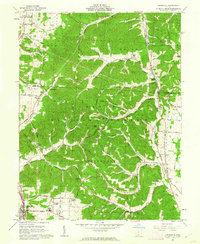 1961 Lucasville1962 Print · USGSLucasville and the surrounding Scioto County timberlands are captured here in the early sixties, showing the expansion of residential additions along the valley floor. Genealogists can locate family burial grounds like Slavens Cem and Bennett Cem or trace the Chesapeake and Ohio rail line through the hills.3 unique versions available
 - 1961 Map of Rarden, 1963 Print
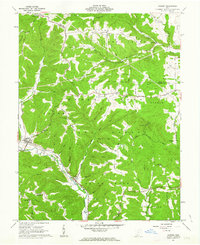 1961 Rarden1963 Print · USGSScioto County during the early 1960s was a landscape of deep timber and winding hollows, largely defined by the Brush Creek State Forest. You can trace old family burial grounds like Old Hackworth Cem and follow the Norfolk and Western rail line through Rarden.4 unique versions available
 - 1961 Map of Latham, 1963 Print
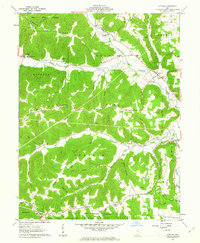 1961 Latham1963 Print · USGSPike County's rural valleys and steep ridges are captured here in the early sixties, showing a landscape defined by the Virginia Military District. Genealogists can locate family names at Arkoe Cem and Pennisten Chapel or trace the old roads near Latham.4 unique versions available
 - 1961 Map of Beaver, 1963 Print
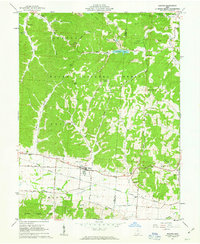 1961 Beaver1963 Print · USGSSouthern Ohio at the start of the 1960s reveals a landscape of wooded hollows and industrial rail lines along the Pike and Jackson county line. Genealogists and researchers can trace family landmarks like Beaver Union Cem, Linn Hill Ch, and the crossroads at Limerick.5 unique versions available
 - 1961 Map of Richmond Dale, 1963 Print
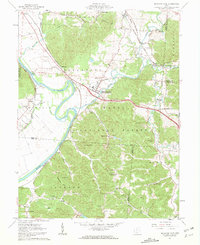 1961 Richmond Dale1963 Print · USGSRoss and Pike counties are captured here in the early sixties, showing a landscape defined by the convergence of major rail lines and the Scioto River. Genealogists can trace family names at Little Mound Cem or the rural settlement of Limerick, while industrial historians can follow the Baltimore and Ohio Railroad.2 unique versions available
 - 1961 Map of Wakefield, 1963 Print
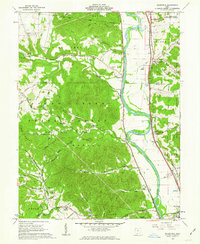 1961 Wakefield1963 Print · USGSThe Scioto River valley and surrounding state forests are seen here in the early sixties as industrial development met the rural hills. Researchers can trace family sites like Rhymby Cem and Miller Cem, or find the Norfolk and Western line near the Scioto Canal.3 unique versions available
Showing maps 1-25 of 115
Top cities of Pike County
Frequently asked questions
- What are the different types of historical maps available for Pike County?
- What is the oldest map of Pike County?
- Where can I purchase historical maps of Pike County for my home or office?
- Where can I download high-res historical maps of Pike County?
- Are there historical topographic maps available for Pike County?
- Is there historical aerial imagery available for Pike County?
- Where are historical maps of Pike County sourced from?