1950s Maps of Warren County, Ohio
Explore 12 historic maps of Warren County from the 1950s. These maps offer a rare glimpse into what life looked like during the 1950s — showing old roads, neighborhoods, homes, and landmarks that have changed or disappeared over time.
Whether you're researching your family's past, planning a metal detecting trip, or studying how Warren County's landscape evolved across the 1950s, these high-resolution maps are a powerful tool for exploring the history of this region.
- Focus on a specific era: All maps on this page are from the 1950s, giving you a focused view of this time period.
- See what’s changed: Compare century-old streets, trails, and buildings to today's modern landscape using overlays and satellite layers.
- Research with precision: Use these maps for genealogy, historical research, land use analysis, or educational projects.
- View, download, or print: Maps are fully viewable online in high resolution, and can be downloaded or printed for your own records.
Start exploring Warren County's history through authentic maps from the 1950s. This is your window into the past.
Warren County, OH maps
(12)- 1951 Map of Franklin, 1953 Print
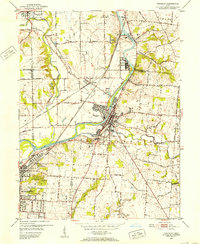 1951 Franklin1953 Print · USGSThe industrial corridor of the Great Miami River valley thrives in the early 1950s as a major rail hub for the New York Central and Baltimore and Ohio. Genealogists can trace family landmarks like Swartzel Cem and Stettler Ch or locate the ancient Indian Mound overlooking the river.
 - 1953 Map of Cincinnati, 1965 Print
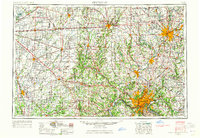 1953 Cincinnati1965 Print · USGSThe Ohio River valley and the industrial heartland of Indiana and Ohio are captured here during the mid-century peak of rail and river commerce. Genealogists and historians can trace connections between Cincinnati and outlying military sites like Camp Atterbury and Bakalar AFB.3 unique versions available
 - 1955 Map of Monroe, 1956 Print
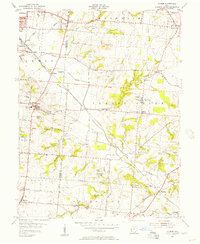 1955 Monroe1956 Print · USGSIn the mid-1950s, the border of Butler and Warren Counties was a landscape of established institutions and quiet rail stops. Researchers can trace historic communal sites like the Otterbein Home, old cemeteries such as Mound Cemetery, and stops along the Pennsylvania RR at Beedles Station.
 - 1955 Map of New Burlington, 1956 Print
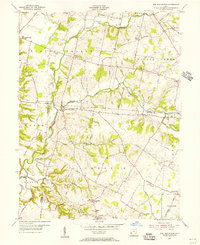 1955 New Burlington1956 Print · USGSGreene and Clinton Counties are shown in the mid-1950s as a landscape of established townships and winding creek forks. Genealogists and local historians can trace family roots through numerous sites like New Burlington Cem, Richland Ch, and McKay Cem.2 unique versions available
 - 1955 Map of Lebanon, 1956 Print
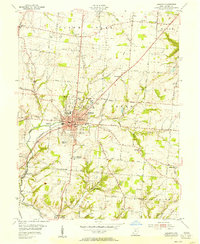 1955 Lebanon1956 Print · USGSMid-century Lebanon and its surrounding townships show a landscape of established family farms and growing residential heights. Genealogists and local historians can trace legacy sites like the Old Stone Schoolhouse, Pioneer Cem, and the Pennsylvania Railroad corridor.
 - 1955 Map of Waynesville, 1956 Print
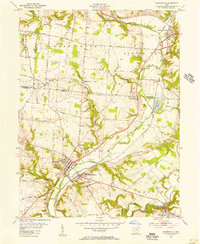 1955 Waynesville1956 Print · USGSThe Little Miami River valley in the mid-fifties remains a landscape of small railroad hamlets and historic church communities. Genealogists and historians can trace family locations near Waynesville, Spring Valley, and the now-submerged banks of Caesar Creek.2 unique versions available
 - 1955 Map of South Lebanon, 1956 Print
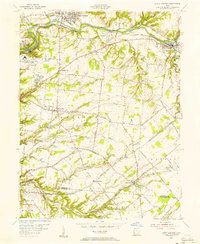 1955 South Lebanon1956 Print · USGSWarren and Clermont Counties are captured in the mid-fifties, showing the industrial pulse of the Little Miami River valley alongside quiet farming hamlets. Trace family roots at Deerfield Cem, locate the old Township Sch, or explore the rail hubs at Middletown Junction and Morrow.4 unique versions available
 - 1955 Map of Oregonia, 1956 Print
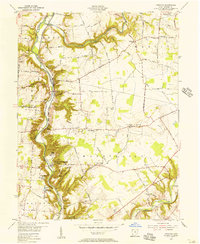 1955 Oregonia1956 Print · USGSWarren County at the dawn of the interstate era still revolves around the river valley and its rail connections. Researchers can trace ancestral locations at Mathers Mills, Harveysburg, and local landmarks like Olive Branch Ch.2 unique versions available
 - 1955 Map of Mason, 1956 Print
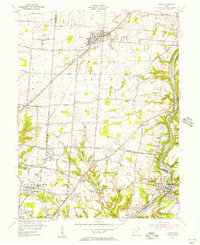 1955 Mason1956 Print · USGSSouthwestern Ohio was entering a period of suburban expansion in the mid-fifties while maintaining its vital river and rail corridors. Trace the massive Voice of America transmitter site and local landmarks like Kings Mills and Gate of Heaven Cemetery.
 - 1955 Map of Springboro, 1956 Print
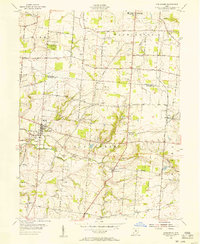 1955 Springboro1956 Print · USGSWarren and Montgomery Counties are captured here in the mid-1950s, showing a traditional farming landscape on the cusp of modern growth. Researchers can locate old family burial grounds like Rehoboth Cem and small rural hubs including Lytle, Ridgeville, and Pekin.
 - 1955 Map of Pleasant Plain, 1956 Print
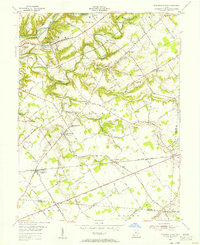 1955 Pleasant Plain1956 Print · USGSWarren and Clermont counties are shown in the mid-fifties as a landscape of rural hamlets and winding river forks. Family historians can trace numerous rural sites like Ruhyan Cem, Leather Ear Ch, and the Baltimore and Ohio RR corridor.2 unique versions available
 - 1957 Map of Cincinnati
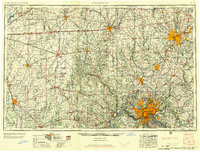 1957 Cincinnati1957 Print · USGSThe Ohio River valley and its surrounding highlands thrived during the mid-fifties industrial peak, centered on the bustling Cincinnati and Dayton metropolitan hubs. Researchers can trace the extensive rail networks and military sites like Wright-Patterson AFB and Camp Atterbury.
End of results
Showing maps 1-12 of 12
Top cities of Warren County
- Mason historical maps
- Lebanon historical maps
- Springboro historical maps
- South Lebanon historical maps
- Waynesville historical maps
- Morrow historical maps
See more
Frequently asked questions
- What are the different types of historical maps available for Warren County?
- What is the oldest map of Warren County?
- Where can I purchase historical maps of Warren County for my home or office?
- Where can I download high-res historical maps of Warren County?
- Are there historical topographic maps available for Warren County?
- Is there historical aerial imagery available for Warren County?
- Where are historical maps of Warren County sourced from?