Old Maps of Franklin Township, Ohio for Academic Research
Study the evolution of Franklin Township with 30 high-resolution historic maps. Whether you're teaching, researching, or modeling changes in land use, these maps provide essential visual documentation of urban, environmental, and geographic change.
- Analyze long-term change: Track patterns in development, transportation, and natural features.
- Ideal for environmental or urban studies: Support academic projects with primary historical map data.
- Use in the classroom or lab: Educators and researchers rely on these maps to bring historical context to life.
These maps are a powerful tool for teaching, research, and visualizing how Franklin Township has changed over the decades.
Franklin Township, OH maps
(30)- 1904 Map of Mason, 1958 Print
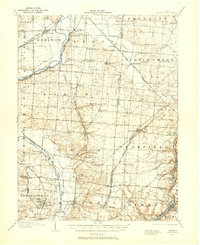 1904 Mason1958 Print · USGSSouthwestern Ohio at the turn of the century is a landscape of thriving canal-era towns and expanding rail corridors. Genealogists and researchers can trace the early layouts of Union Village, Shaker Village, and the industrial riverside at Kings Mills.
 - 1906 Map of Mason, 1939 Print
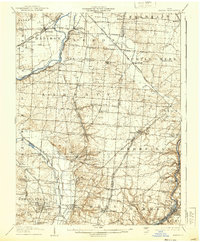 1906 Mason1939 Print · USGSWarren and Butler counties are shown here in the first decade of the 1900s, when electric railways were transforming rural life. Genealogists can trace family roots through old hubs like Union Village, Kings Mills, and Amanda Excello P O.2 unique versions available
 - 1908 Map of Miamisburg, 1948 Print
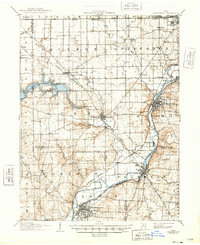 1908 Miamisburg1948 Print · USGSThe Miami Valley at the start of the twentieth century was a hub of electric traction lines and canal history. Genealogists and historians can trace the early layouts of Miamisburg and Franklin, or locate landmarks like Browns Chapel and the National Military Home.
 - 1913 Map of Waynesville
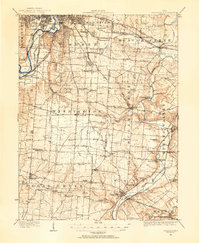 1913 Waynesville1913 Print · USGSThe Miami and Erie Canal and a dense network of electric railways define this Ohio landscape in the decade before the Great War. Researchers can trace the early footprints of Waynesville, Centerville, and Springboro alongside rural landmarks like Washington Mills and Lantz School.
 - 1915 Map of Waynesville, 1942 Print
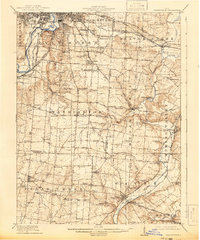 1915 Waynesville1942 Print · USGSThe Dayton suburbs and Warren County countryside are captured here just before the Great War, during the heyday of electric interurban rail. Genealogists can locate specific local landmarks like Lantz School, Wittes Corners, and the historic community of Shakertown.
 - 1951 Map of Franklin, 1953 Print
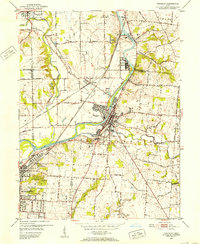 1951 Franklin1953 Print · USGSThe industrial corridor of the Great Miami River valley thrives in the early 1950s as a major rail hub for the New York Central and Baltimore and Ohio. Genealogists can trace family landmarks like Swartzel Cem and Stettler Ch or locate the ancient Indian Mound overlooking the river.
 - 1953 Map of Cincinnati, 1965 Print
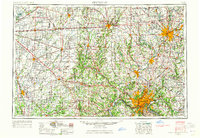 1953 Cincinnati1965 Print · USGSThe Ohio River valley and the industrial heartland of Indiana and Ohio are captured here during the mid-century peak of rail and river commerce. Genealogists and historians can trace connections between Cincinnati and outlying military sites like Camp Atterbury and Bakalar AFB.3 unique versions available
 - 1955 Map of Monroe, 1956 Print
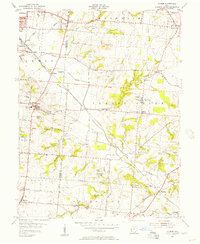 1955 Monroe1956 Print · USGSIn the mid-1950s, the border of Butler and Warren Counties was a landscape of established institutions and quiet rail stops. Researchers can trace historic communal sites like the Otterbein Home, old cemeteries such as Mound Cemetery, and stops along the Pennsylvania RR at Beedles Station.
 - 1955 Map of Springboro, 1956 Print
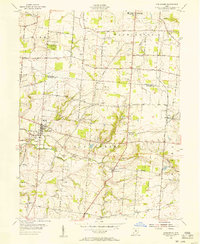 1955 Springboro1956 Print · USGSWarren and Montgomery Counties are captured here in the mid-1950s, showing a traditional farming landscape on the cusp of modern growth. Researchers can locate old family burial grounds like Rehoboth Cem and small rural hubs including Lytle, Ridgeville, and Pekin.
 - 1957 Map of Cincinnati
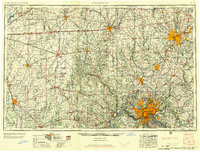 1957 Cincinnati1957 Print · USGSThe Ohio River valley and its surrounding highlands thrived during the mid-fifties industrial peak, centered on the bustling Cincinnati and Dayton metropolitan hubs. Researchers can trace the extensive rail networks and military sites like Wright-Patterson AFB and Camp Atterbury.
 - 1965 Map of Franklin, 1967 Print
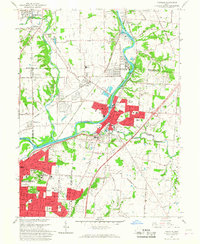 1965 Franklin1967 Print · USGSMiddletown and Franklin thrive along the river and rail corridors of the Miami Valley in the mid-1960s. Genealogists and researchers can trace local landmarks like Wood Hill Cemetery, Stettler Ch, and the sprawling Mound Laboratory (AEC) complex.5 unique versions available
 - 1965 Map of Monroe, 1967 Print
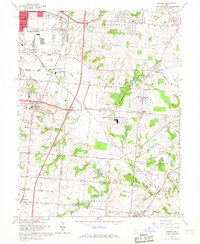 1965 Monroe1967 Print · USGSButler and Warren Counties are seen during a period of rapid development in the mid-sixties. Local researchers can trace family roots at Mound Cemetery, locate the old Beedles Station, or study the footprint of the Lebanon Correctional Institution.5 unique versions available
 - 1965 Map of Springboro, 1967 Print
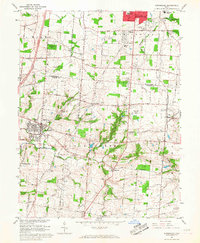 1965 Springboro1967 Print · USGSThe Montgomery and Warren County line comes alive in the mid-sixties as Centerville and Springboro begin to expand. Researchers can trace family history through sites like Rehoboth Cem, Bethel Ch, and the crossroads at Five Points.4 unique versions available
 - 1986 Map of Cincinnati
 1986 Cincinnati1986 Print · USGSGreater Cincinnati and its tri-state surrounds are captured here in the mid-eighties as suburban growth reached into the neighboring hills and river valleys. Researchers can trace the development of transit hubs like Greater Cincinnati International Airport and historic sites such as Spring Grove Cemetery.3 unique versions available
 - 1986 Map of Dayton
 1986 Dayton1986 Print · USGSThe Miami Valley and the Indiana-Ohio borderlands reached a peak of suburban and industrial connectivity in the mid-eighties. Genealogists and historians can trace family burial sites at Miami Memorial Garden (Cem) and the development surrounding Wright-Patterson Air Force Base.2 unique versions available
 - 2010 Map of Springboro, 2010 Print
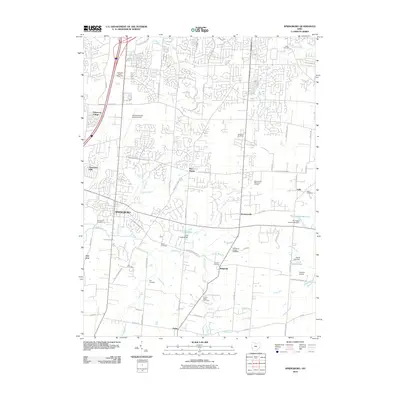 2010 Springboro2010 Print · USGSThe Springboro area in the early twenty-first century reveals a blend of modern suburban growth and historic rural sites. Genealogists can trace family landmarks like Null Cemetery, Salem Cemetery, and the Hidden Valley Fruit Farm.
 - 2010 Map of Monroe, 2010 Print
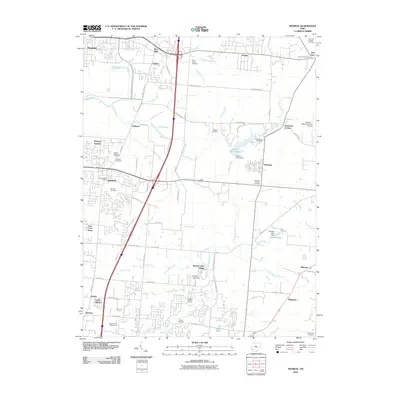 2010 Monroe2010 Print · USGSMonroe and the surrounding Butler County countryside appear at a peak of suburban growth in the early 2000s. Genealogists can trace a remarkable number of historic burial sites, from the Mound and Otterbein-Shaker cemeteries to the Gilbert Cemetery.
 - 2010 Map of Franklin, 2010 Print
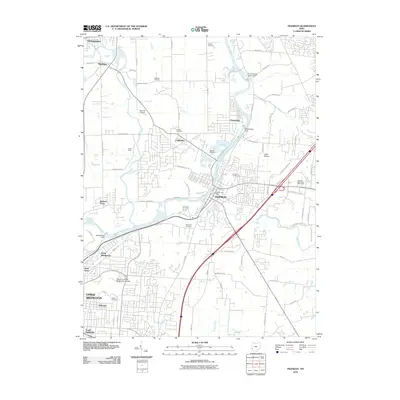 2010 Franklin2010 Print · USGSThe Great Miami River corridor comes alive in this 2010 survey of the borderlands between Butler and Montgomery counties. Genealogists and local historians can trace legacy sites like Tapscott Cemetery, Wood Hill Cemetery, and Camp Hook.
 - 2013 Map of Monroe, 2013 Print
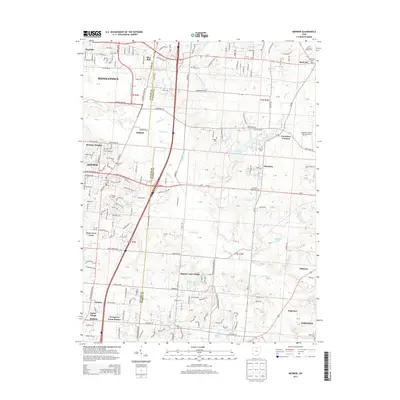 2013 Monroe2013 Print · USGSSouthwestern Ohio's Butler and Warren County line is captured here during a period of residential growth and historical preservation. Genealogists can locate family sites at Mt Pleasant Cem, Red Lion Cem, or the namesake Monroe Cem.
 - 2013 Map of Franklin, 2013 Print
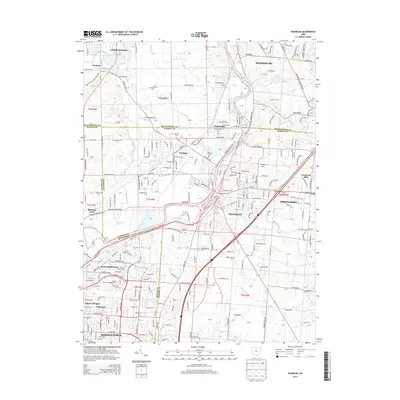 2013 Franklin2013 Print · USGSThe Great Miami River corridor was a bustling industrial and residential landscape in the early 2010s. Researchers can trace several family-named burial grounds like Swartzel Cem and Tapscott Cem or locate the Hummel Airport.
 - 2013 Map of Springboro, 2013 Print
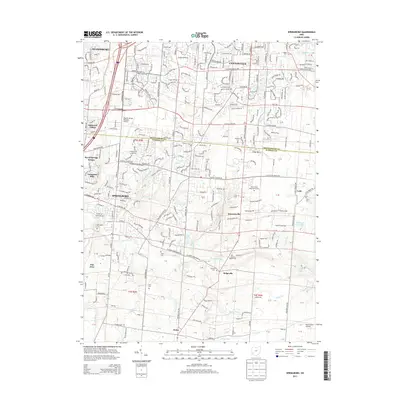 2013 Springboro2013 Print · USGSThe Montgomery and Warren county line is captured here in the early twenty-first century as suburban growth surrounds historic rural settlements. Researchers can trace family history through a high density of burial sites like Old Sch Baptist Cem and Eyer Cem, or locate landmarks like Dayton-Wright Brothers Airport.
 - 2016 Map of Springboro, 2016 Print
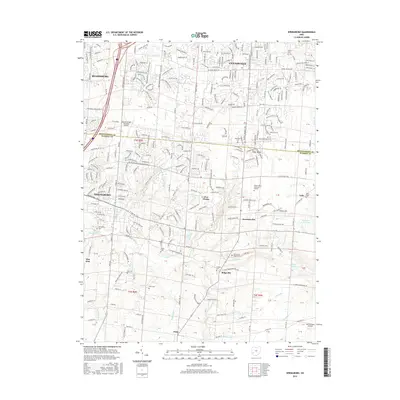 2016 Springboro2016 Print · USGSThe borderlands of Montgomery and Warren Counties appear in the mid-2010s as a mix of suburban growth and enduring rural landmarks. Genealogists can trace family roots through numerous local burial sites like Sears Cem, Rehoboth Cem, and Old School Baptist Cem.
 - 2016 Map of Franklin, 2016 Print
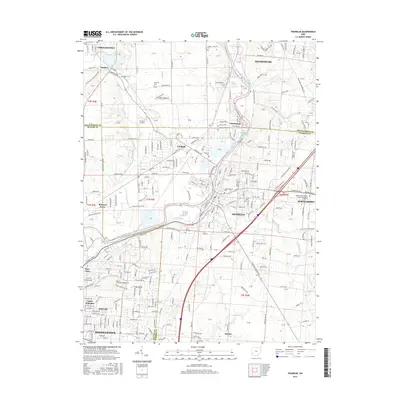 2016 Franklin2016 Print · USGSThe Great Miami River valley near the Butler and Montgomery county line is captured here during its modern suburban expansion. Researchers can trace historic family burial sites at Stettler Cem and Swartzel Cem or locate campuses like Miami-Middletown.
 - 2016 Map of Monroe, 2016 Print
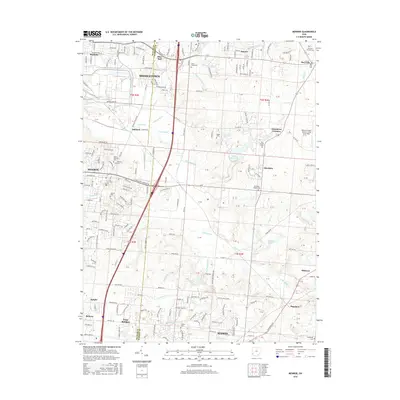 2016 Monroe2016 Print · USGSButler and Warren Counties are captured here as modern infrastructure meets pioneer-era roots in the mid-2010s. Genealogists can locate legacy sites like Mound Cem and Otterbein-Shaker Cem or trace the early paths of Blue Ball and Greentree Corners.
 - 2019 Map of Franklin, 2019 Print
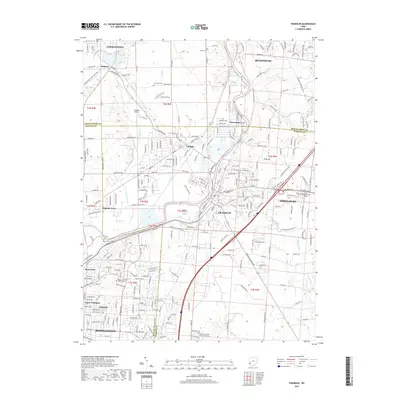 2019 Franklin2019 Print · USGSGreater Middletown and the Miami River valley are captured here in the late twenty-teens as suburban development fills the space between historic river towns. Genealogists and local historians can locate legacy burial sites such as Tapscott Cem or trace the grounds of Southwestern College.
Showing maps 1-25 of 30
Top cities near Franklin Township
- Dayton historical maps
- Hamilton historical maps
- Kettering historical maps
- Middletown historical maps
- Fairfield historical maps
- Beavercreek historical maps
See more
Top neighborhoods of Franklin Township
Frequently asked questions
- What are the different types of historical maps available for Franklin Township?
- What is the oldest map of Franklin Township?
- Where can I purchase historical maps of Franklin Township for my home or office?
- Where can I download high-res historical maps of Franklin Township?
- Are there historical topographic maps available for Franklin Township?
- Is there historical aerial imagery available for Franklin Township?
- Where are historical maps of Franklin Township sourced from?